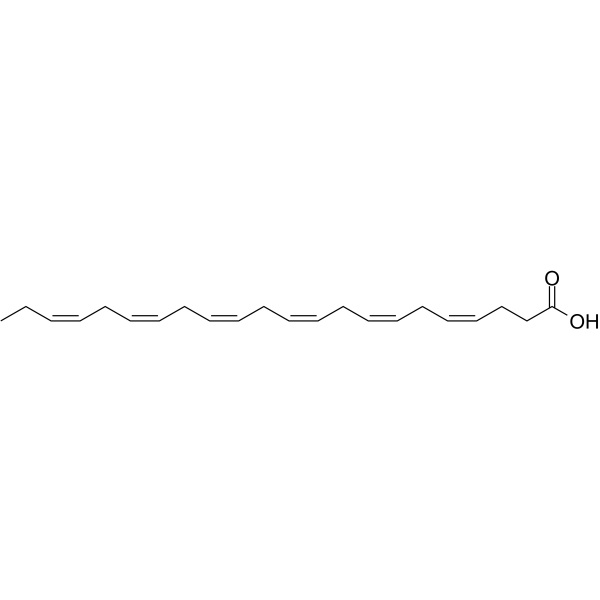
Docosahexaenoic acid
916
MENTIONS
271
EPISODES
165
PODCASTS
Search complete. 916 mentions across 271 episodes found for "Docosahexaenoic acid".
Nov 7, 2026

Majid FotuhiGUEST
Now, sometimes the person has B12 deficiency or vitamin D deficiency and they take a supplement and that supplement really targets a problem inside them and they feel better, but that's minority.
Majid FotuhiGUEST
Of all the supplements that have been studied for the brain, and there are at least a thousand, I find the most effective one is omega-3 fatty acids, DHA, and EPA at a dose of 1,000 megabit per day.
Majid FotuhiGUEST
That's what I take myself, my wife takes it, and our daughters take it.
Majid FotuhiGUEST
Now, beyond that, there are not enough randomized controlled trial to give definitive recommendations for taking them or not taking them.

Eric BergHOST
All right, number five, brain.
Eric BergHOST
Did you realize that most of your brain is mainly fat and cholesterol? And so you need DHA, which is an omega-3 fatty acid for cognitive function.
Eric BergHOST
What was that? Memory, focus, concentration, okay? All right, number six, saturated fat reduce and release bile salts.
Eric BergHOST
the very thing that you need to help break down fats is actually made from cholesterol.

Paul MasonGUEST
So the middle one there, the series two prostaglandins, something like prostaglandin E2, we specifically target that with anti-inflammatory medication.
Paul MasonGUEST
Now, if we come back and have a look at the other side of the coin, if the cell grabs an omega-3, that ends up producing something that we call EPA and DHA.
Paul MasonGUEST
Basically, these are what's found in fish oil.
Paul MasonGUEST
And the products that we have from conversion of these are not that inflammatory, very much less inflammatory than on the other side.
Eric BergHOST
and the retina, and the testes, and even sperm.
Eric BergHOST
And so the richest source of DHEA, which is an omega-3 fatty acids, is in your cerebral cortex of your brain, the part of the brain that helps you think and make logical decisions.
Eric BergHOST
And supposedly it does a lot of other things.
Eric BergHOST
But the retina too, the retina needs this DHEA.
Eric BergHOST
You have a lot of DHEA in your retina, and the testes, and the sperm.
Eric BergHOST
So if you're deficient in omega-3 fatty acids, So your brain's not going to work that well.
Eric BergHOST
You're not going to be able to see as well.

Ken BerryHOST
But the problem is, is that if you're not absorbing enough over and above the little that you can make, then you're much more likely to develop anemia and all of the complications that go along with that.
Ken BerryHOST
The next substance is DHA, docosahexaenoic acid.
Ken BerryHOST
This is absolutely mandatory for building and maintaining our big human brain.
Ken BerryHOST
Now, many plant-based gurus out there will tell you that there are omega-3 fatty acids in plants.
Ken BerryHOST
And indeed there is ALA, but there is no DHA in any plant on the earth.
Ken BerryHOST
Many humans are very poor converters of ALA into DHA.
Ken BerryHOST
And therefore, unless you're getting DHA, in your diet, you're going to have a deficiency and this is going to affect your brain function.
Ken BerryHOST
I have a video about DHA rich foods.

Annette BosworthGUEST
But there is something unique to the anchovy, sardine, macro families that are different lineages in the worlds of fish, but they all seem to have this powerful satiety that comes with it.
Annette BosworthGUEST
And even when you try to replicate that satiety using supplements of DHA and EPA, I have never had a patient tell me, and there's some reasons on this, but I think it's just better when you hear it from a clinical standpoint.
Annette BosworthGUEST
I've never had a patient tell me, you know, doc, I started that fish oil supplement and I am so stinking hung full.
Annette BosworthGUEST
I can't eat anything.
Eric BergHOST
So you can look at tocotrienols as a natural version of nitroglycerin because it's very powerful in increasing the oxygen to the heart muscle itself.
Eric BergHOST
Now, vitamin E in general is necessary to allow the omega-3 fats, especially DHA, to work in the brain.
Eric BergHOST
So if you're deficient in vitamin E, You could be taking a lot of fish oils and DHA directly and not notice a lot of change.
Eric BergHOST
One of the biggest reasons why people are deficient in vitamin E is they consume too many refined grains.
Eric BergHOST
So refined grains are a big reason why you might be deficient in vitamin E, or it could be you're just not consuming enough foods that are high in vitamin E.

Autumn SmithHOST
But can you tell me, just so visually people can understand this, when we eat something, how is it that these nutrients are getting to our brain? What exactly in our brain is changing?
Joseph HibbelnGUEST
Dietary Deficiency Impairs Synapse Development again takes this concept of an adequate diet as you would find in countries that eat a lot of fish and a deficient diet and this omega-3 DHA here more than 10 times higher in the hippocampus.
Joseph HibbelnGUEST
So here's the impact of on the basic and fundamental component of the nervous system, which is a neuron and synapses.
Joseph HibbelnGUEST
Here in blue is the body of the neuron, and it has many branches like roots of a tree.
16 MINS LATER
Joseph HibbelnGUEST
Yeah.
Joseph HibbelnGUEST
Women, you know, they literally give over of themselves in pregnancy to the brain, to the developing brain.
Joseph HibbelnGUEST
If you remember that picture I showed, which you didn't see, your editor saw, of the neurons with adequate DHA having twice as many branches and twice as many synapses.
Joseph HibbelnGUEST
That's what you want to build when the brain's developing.

MontyHOST
And then we're kind of scratching our head why our dogs are getting dementia.
MontyHOST
Now, I'm not saying that a dog can't get dementia that is eating a higher fat diet, but I think this is part of the epidemic that we're seeing with cognitive decline is that are we appropriately supporting the brain that it needs with the fat that it needs? Inflammation control, omega-3, again, going back a little bit to essential fatty acids, EPA and DHA are among the most anti-inflammatory tools that we have.
MontyHOST
We need fat for them.
MontyHOST
And then satiety, palatability.

Brenda DavisGUEST
And we, you know, we still are... trying to figure the long chain omega-3s out in terms of their impact on brain health and, you know, our ability to make long chain omega-3s, all of that.
Brenda DavisGUEST
But generally our ability to convert omega-3, you know, the alpha-linolenic acid into DHA, DPA and EPA is limited.
Brenda DavisGUEST
And so it's kind of like a precautionary thing to consider taking a supplement of DHA and EPA because we know that people with dementia tend to have lower levels in their brain.
Brenda DavisGUEST
We know that probably half the fat in the brain is DHA, and it's really important.
Brenda DavisGUEST
Now, there was a study that just came out that showed giving 2000 milligrams of DHA per day for two years increased DHA levels in the blood and tissues, but it didn't reduce cognitive decline.
Brenda DavisGUEST
And so that, you know, got on the radar of a lot of people and they started saying, well, I guess it doesn't matter if we take EPA and DHA.
Brenda DavisGUEST
But the reality is all they used was DHA.
Brenda DavisGUEST
And some of the critics are saying EPA, it has a synergistic effect with DHA and we need both.
261 more episodes mention Docosahexaenoic acid.
Create an account to see the whole feed, search across every transcript, and follow the entities you care about.