DMZ
66
MENTIONS
32
EPISODES
23
PODCASTS
Search complete. 66 mentions across 32 episodes found for "DMZ".
Nov 2, 2026

Luke WignallGUEST
Well how is this that different? It's a layered approach, right? It's the same sort of ideas around, you know, whether it be firewalls and networking security or whatever, we're just now applying that within AI and Gentic environments.
Luke WignallGUEST
We're creating DMZs, we're creating, you know, call that a sandbox, if you will.
Luke WignallGUEST
And I think it's just sort of this awakening to, wow, these are practices that we're actually really good at, and now we're going to apply them to agentic use cases.
Luke WignallGUEST
And I think there's some discovery around that, certainly.

speaker_2HOST
Right.
speaker_2HOST
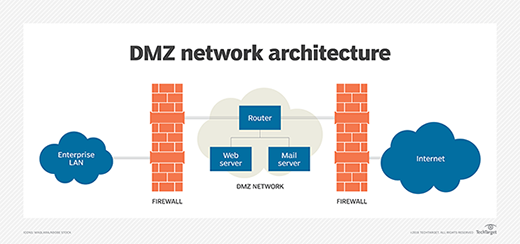
So you have the Internet connecting to a switch with your public stuff, like your web server, which creates your DMZ, your demilitarized zone.
speaker_3HOST
Exactly.
speaker_3HOST
And then that single firewall sits between the DMZ and your internal private network, just inspecting packets and dropping anything unauthorized.
speaker_2HOST
OK, so that's the baseline.
speaker_2HOST
But I'm guessing bigger companies do something more complex.
speaker_3HOST
Modern environments usually upgrade to a multiple interface firewall.
speaker_3HOST
This is one really powerful appliance that routes traffic between three or more distinct zones.

Scott ChristensenHOST
Segmentation.
Scott ChristensenHOST
I think this is easily the number one conversation I have these days is what does segmentation look like? I think the first conversation a lot of times is DMZ between IT and OT or DMZ between OT and everything else.
Scott ChristensenHOST
Right.
Scott ChristensenHOST
I think I'm a very big believer in zero trust, not just from a networking standpoint, but from an all security standpoint.

Allan JudeHOST
So part of it can be, you have a static IP, but where is that IP terminated? What device is it coming on? If it's a device that you have enough control over, then it can get pretty interesting.
Allan JudeHOST
You can basically use the firewall to forward that to maybe another subnet you set up internally, a DMZ, as we would call it.
Allan JudeHOST
That would be a subnet you know is partially exposed to the internet, and maybe we'll treat that a little differently than the rest of your network.
Allan JudeHOST
But usually the question we get around this is, I'm going to have more than one website.

speaker_1HOST
So what's the solution there?
speaker_2HOST
According to the CISA intelligence and the international NERC CIP guidelines we're analyzing, the most effective feasible mitigation strategy is the implementation of jump hosts, often referred to as bastion hosts, positioned strictly within a demilitarized zone or DMZ at level 3.5 of the Purdue model.
speaker_1HOST
Let's clearly define what that architecture looks like for you, the operational listener.
speaker_1HOST
Instead of allowing any direct routing or network connection from the enterprise IT network down to the OT plant floor, you position a highly secured, heavily audited server, the jump host, in the DMZ between them.
speaker_1HOST
All traffic must stop there.
speaker_2HOST
Exactly.
speaker_2HOST
Even for the legacy devices?
speaker_1HOST
Yes.

Mirko PetersHOST
Now place a buffer between plant and enterprise exchanges.
Mirko PetersHOST
An industrial demilitarized zone, usually called an industrial DMZ, is a separate network zone that hosts selected services between those environments under controlled access rules.
Mirko PetersHOST
Its job is to contain those exchanges.
Mirko PetersHOST
A plant-side service might send approved records to a service in the industrial DMZ, while an enterprise service receives those records through a separately permitted connection from its own zone.
Mirko PetersHOST
Those are distinct connections with distinct permissions.
Mirko PetersHOST
The enterprise system doesn't inherit access to the filler simply because it can communicate with a service that receives information originating from that machine somewhere deeper in the plant.
Mirko PetersHOST
A buffer needs enforcement on its boundaries.
Mirko PetersHOST
Calling a server an industrial DMZ server achieves little if its network interfaces or routing settings still provide an unrestricted route between the plant and enterprise networks around those controls.

Kyle WintersGUEST
We have our different branches that are part of this as well.
Kyle WintersGUEST
We have a DMZ, we have our remote users.
Kyle WintersGUEST
All this is tied in together and we're including pieces as well along the security stack.
Kyle WintersGUEST
Things like Splunk is an example.
speaker_1HOST
It is isolated behind multiple purpose-built industrial firewalls.
speaker_1HOST
It is separated by a demilitarized zone, a DMZ, from the enterprise IT network, which is level four.
speaker_1HOST
And it is completely physically cut off from the public Internet.
speaker_2HOST
So you're saying it's protected by the architecture?
RyanHOST
They build strict firewall rules that explicitly drop all traffic trying to reach it, except from maybe one single highly secured admin computer.
RyanHOST
They wrap it in a demilitarized zone or DMZ, effectively creating a digital airlock.
speaker_0HOST
Okay, so the vulnerability technically still exists on the hard drive, but it is essentially locked inside a vault, buried under a mountain, and guarded by a dragon.
RyanHOST
Exactly.
9 MINS LATER
RyanHOST
We calculate the exploitability of the weapon, the remediation of the shield, and the confidence of the reporting to find the actual present-day danger.
speaker_0HOST
We unpacked the mechanics of the scanner itself, realizing it is just a script looking for file versions, totally prone to false positives when a patch changes a file path.
speaker_0HOST
We also understand the strategy of documented exceptions, isolating a vulnerable legacy system behind an airlock DMZ because the cost of fixing it outweighs the contained risk.
RyanHOST
Right.

Saurabh Kumar PandeyGUEST
I generally give the hit and trial to understand whether it is assigning with something or not.
Saurabh Kumar PandeyGUEST
And sometimes people also create a DMZ.
Saurabh Kumar PandeyGUEST
And there also, with the help of DMZ, they create the entire fake ROS system.
Saurabh Kumar PandeyGUEST
and if someone entered that mac address they can catch up yeah something happened someone has has taken entry in my organization so that that is a different game to bypass dmg to look into the firewall and bypassing the mac address and all So generally, we have to identify, there are multiple ways to identify the MAC address, whether it is proof or not.
Saurabh Kumar PandeyGUEST
But hit and trial is one of the methods.
22 more episodes mention DMZ.
Create an account to see the whole feed, search across every transcript, and follow the entities you care about.