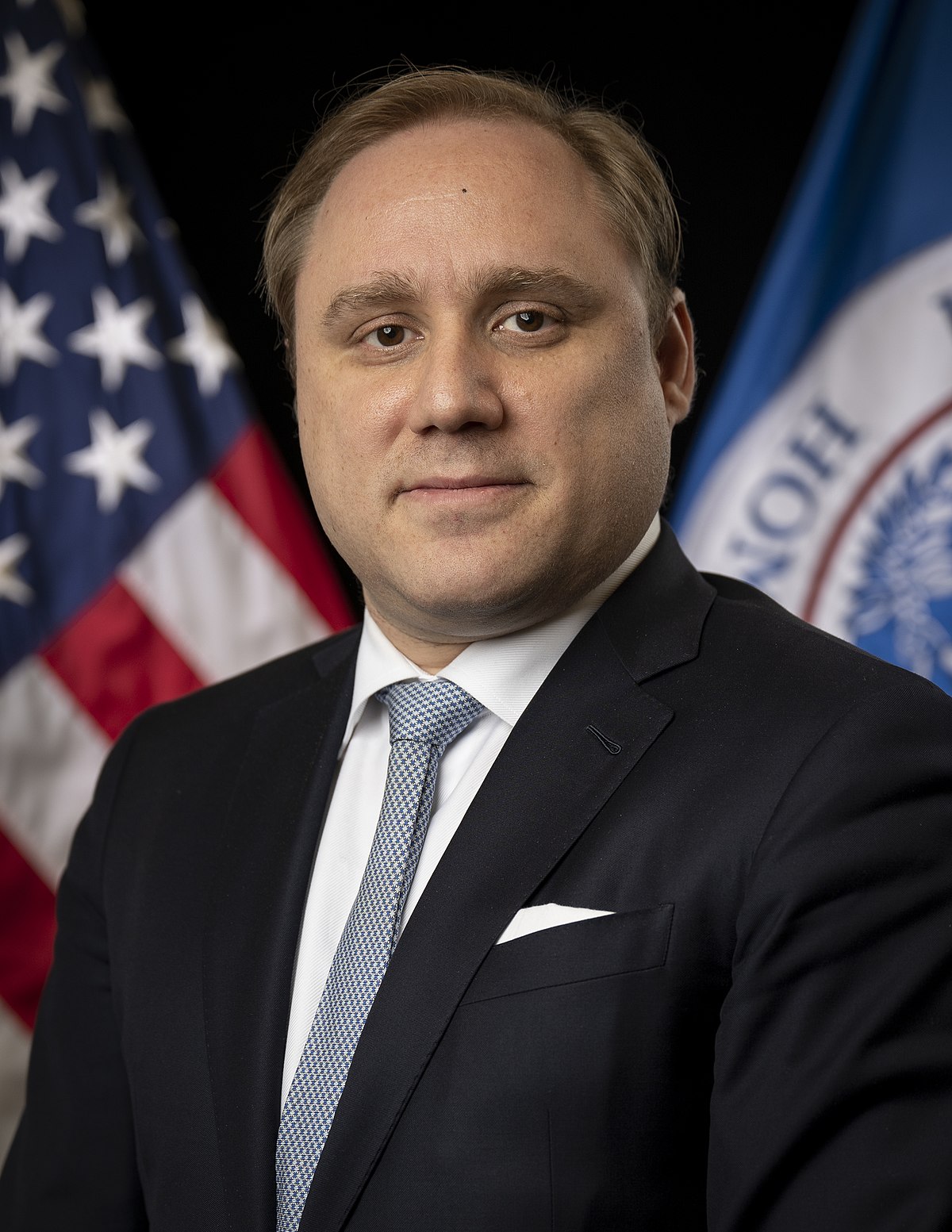
Dmitri Alperovitch
American author and former chief technology officer of CrowdStrike
10
APPEARANCES
10
PODCASTS
Oct 2, 2026


Samm SacksGUEST
And I think that's missing from this equation of an all-out race means no constraints.

Dmitri AlperovitchGUEST
Dimitri, do you agree? Well, look, the fact of the matter is that AI is not safe and probably will never be safe 100% because it's non-deterministic.
Dmitri AlperovitchGUEST
You ask AI a question, you wipe out your session, you ask the same question, you will get a different answer every single time.
Dmitri AlperovitchGUEST
And sometimes, a small percentage of the time, it will be completely wrong.

Chris McGuireGUEST
But I do think that you're going to have humans enabled by models in the very near future that are going to cause much more damaging cyber attacks.

Samm SacksGUEST
And I think that's missing from this equation of an all-out race means no constraints.
Dmitri AlperovitchGUEST
Dimitri, do you agree? Well, look, the fact of the matter is that AI is not safe and probably will never be safe 100% because it's non-deterministic.
Dmitri AlperovitchGUEST
You ask AI a question, you wipe out your session, you ask the same question, you will get a different answer every single time.
Dmitri AlperovitchGUEST
And sometimes, a small percentage of the time, it will be completely wrong.
Chris McGuireGUEST
But I do think that you're going to have humans enabled by models in the very near future that are going to cause much more damaging cyber attacks.

Dmitri AlperovitchGUEST
In the last 100 years, the two countries that have seriously prepared for the invasion of Taiwan, obviously China, in particular in the last, uh, uh, 45 years or so, and the United States, that during World War II, um, when Taiwan was still under Japanese occupation, as we were hopping across the islands in the Pacific on the way to mainland Japan, uh, one of the plans that was being proposed was to invade Formosa, as Taiwan was called at the time, and the US military even developed a war plan in August of 1944, uh, for this invasion.
Dmitri AlperovitchGUEST
What happened in June of 1944? The greatest military amphibious invasion in human history, Operation, um, Overlord, [lip smacks] uh, the landing of the beaches of Normandy.
Dmitri AlperovitchGUEST
The interesting thing is the similarities between the two, right? Taiwan Strait about the width of the English Channel, uh, landing on the beaches that are, that are well defended, and obviously, uh, the Normandy invasion, you could say, even gave us a great deal of hope that this can be successful, gave us experience to orchestrate something like this.
Dmitri AlperovitchGUEST
And nevertheless, um, this plan that was put together was called Operation Causeway.


Scott D. ClaryHOST
I want to have some sort of roadmap for where we can go, given that this is a real threat.
Dmitri AlperovitchGUEST
Yeah, and my book, World on the Brink, America Can Beat China in the Race of the 21st Century, is actually very optimistic, believe it or not, despite the title, because the first half of the book talks about the problem, the reason why Taiwan matters, the reason why we're on a path to conflict.
Dmitri AlperovitchGUEST
China, I think, is actually a weaker power than the Soviet Union ever was during the first Cold War.
7 MINS LATER


Patrick GrayHOST
So it's not actually a new EO, but it is guidance to the rest of the US government, uh, i-i-in that, uh, you know, this is the White House telling the rest of the government what it wants, you know, various organs of the government to do under the EO that was previously issued in March.
Dmitri AlperovitchGUEST
You know, I've got scars from the first, uh, Internet war over active defense, cyber offense back 15 years ago.
Dmitri AlperovitchGUEST
So here we are again, and, and the usual suspects are coming out of the woodwork.
Dmitri AlperovitchGUEST
Uh, I've been in some private chats where people are saying, "Oh no, they're gonna hack a hospital.
19 MINS LATER


Melissa LeeHOST
So are you just sort of holding your breath? I mean, what can actually be done right now to prevent, you know, uh, something that is, has more dire consequences than breaking out of a, a testing sandbox?
Dimitri AlperovitchGUEST
Well, there are two problems here, right? One is the AI models on their own going out and hacking these companies, and as serious as it is, they're not doing anything destructive.
Dimitri AlperovitchGUEST
They have not been, you know, publicizing the data that they get from these companies.
Dimitri AlperovitchGUEST
Humans, malicious humans, whether it's governments or criminal groups, using these AI models to do major harm on purpose is really m- much bigger threat here, and that's already happening.
Melissa LeeHOST
I mean, what can be done by the AI companies, by the government to make sure that the next 12 to 18 months don't yield any issues?

Garrett SmithHOST
And then I've got a follow-up, which will sound something like, why does it matter if we label it Cold War to or not.
Dmitri AlperovitchGUEST
Well, to me, it's ridiculous that this is not accepted wisdom, right? And let me just run you through the comparisons of the first Cold War with the Soviet Union and the second with China, right? First of all, you have a global competition for supremacy playing out in every single corner of the world between the U.S.
12 MINS LATER
Garrett SmithHOST
Can you maybe tease out a little bit more what that needs to look like? What are the win conditions? In other words, how do we know if we've won in this kind of Cold War competition?

14:57

And full disclosure here, Click Here and Recorded Future News are an editorially independent arm of the company.
Dmitri AlperovitchGUEST
For example, uh, they, uh, they started targeting CEOs and founders of companies.
Dmitri AlperovitchGUEST
They think that a personal OSINT or bullying of this person, of these people, uh, will, will help to pressure the victim to pay.
15:49
Not just a group of individual coders writing malware, but an organization running a system.
Dmitri AlperovitchGUEST
His job was to control the infrastructure, make sure it all works, make sure that a communication line with, with victims is up, make sure that the payments go through and the affiliates are getting their share.

Dmitri AlperovitchGUEST
Well, look, uh, th- these four states are certainly not the only ones with active cyber offense programs.
Dmitri AlperovitchGUEST
In fact, there are over 100 different countries now at various stages of developing cyber offense.
Dmitri AlperovitchGUEST
But I actually found this really interesting, right? That, you know, 15 years ago, looking at the developments of cyber across the whole world, why is it that time and time again, as we investigated breaches into government networks, into private sector networks, it was China, Russia or North Korea? And it's because these are our geopolitical threat actors, right? Uh, guess what? Singapore is really, really good at cyber.
Dmitri AlperovitchGUEST
I don't spend my time worrying much about what cyber, uh, Singapore is gonna do to the United States, right? For a reason.
Dmitri AlperovitchGUEST
We have norms of behavior, um, that we abide by, and, and we don't target each other's economies and, and, and do things that are detrimental to each other's interests.
31 MINS LATER


Rebecca BalonHOST
But I'd love to hear a little bit about you starting CrowdStrike and working there until, what was it, 2020?
Dmitri AlperovitchGUEST
I started a company with my dad when I was still in high school, focused on cryptography, the emerging field of encryption, study it in college.
Dmitri AlperovitchGUEST
I was an executive at a company called McAfee, which was, at the time, one of the biggest cybersecurity firms, and in January of 2010, I worked together with Google, who had been compromised by the Chinese, uh, nation-state operators at the time, and I investigated that operation, realized that there were many other victims that were involved in that intrusion, and they were focused on stealing intellectual property from these companies, that they were also going after, at Google specifically, email accounts of dissidents, Tibetan dissidents and others, that the Chinese wanted to surveil.
Dmitri AlperovitchGUEST
But this was really the first time that the public had learned that nation-state hackers were not just targeting governments, they were not just engaged in traditional espionage, they were also stealing massive amounts of intellectual property.
Dmitri AlperovitchGUEST
And then over the course of the next year, I did some major investigations, I called them Night Dragon and Shady Rat, that unveiled the full scope of what was taking place and the numerous nation-state actors, not just China, but North Korea, and then ultimately Russia and Iran, that were engaging in these activities.
18 MINS LATER
Rebecca BalonHOST
Is there anything, any trends that you're seeing that you would advise companies to pay closer attention to?