DMAIC
15
MENTIONS
8
EPISODES
8
PODCASTS
Search complete. 15 mentions across 8 episodes found for "DMAIC".
Nov 2, 2026

Steve GundGUEST
And so it's a step-by-step structured process for problem solving that we teach to all of our leaders And increasingly to really all of our team members.
Steve GundGUEST
And so we follow what is called a DMAIC process and we use a tool called an A3.
Steve GundGUEST
The A3 is the document that really gives the structure for the problem solving event.
Steve GundGUEST
And we could say problem solving, we could say opportunity realization.

Keith BartonGUEST
And so the biggest part is actually just, like I said before, you have to teach them how to actually do it right.
Keith BartonGUEST
So in order to be able to even be part of the American Lean Act, they have to go through a four-hour class on DMAIC and root cause analysis before they're allowed to write a module and submit it.
Matt DavisHOST
Okay, so who has to go through the four-hour program? The actual congressman or his staff, like legislative
Keith BartonGUEST
director? No, even better, there are so many of these programs at big colleges all over the country.

Michelle PattersonGUEST
So when I started this initiative around world class customer service at the time, I had zero idea what to do.
Michelle PattersonGUEST
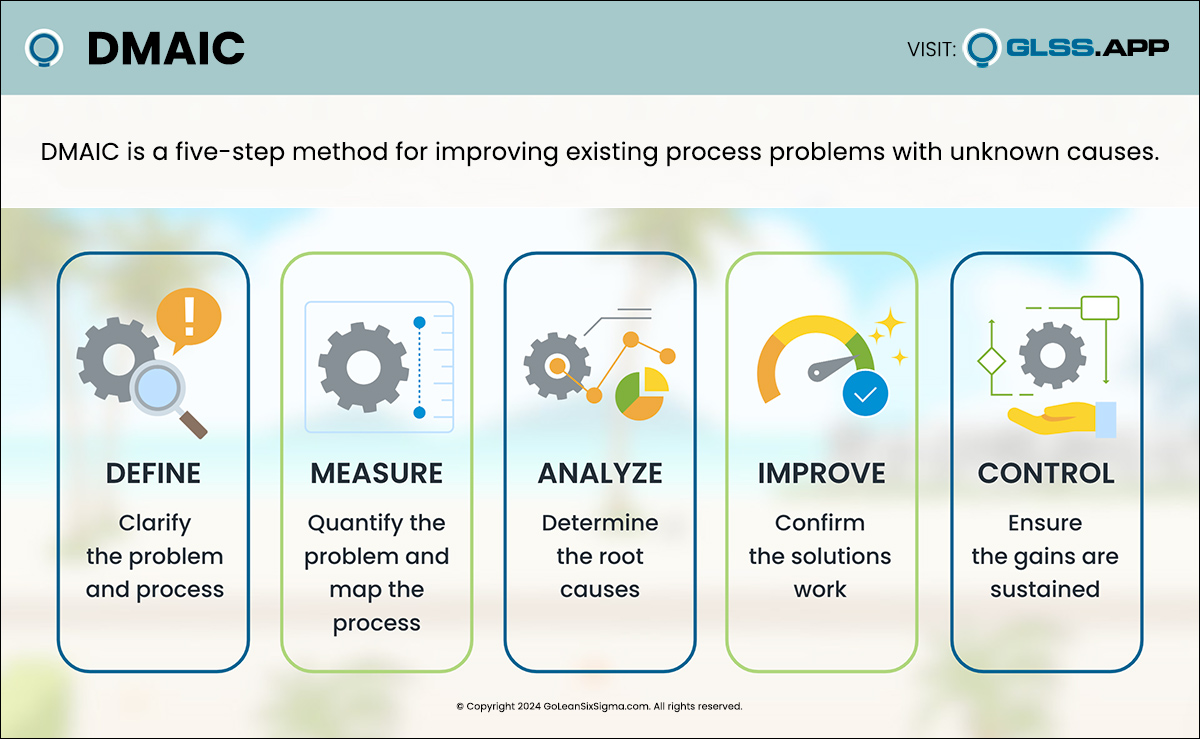
I leaned on my Lean Six Sigma background and the project management structure that a lot of Lean Six Sigma practitioners use, and that is a model, define, measure, analyze, improve, control, or DMAIC for short.
Michelle PattersonGUEST
I think many people probably are very familiar with that.
Michelle PattersonGUEST
Because I was used to that.
6 MINS LATER
Michelle PattersonGUEST
I actually was doing continuous improvement before Lean Six Sigma was a thing.
Michelle PattersonGUEST
And a lot of people probably do not know this.
Michelle PattersonGUEST
When that DMAIC structure actually was MAIC, it was Measure, Analyze, and Improve Control at the beginning, right? And they ended up adding the define for exactly that reason.
Michelle PattersonGUEST
People will jump to the solution and implement a solution without really understanding why.

Michelle PattersonGUEST
So when I started this initiative around world class customer service at the time, I had zero idea what to do.
Michelle PattersonGUEST
I leaned on my Lean Six Sigma background and the project management structure that a lot of Lean Six Sigma practitioners use, and that is a model, define, measure, analyze, improve, control, or DMAIC for short.
Michelle PattersonGUEST
I think many people probably are very familiar with that.
Michelle PattersonGUEST
Because I was used to that.
6 MINS LATER
Michelle PattersonGUEST
I actually was doing continuous improvement before Lean Six Sigma was a thing.
Michelle PattersonGUEST
And a lot of people probably do not know this.
Michelle PattersonGUEST
When that DMAIC structure actually was MAIC, it was Measure, Analyze, and Improve Control at the beginning, right? And they ended up adding the define for exactly that reason.
Michelle PattersonGUEST
People will jump to the solution and implement a solution without really understanding why.

Jay BellGUEST
Everything I do, Six Sigma is at the root of it.
Jay BellGUEST
But you almost have to detangle or uncouple Six Sigma and the actual DMAIC methodology and the tools and keep it behind the scenes because I learned very, very quickly back in 2005, 2006 that where I was first engaged in Six Sigma and working with underwriters, that the more I leaned into the tooling, unless I had the right audience, the more they started pulling back.
Jay BellGUEST
And so I absolutely agree that we need more lean, we need to drive more of that more effectively.
Jay BellGUEST
We have to do it in a way where it doesn't feel like it's this robotic science, because underwriters have this natural aversion to that, and then they go into that immediate, it's an art and a science.

Dave HineGUEST
Yeah.
Zach GobstHOST
Uh, is a part of, like, your flow of MAD, DMAIC, and I've memorized acronyms.
Zach GobstHOST
But, uh, all this to say, a lot of those, like, early kinda structures, all on spreadsheets, all about kind of like figure out what's the failure mode, what's the frequency, how can you detect it.
Zach GobstHOST
If you can't detect it, you...

David NorrisGUEST
And so-
Catherine McDonaldHOST
I remember someone saying to me a few years ago, so we learned DMAIC, D-M-A-I-C, I remember when we were studying, and I know it's a Six Sigma, but some Six Sigma tools were thrown in.
Catherine McDonaldHOST
I remember was using it for a while, and then somebody who was a lot more experienced than me said, "Why are you using DMAIC? The M should come before the D.
Catherine McDonaldHOST
It should be MDMAIC," because everyone's trying to define the problem, and then you move on to the measure.
Catherine McDonaldHOST
It should be the measure first.
Catherine McDonaldHOST
And actually, it made perfect sense to me that we complain about our problems, and we know we have problems, and we talk about them in management meetings without ever having the right measure.
David NorrisGUEST
Yeah.
David NorrisGUEST
I think that that's a great example there.

Manish KhadiyaGUEST
So in my mind, and again, I give a lot of credit to some of my initial training at GE and Six Sigma, taught me some basic fundamentals around how to look at a problem and what should be the different stages.
Manish KhadiyaGUEST
The famous thing about Six Sigma is those two methodologies, DMAIC, define, measure, analyze, improve, and control, which is when an existing business process is not working the way it is supposed to.
Manish KhadiyaGUEST
Or you have a new problem and there is a different methodology that you follow.
Manish KhadiyaGUEST
It's called Demadvi.