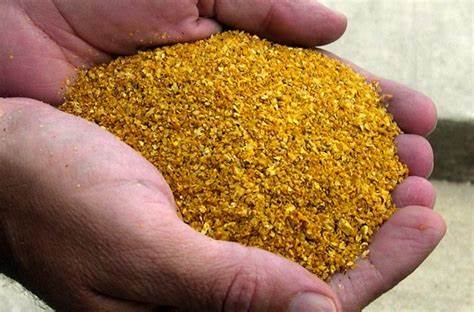
Distillers grains
FoodWikipedia
17
MENTIONS
9
EPISODES
9
PODCASTS
Search complete. 17 mentions across 9 episodes found for "Distillers grains".
Sep 20, 2026

Aiden WyattPANELIST
They're number one in that.
Aiden WyattPANELIST
They're also number one in eggs, ethanol, and dry distiller, dry distillers grain solubles, DDGS, which serve as a premium source of protein for all livestock.
Derek DukeHOST
See, when you were, when you asked the question, I immediately thought of, like, some kind of grain or ...
Derek DukeHOST
I didn't think we were gonna talk about meat.

Emerson WohlenbergGUEST
So this is a huge amount that could not only supply domestic consumption, but also increase exports, uh, in the US.
Emerson WohlenbergGUEST
And the other point that I will make also is we are also increasing, uh, feed, feed products, right? More ethanol production results in more DDGs, more soybean oil going to biofuels.
Emerson WohlenbergGUEST
Do we have more soybean meal? So that actually increases the supply from our baseline, right? And is an incentive for us to grow.
Emerson WohlenbergGUEST
They will grow more feed as well.

Arlen SudermanGUEST
It's really been impressive demand, both domestically and globally.
Arlen SudermanGUEST
Some of that's taking away from DDGs a little bit, a little bit of a shift.
Arlen SudermanGUEST
But overall, it's just been much better than expected demand globally that we've seen for the meal to absorb it.
Michelle RookHOST
Gotcha.

Carlos CampabadalHOST
I see that.
Carlos CampabadalHOST
I know we don't want to go away from the whole topic, but when you think about DDGs, we feed ingredient there coming from the ethanol production, but always the ethic, are we using our grain that we're still going to feed here, at least in the U.S. for the animals, produce ethanol and, you know, the leftover going to that.
Carlos CampabadalHOST
And that's a different way from seeing it from other countries that they use more than, let's say, corn for food products, you know.
Carlos CampabadalHOST
But

Scott SearleHOST
Learn more at balchem.com/xl.
Sebastian SalvaterraGUEST
[Instrumental music] So what we're trying to work with was to, right, uh, replace the soy proteins with protein coming from the DDGS.
Sebastian SalvaterraGUEST
So we were just trying to, um, find effects of the protein source, right? So our hypothesis was that by replacing the soy proteins with the proteins coming from the DDGS, um, will not affect our cow performance and will reduce, uh, the methane emissions, right? That's mainly what it's about, the, the talk that I'm going to give to you.
Scott SearleHOST
And so tell me, why would, uh, replacing soybean with DDGS, uh, reduce methane emissions?
Sebastian SalvaterraGUEST
So basically, everything, it's based on the rumen fermentation, okay? So due to the unsaturated fatty acids that the DDGS has, the rumen mi- uh, the rumen microbes will work to saturate it into stearic acid.
Sebastian SalvaterraGUEST
So will be taking the free hydrogens from the rumen-
Scott SearleHOST
Okay
Scott SearleHOST
And what were some of your key findings?

Jared WhiteHOST
Canada was the top destination again in July, taking in nearly 40% of the month's shipments, followed by the European Union and Vietnam.
Jared WhiteHOST
Exports of distillers' dried grains with solubles were essentially unchanged on the month, primarily to Mexico, Indonesia, and South Korea, with 2026 DDGS exports also 13% ahead of 2025.
Jared WhiteHOST
Ethanol exports are largely driven by rising global demand for low-carbon fuels, while DDGs exports reflect increasing livestock feed demand.
Jared WhiteHOST
We'll have a quick timeout here on this holiday edition of Agriculture Today.

Jesse AllenHOST
His theme for the year is feeding and fueling the world.
Jesse AllenHOST
He says it's easy to focus on planting and harvest and miss the end users of U.S. corn, ethanol, DDGs, sorghum, and
Jay ReinerSOUNDBITE_SPEAKER
barley.
Jay ReinerSOUNDBITE_SPEAKER
Especially as farmers, we get in our tunnel vision.
Jesse AllenHOST
Reiner says the goal is to open doors with international customers and government officials who are focused on energy, transportation, ethanol, distillers, grains, biochemicals, and bioplastics, not just traditional grain trade.
Jay ReinerSOUNDBITE_SPEAKER
as the traders and government officials in foreign countries get older and retire there's a whole new group of gun stores coming up or brand new industries and it's like why are we talking to u.s grains council what do you have to do what we don't deal in grains you know because there's a whole gamut of things.
Jay ReinerSOUNDBITE_SPEAKER
So Bioproducts Council came into play, not only the ethanol and DDGs, but also, you know, we got the future of biochemicals and bioplastics and all that.
Jay ReinerSOUNDBITE_SPEAKER
So just, you know, hopefully we'll name change will last for the next 30, 40 years.

Joe VaclavikHOST
ethanol prices are not keeping up with corn prices the current uh rally in the corn market as i see it began in july and since the first of july cme corn futures are up 18 and a half percent plants ethanol futures up only 8.7 percent so corn prices acting much better than ethanol prices as a result of that we've seen ethanol production margins decline This chart is a very simplistic view of U.S. ethanol margins.
Joe VaclavikHOST
This is refinitive data, and the margins pictured here reflect spot prices of corn, natural gas, electricity, chemical and process cost, ethanol, DDGs, and CO2.
Joe VaclavikHOST
But you can see that things have turned... much worse and they look much worse and margins using spot prices of all those things are actually negative in real time for a lot of places.
Joe VaclavikHOST
Now, your ethanol plant locally or the one that you run or deliver to or whatever, they may have hedged their ethanol margins.

Laurie BoyerHOST
Consumption of the grain used for dry milling fuel production accounted for 93 percent of the total, while wet milling totaled roughly 7 percent.
Laurie BoyerHOST
Production of dried distillers grains with solubles was reported at 1.85 million tons in July.
Laurie BoyerHOST
Down 1% year over year, the government said.
Laurie BoyerHOST
Distillers' wet grains, with 65% or more in moisture, totaled 1.29 million tons of 9% on an annual basis.