Dioxygen
Chemical compoundWikipedia
21
MENTIONS
2
EPISODES
1
PODCASTS
Search complete. 21 mentions across 2 episodes found for "Dioxygen".
Oct 29, 2026

Michael RussellHOST
Excellent.
Michael RussellHOST
Okay, so here's an example of O2, all right? Now, like I said, oxygen has 1s2, which I'm not showing, 2s2, and 2p4.
Michael RussellHOST
So in the orange ones here, you'd have 1, 2, 3 by themselves first, and this box would have a pair, would have four electrons total.
Michael RussellHOST
And this is another oxygen.
Michael RussellHOST
So you start at the bottom, one, two, three, four, And lo and behold, look at oxygen.
Michael RussellHOST
Oxygen has unpaired electrons.
Michael RussellHOST
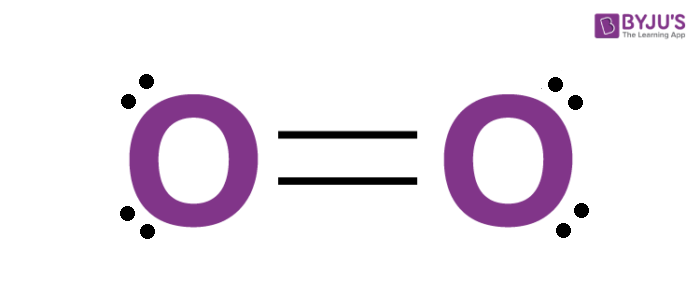
And again, the Lewis structure for O2 did not predict that at all.
Michael RussellHOST
It made it look diamagnetic.
Michael RussellHOST
Why this Hund's rule becomes important is that it helps to explain the magnetism.
Michael RussellHOST
And notice there on O2 in the pi star 2p, each electron had its own orbital and you don't start putting them together until there's no more room.
Michael RussellHOST
So if you had one more electron, it would fill up the first box and another electron would fill up the other pi star 2p box.
Michael RussellHOST
So because O2 has those two unpaired electrons, that means that it's paramagnetic.
Michael RussellHOST
Paramagnetic things are attracted to magnetic fields.
Michael RussellHOST
So we talked about earlier how the Lewis structure for O2 doesn't show any paramagnetism for O2.
Michael RussellHOST
But boy, oh boy, when you see this molecular orbital diagram, you focus on that part that I circled right there.
Michael RussellHOST
Those two individual electrons are not paired up.