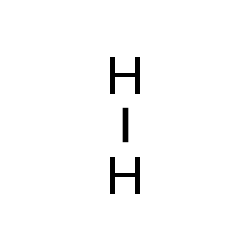
Dihydrogen
Chemical compoundWikipedia
100
MENTIONS
17
EPISODES
10
PODCASTS
Search complete. 100 mentions across 17 episodes found for "Dihydrogen".
Nov 18, 2026

Linda MitchellHOST
Because I want to talk a little bit about recovery.
Linda MitchellHOST
What drew you to molecular hydrogen and what have human studies actually measured when it comes to exercise recovery? Because as you get older, that's the name of the game.
Linda MitchellHOST
It's harder, takes a little longer to recover for most of us.
Steve CarverGUEST
Well, there are white sheets on human studies that show that with the introduction of hydrogen gas post-workout, that your recovery rate is improved.
Steve CarverGUEST
I don't know the exact percentages, and you would have to read those studies specifically, but they do show great promise, and we would love to see more studies on that specifically.
Steve CarverGUEST
The thing about molecular hydrogen... that the reason we were drawn to it, and we put it with an electrolyte formulation so that you would get your magnesium, your potassium, your sodium, right? These are all recovery tools.
Steve CarverGUEST
Right.
Steve CarverGUEST
Those are all your recovery tools.

speaker_0NARRATOR
We know that hydrogen and oxygen combine to form water.
speaker_0NARRATOR
We know that hydrogen exists as a molecule of two hydrogen atoms covalently bonded together, H2, and oxygen likewise exists as a molecule of two oxygen atoms covalently bonded together, O2.
speaker_0NARRATOR
So we have H2 plus O2 forming H2O.
speaker_0NARRATOR
But if we write the chemical equation like this, we've violated the law of conservation of mass.
speaker_0NARRATOR
We can't show atoms being created or destroyed during the course of this reaction, but that's what we just wrote.
speaker_0NARRATOR
We are only allowed to change the coefficients in front of any single atom or molecule, but we can't change any subscripts.
speaker_0NARRATOR
If we did, we'd be changing the actual chemical.
speaker_0NARRATOR
For instance, if we wrote H2O2 on the right-hand side, we might feel clever and think we solved the problem, but we'd be so completely wrong, because that's not the formula for water, that's the formula for hydrogen peroxide.

Daniel JosephGUEST
awesome.
Daniel JosephGUEST
Molecular hydrogen is awesome, by the way.
Daniel JosephGUEST
I drink hydrogen water.
Daniel JosephGUEST
In fact, I was over there with the event with you.

CurtisHOST
He couldn't get any answers from the traditional medical system, so...
CurtisHOST
He started researching nutrition, clean water, and molecular hydrogen.
CurtisHOST
So we're going to be talking to him about his illness and what he found out doing his research and everything that he's up to and going to be up to.
CurtisHOST
So Hydrogen Man, welcome to the show.
15 MINS LATER
GregGUEST
And so that's kind of one of the more new things that recently happened.
GregGUEST
So it's been really interesting.
CurtisHOST
Well, when you first started researching molecular hydrogen, you thought it was a scam at first.
CurtisHOST
So kind of tell us about your research and what made you change your mind.

Lisa Pitel-KillahHOST
So let me give you a little background on all things that Stephen does.
Lisa Pitel-KillahHOST
So first off, he's the lead author of H2 Water for Life book and also the founder of H2WaterForLife.org.
Lisa Pitel-KillahHOST
He is a certified molecular hydrogen advisor, a quantum medicine level one grant, a complementary and alternative medicine liaison.
Lisa Pitel-KillahHOST
He's ongoing biology, chemistry, and biochemistry student.

Jesus SalasGUEST
It is one of the largest, or the largest, the largest reservoir of molecular gas in the galaxy, containing about 30 million solar masses.
Jesus SalasGUEST
of molecular gas, mostly in the form of H2, molecular hydrogen.
Jesus SalasGUEST
And it's condensed mostly in what we call giant molecular clouds.
Jesus SalasGUEST
And we've heard what those are in this conference.

Hezekiah Paul SmithHOST
It is the lightest and most abundant chemical element in the universe, constituting about 75% of all normal matter.
Hezekiah Paul SmithHOST
Under standard conditions, hydrogen is a gas of diatomic molecules with the formula H2 called dihydrogen or hydrogen.
Hezekiah Paul SmithHOST
That is how it is found in nature.
Hezekiah Paul SmithHOST
Atomic number three, lithium.
Amiel SternbergGUEST
The second one is very loosely bound, and that's called H-.
Amiel SternbergGUEST
And the H- reacts with hydrogen to form H2, molecular hydrogen.
Amiel SternbergGUEST
The reason why this is so important is that as the universe was cooling down, in order to form stars, one had to actually... enable the collapsing gas clouds to emit, lose their energy.
Amiel SternbergGUEST
And the way they lose their energy, the way they lost their energy is by spectral line emissions of the molecular hydrogen, which enable cooling and fragmentation into stars, as was first pointed out in the famous paper by Peebles and Dickey in 1968.
7 MINS LATER
Amiel SternbergGUEST
And what you can see here is that there's a correlation between the star formation rate and the gas surface density.
Amiel SternbergGUEST
The correlation actually is pretty well defined once you go up about a certain surface density, but if the surface density is too low, there's a great deal of scatter.
Amiel SternbergGUEST
It turns out that this transition from a situation where there's scatter and a fairly good correlation is associated with the transition from a state in which the gas is primarily atomic hydrogen to the location where the gas is primarily in the form of H2.
Amiel SternbergGUEST
So this correlation, which I've just shown you here graphically, can describe in terms of this equation, simple equation where the various pieces are in the denominator, is a time scale, a time for which these interstellar clouds collapse to form stars.

Joseph MercolaHOST
Drinking too much water can be more dangerous in the short term than not drinking enough.
Joseph MercolaHOST
That's one of the surprising points in a recent article from Dr. Mercola on hydration, electrolytes, and molecular hydrogen, built around a conversation between researcher Tyler LeBaron, Ph.D., and mixed martial artist Misha Tate on her Built for Growth podcast.
Joseph MercolaHOST
Their main message is that hydration isn't only about how much you drink.
Joseph MercolaHOST
It's about how your body manages what you take in.
speaker_2NARRATOR
Dr. Murr Kola notes that slightly more salt may increase thirst and support healthy circulation in older adults.
speaker_2NARRATOR
But responses vary, so pay attention to how your own body reacts.
Joseph MercolaHOST
Now for molecular hydrogen.
Joseph MercolaHOST
It's simply two hydrogen atoms joined together, written as H2.

Michael RussellHOST
We'll look at two atom systems.
Michael RussellHOST
So we can look at, say, O2 and we can look at H2, but we won't look at things with three or more atoms.
Michael RussellHOST
So, for example, NH3, ammonia, and H2O, those have too many atoms.
Michael RussellHOST
We won't look at them, unfortunately.
Michael RussellHOST
We're going to look just at simple diatomics.
Michael RussellHOST
So what that means is that at the number of molecular orbitals you have equal the number of atomic orbitals that you put into it.
Michael RussellHOST
So you're not going to create or destroy any orbitals.
Michael RussellHOST
So for example, if you're going to make H2, each hydrogen has one 1s orbital.
7 more episodes mention Dihydrogen.
Create an account to see the whole feed, search across every transcript, and follow the entities you care about.