Digital Light Processing
13
MENTIONS
3
EPISODES
3
PODCASTS
Search complete. 13 mentions across 3 episodes found for "Digital Light Processing".
Oct 8, 2026

Louis RossGUEST
They were at university getting their PhDs, and they went out and started working at companies.
Louis RossGUEST
My, my colleague went through that, got his PhD, worked at a large company called Texas Instruments, and he worked on the first US government-funded MEMS, uh, program called the Digital Light Processing chip, which he developed with Larry Hornbeck, uh, the inventor, and he built those first devices.
Louis RossGUEST
He was brought up, uh, in a corporate environment where you actually had to build a product.
Leeanne AguilarHOST
Mm-hmm.

Karl GuttagGUEST
Those of you who don't remember, but in the early 2004 or so, that was getting to be a thing.
Karl GuttagGUEST
And so people think I worked at DLP, by the way, at TI.
Karl GuttagGUEST
That's always a big misconception I get hit with.
Karl GuttagGUEST
Because I worked at TI and I'm working in displays and stuff.
Karl GuttagGUEST
I...
Karl GuttagGUEST
It's ironic in a way, but TI, you're basically fighting for a limited, they basically have an R&D pool and all the groups are fighting over it.
Karl GuttagGUEST
And DLP soaked up almost all the R&D for a couple of years.
Karl GuttagGUEST
So we had very little money in my group for doing the graphics and imaging and stuff because a lot of that money was getting, at the time, Jerry Junkins decided, hey, DLP was the way to go.

speaker_0HOST
I mean, that sounds agonizingly slow.
speaker_1HOST
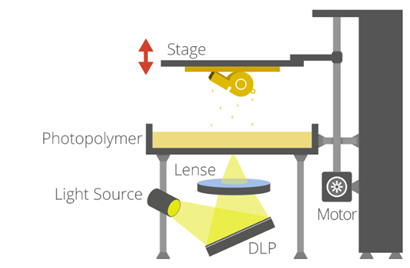
It is, which led to the second family, DLP or digital light processing.
speaker_1HOST
This uses the imaging chip out of a standard projector.
speaker_1HOST
So instead of drawing like a pen, it just flashes an image of the entire layer all at once.