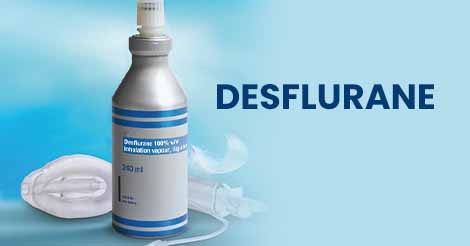
Desflurane
DrugWikipedia
7
MENTIONS
3
EPISODES
3
PODCASTS
Search complete. 7 mentions across 3 episodes found for "Desflurane".
Oct 27, 2026

Abd-Al-Wahab KhawajaGUEST
They mentioned that same World Health Organization statement and the number of the percentage of healthcare system emissions is about the same.
Abd-Al-Wahab KhawajaGUEST
And then they compare Sivoflurane and Desflurane.
Abd-Al-Wahab KhawajaGUEST
And then they give some tips here about things that we can do.
Abd-Al-Wahab KhawajaGUEST
This graph here showed over time in the SHA the decreasing usage of Desflurane.
Abd-Al-Wahab KhawajaGUEST
And this last one was in 2021.
Abd-Al-Wahab KhawajaGUEST
As long as I've been a resident, I think I've seen desflurane used like only once.

ArnieHOST
Lastly, with the PC differences, you have to know the saturated vapor pressure for all of these agents.
ArnieHOST
And the unique one here is Desflurane having an SVP of 669, which means you really can't administer this agent safely without the use of the TEC6 vaporizer.
ArnieHOST
I just realized we said at the start would cover nitrous oxide by itself.
ArnieHOST
So we'll just leave the pharmacodynamic and pharmacokinetics of nitrous oxide till the very end.
8 MINS LATER
ArnieHOST
I think that's a very comprehensive cardiovascular approach.
ArnieHOST
And those are our big three systems covered.
ArnieHOST
So then I'll just quickly go through the other system effects, starting off with the liver, where hepatic blood flow is generally maintained for the agents we use commonly such as Sivoflurane, Desflurane and Isoflurane, mainly because the hepatic arterial buffer response is maintained, but for old school agents like N-flurane and Halothane, there's a decrease in hepatic blood flow, mainly because of a decrease in cardiac output.
ArnieHOST
In terms of renal effects, you get a dose-dependent decrease in renal blood flow, which leads to a decrease in GFR and urine output, but the majority of this effect can be ablated with good pre-op and post-op hydration.

Chloe GHOST
Let's compare some approximate MAC values.
Chloe GHOST
Desflurane has a blood gas coefficient of about zero point four two and a MAC value of approximately six percent.
Chloe GHOST
Sevoflurane has a blood gas coefficient around point six five and a MAC value around two percent.
Chloe GHOST
Isoflurane has a blood gas coefficient around one point four and a MAC value of around one point one five percent.
Chloe GHOST
So these are approximate reference values and MAC changes with patient's age or other physiologic factors.
Chloe GHOST
Now I want you to notice something.
Chloe GHOST
Desflurane has a lower blood gas solubility than isoflurane.
Chloe GHOST
That means that desflurane generally allows faster changes in alveolar anesthetic partial pressure.