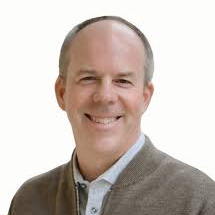
Derek Fredrickson
Derek Fredrickson is Founder & CEO of The COO Solution, which embeds fractional COOs/integrators into scaling businesses; he hosts The COO Solution Podcast.
8
APPEARANCES
8
PODCASTS
Sep 7, 2026

Mitch CarsonHOST
Give me an example of a recent client you are most proud of, that you got involved, you took them from X to Y, and now they're Z-ing.

Derek FredricksonGUEST
I won't use the name, but we work, you know, one of our we work with a lot of business owners that are in the financial services space.
Derek FredricksonGUEST
So wealth management professionals, insurance advisors, you know, investment professionals, et cetera.
Derek FredricksonGUEST
And we worked with somebody we've been working with him from since November.
Derek FredricksonGUEST
Great guy based in Florida, has a very successful business, has been doing it for 20 to 25 years, loves the work.
8 MINS LATER


Mike ConradHOST
What eventually made you decide it was time to stop building exclusively for other people and create something of your own?
Derek FredricksonGUEST
just said listen my zone of genius my lane is is running other people's companies i've done that for 16 years and and i love it and i'm i'm an operator at heart um what i realized is a couple things one uh after you know when my wife and i were working together in her business coaching company and i got to a point where it was running self-management and i didn't need to be involved in the day-to-day basis i stepped out of that and started to offer fractional meaning part-time services as a coo second in command for other companies people would tap me on the shoulder and say, I need a Derek.
Derek FredricksonGUEST
I need somebody to do for my business what you've done for your wife's business.
Derek FredricksonGUEST
How do I scale a multiple seven figure company in terms of the processes and the structures and the accountabilities and the metrics, the team, etc.? ? But as a fractional executive, you can only do so much when it's only yourself.
30 MINS LATER

WalterHOST
So let's talk about the mindset shift that needs to take place and what steps people really should be taking who are in the pipeline, or if you start thinking about wanting to expand and grow beyond self.
Derek FredricksonGUEST
I think a lot of business owners come to the point where they're aware that things may need to change.
Derek FredricksonGUEST
And oftentimes through grit, determination, more work, they kind of persevere.
Derek FredricksonGUEST
They kind of push through it and kind of say, well, this must be what business growth should be.
7 MINS LATER
WalterHOST
it they can do today to start taking a real determined step in the right direction?


Sean WeisbrotHOST
What is the right time for someone to consider bringing in a fractional if they can't afford someone full-time? Yeah, great question.
Derek FredricksonGUEST
In my experience, fractional can work all the way up to about 20 to 25 million in annual revenue.
Derek FredricksonGUEST
Anything above that range, in our experience, the idea of fractional starts to spread too thin.
Derek FredricksonGUEST
um at a starting point i would say at least to be at a million or more right low multiple seven figures i know there's a lot of companies out there that are trying to break that seven figure threshold and we applaud them and celebrate them but they often say i want a coo but in reality you don't really need a coo what you really need is just to do more of what you're already doing maybe you need a online business manager or an ops assistant or you know project manager but for companies that are at low multiple seven figures up to about 20 million fractional works really really well in terms of just the business size in terms of when they may feel like the need is there is usually when they've realized that when they've been trying to grow and scale and it's not been happening fast enough right it kind of feels like they're pushing the the boulder of their business up the hill and it's getting bigger and heavier and it just feels like there's more effort The day-to-day feels more exhausting.
20 MINS LATER
Sean WeisbrotHOST
How heavily do you use AI and do you require all of the fractional CEOs that you employ on behalf of your clients to be involved with AI and

Derek FredricksonGUEST
I've never had a business owner jump out of bed and say, "I can't wait to create systems, structure, and process and accountability." That feels like a box.
Derek FredricksonGUEST
And so with Bob, what we had to realize first, what he had to realize is that there's a mindset shift, and the mindset shift is from owner, from, excuse me, from operator to true owner, from founder-led to operator-led.
14 MINS LATER
Galen LowHOST
I'm just wondering like, wh- what is the most common thing that you notice gets lost in translation that sometimes just goes under the radar and nobody ever really like, calls out?


Duane DeasonHOST
Now, do you use finance generally to track metrics? Do you do that on your own? When is when have you found finance to be an ally? And have you had experiences where in some ways you felt they
Derek FredricksonGUEST
And I want to come back to a story that I'll maybe finish with on that question that I think illustrates to an extent what you're describing.
Derek FredricksonGUEST
You know, there are some companies that we work with where I say the finance seat has ownership.
Derek FredricksonGUEST
What I mean by the finance seat is that whether it's a bookkeeper, a controller, CFO, an accountant, a combination of all of those is their ownership.
Derek FredricksonGUEST
Meaning if the numbers from a finance perspective are off track, can we point to an individual to the team and say, Tim, You're the CFO.
11 MINS LATER


Carl JacobyHOST
Was there any fear in that? What was going on in your mind when you said, okay, I'll make this bold move? Did you do it? uh because you didn't feel any fear did you do it because you felt fear like walk us in that
Derek FredricksonGUEST
moment man um i would be lying if i said there was no fear i mean i'm a guy that's a fairly kind of analytical uh consistent you know risk averse right so i think the idea of makes sense from from corporate into entrepreneurial space is not something that an individual like myself makes those decisions lightly.
Derek FredricksonGUEST
There are a lot of entrepreneurs that are born in the sense that they're high risk takers, they're high idea generators, they're creators, they're visionaries.
Derek FredricksonGUEST
And so it was a very calculated decision that the both of us made together.
Derek FredricksonGUEST
And it came from an opportunity to create what we wanted for our personal lives.
31 MINS LATER
Carl JacobyHOST
Still hasn't fully landed yet, right? But how do you go from not being that person to now you are this person, right? I mean, was there a hack, secret sauce? Did you have to believe it, then start doing it? Or did you just


Derek FredricksonGUEST
I would say what I do, and there's been a few, I think in the beginning, I had a lot of momentum when I launched my company and then we hit this kind of plateau and asked myself, should I have done this, right? Is this what it's going to be? I had very aspirational goals of what I wanted to have in my business, not just in the first year, but I very clearly and strategically mapped out what I call my 10-3-1, my 10-year plan, my three-year target, and my one-year picture.
Derek FredricksonGUEST
And that one-year picture felt like it was going to be longer than one year to get to.
Derek FredricksonGUEST
And so when I reached those plateaus, I think oftentimes, and this is the work that we do with our clients, before we just go and jump in and make another decision, right? Talk and then think about it.
Derek FredricksonGUEST
So I said, you know, maybe why am I choosing to have this experience? Why am I realizing this sense of plateau or kind of status quo, if you will? And I look at, in a couple different ways, you know, What's working? What's good about this, right? Kind of focus on the kind of gratitude aspect of where I've come from and what I've appreciated to get me to this point.
11 MINS LATER
21:42
Do you try to connect them with the right kinds of informal teams that will help them understand how they can be better at what they do?