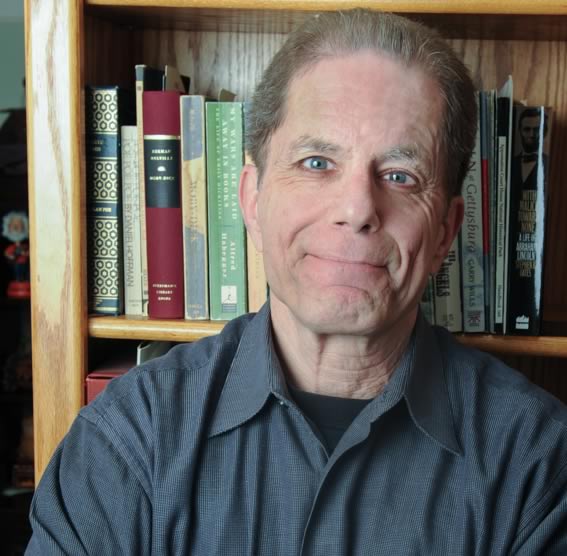
Dennis McNally
Author
15
MENTIONS
10
EPISODES
6
PODCASTS
Search complete. 15 mentions across 10 episodes found for "Dennis McNally".
Sep 26, 2026

Rich BonnifaceNARRATOR
The guy whose idea launched this band, credited as a member, absent from the record.
Rich BonnifaceNARRATOR
And then Dennis McNally described the live-dead era, and this is where the two bands' reality becomes undeniable.
Rich BonnifaceNARRATOR
in effect it was two bands mcnally wrote there was the elite jazz fusion ensemble that could play dark star for half an hour with hardly a vocal bouncing off planets in space dodging or causing cosmic storms in the heavenly spheres of st stephen going back out past pluto for a lengthy foray into eleven beat vibrations in the eleven then gracefully bringing the gleaming titanium spaceship in for a landing and out of the hatch would step mr funk himself a recording studio has no weather in it that is the first thing to get right about the room this part of the story takes place in no window, no season, no way of knowing from inside whether it is four in the afternoon or four in the morning.
Rich BonnifaceNARRATOR
The walls are covered in something soft that swallows a sound before it can come back at you, the floor is carpeted, the air handling runs quietly and constantly, and the temperature never changes, and the only clock anyone is really aware of is the one in the control room, because in a room like that the clock is what the bill is made of.
Rich BonnifaceNARRATOR
The estimate that comes down to us from Bob Matthews is that those sessions alone cost something in the region of $150,000, and that this pushed what the band owed Warner Brothers past $180,000.
Rich BonnifaceNARRATOR
A figure like that is impossible to feel, so it helps to turn it back into the thing it was actually made of, which is ours.
Rich BonnifaceNARRATOR
hundreds and hundreds of hours in a carpeted room with the tape running a part played again and then again and then once more because there was something in the third one worth keeping somebody going out at two in the morning for coffee and coming back with the wrong order reels changed labelled in ball-point stacked on a shelf in the order they were filled a young band discovering that a studio will let you do absolutely anything you can think of which is a wonderful thing to find out and an expensive way to find it out and pigpen is not in the room not for a note of it he does not play on that record anywhere his name is on it printed in the small type where the musicians are listed as ron mckernan pig pen which is a strange thing to hold in your hand once you know credited as a member of a band on an object that contains none of him nobody did that to be cruel that is the part that keeps this from being a story with a villain in it a studio in nineteen sixty eight was a place where you built things in layers slowly piece by piece at a rate per hour and the things being built on that record were exactly the things pigpen had no appetite for building he was not being kept out of a room he was being kept out of an interest and those are different and the second one is much harder to do anything about because there is nobody to ask tom constantine who was the newest man in the band and therefore the one with the clearest eyes put it about as plainly as it can be put it was stated at the time he said the band was two bands depending on whether jerry was fronting it or pigpen was fronting it two bands one stage one van one set of amplifiers one crew one payroll one name on the poster and two entirely separate ideas about what all of it was for standing next to each other every night being perfectly friendly about it it is worth noticing how ordinary that arrangement is two versions of a thing running inside the same building both sincere neither of them wrong one of them getting the budget nobody calls a meeting about it it simply becomes the weather of the place and only years later does anyone say out loud what all of them could see at the time by late nineteen sixty eight only one of those two bands was being built for the future the record was the future one the other one the blues one the one that had actually begun all of this in a music shop and then in a pizza parlor on a wednesday was still there every single night doing something that record could not do and was not trying to do Dennis McNally, writing about that era long afterwards, reached for a spaceship to describe how the two halves sat together, and it turns out to be the only image that works.
Rich BonnifaceNARRATOR
A gleaming titanium ship, out past Pluto, dodging weather that does not exist anywhere near here, and then the long, slow business of bringing it down, and the ground taking its weight, and the hatch coming open.

James JoynerHOST
Voyeuristic images that don't feel invasive, subjects so often caught up in constant motion, her images serve as rare glimpses at the moments in between.
James JoynerHOST
We caught up with Susanna and her husband, former Grateful Dead publicist, author, and historian Dennis McNally, in their home in San Francisco.
James JoynerHOST
Susanna, and this is insane to me, has her very first solo show of photography coming up on October 6th at the St. Joseph's Art Society here in San Francisco.
James JoynerHOST
You should definitely go if you can make it.
Susana MillmanGUEST
I was friends with Diglot Waller of Dick's Picks.
Susana MillmanGUEST
I went over to his house, and he was there with these two guys.
Susana MillmanGUEST
One of them was Dennis McNally.
Susana MillmanGUEST
The other was Paul Grushkin.
Rich BonnifaceNARRATOR
It entrained.
Rich BonnifaceNARRATOR
Dennis McNally described the arrangement's central motion as a slightly unbalanced drive wheel.
Rich BonnifaceNARRATOR
McNally, who watched the Dead play this song more times than most people have eaten a full meal, wasn't being casual.
Rich BonnifaceNARRATOR
He called it a whirring, hypnotic rhythm, entrancing and entraining.
Rich BonnifaceNARRATOR
Entrained.
Rich BonnifaceNARRATOR
As if the song itself became less like a story being told to you and more like a current you simply got pulled into, whether you meant to be or not.
Rich BonnifaceNARRATOR
Dennis McNally, who spent so much of his life close to this band, close enough to watch them play this exact song more times than most of us have sat down to a full meal, described the shape of what Garcia built as a slightly unbalanced drive wheel.
Rich BonnifaceNARRATOR
Picture that image gently, the way you might picture any piece of old machinery, a wheel that isn't quite perfectly round, that wobbles just slightly with every rotation, and because of that tiny imperfection, it never settles into something predictable enough to ignore.
Rich BonnifaceNARRATOR
there's a window that doesn't open and a view of a parking lot and beyond it the low orange glow of a valley town that's it that's what the most famous people in this story were doing while the story was happening ordinary rooms all over that town all night while five blocks of it went strange So the room fills with people who came out of a rock and roll show five blocks away, expecting a party, and instead they walk into somebody's living room, and there's a band in the corner, and there's a machine in the other corner, and no one tells them what to do.
Rich BonnifaceNARRATOR
let's go in the actual audience is harder to count san jose's official account says several hundred people spilled into the street dennis mcnally calls the night not terribly successful because the space was too small for what the pranksters were trying to do Sarah Garcia, Jerry's wife at the time, remembered it as frenetic, people milling around what McNally describes as a terribly loud environment, with the dead playing in too small a room.
Rich BonnifaceNARRATOR
Both descriptions can be true.
Rich BonnifaceNARRATOR
The tactic worked.
Rich BonnifaceNARRATOR
The entire philosophy of the evening is contained in an art object that gives you orders.
Rich BonnifaceNARRATOR
There is no audience for a thing like that.
Rich BonnifaceNARRATOR
you cannot look at it you can only do something to it and when you do the room hears it there are speakers in every corner wired in a loop arrangement so that sound travels around the room rather than coming from a point there are strobe lights roy seaburn's lights washing over the crowd and there is paul foster wrapped head to toe in gauze handing out sugar that people assumed was dosed and which was not that last one might be my favorite detail in the whole story because of what it reveals half the effect of that room was expectation a man in bandages hands you a sugar cube you take it and then for the next hour everything you experience is filtered through your certainty about what you just swallowed and the sugar is just sugar and the room does the rest now put both halves together and stand in the middle the physics of it is the thing a living-room in a victorian house has hard surfaces and low ceilings and no acoustic treatment of any kind plaster walls wood floors right angles everywhere sound in a room like that does not decay gracefully it bounces and the bounces arrive back at your ears milliseconds after the original and when you have two full sound systems and several hundred bodies packed in the reflections stop being separate from the source it becomes one continuous mass of sound with no beginning and no direction phil lesh described the result as a mind-numbing blur of noise and light and heat and then he said the line that does all the work there was no way any one individual could be aware of everything not the band not the pranksters not the man who built the machine or the man who wired the speakers or the man in the gauze nobody in that house had the whole picture everyone was inside a partial experience of the same event which is why there's no reliable account of it and why every description we have contradicts the others slightly and why that's not a failure of the record it's an accurate record of a thing that could not be observed from anywhere Dennis McNally calls the night not terribly successful because the space was too small for what was being attempted.
Rich BonnifaceNARRATOR
Sarah Garcia remembered it as frenetic.

Adam ReaderHOST
It actually happened just before they hit the stage for an engagement at the famed Madison Square Garden.
Adam ReaderHOST
The news was delivered actually by their publicist, Dennis McNally.
Adam ReaderHOST
McNally recalled that when he told the band about the song breaking into the top 10, look at this is what Jerry Garcia said.
Adam ReaderHOST
He responded, I'm appalled.

Eric SaperstonGUEST
those people choose to be extraordinary they choose to live by their principles they choose to put themselves out there they choose to ask for help they choose to to know what they value they choose not to be reactive to things it's all it's all a choice and that choice is accessible to all of us you and me and that's what we do every day is that you know we choose to be our best in any moment and make it make it better leave places people and things better than we found it do you remember what jerry said You know, I got a chance to meet Jerry Garcia and it was so sweet.
Eric SaperstonGUEST
I met Dennis McNally, who you interviewed.
Eric SaperstonGUEST
Yeah.
Eric SaperstonGUEST
And I got invited to go backstage to see him.

Ben MarksGUEST
Lots of people had input.
Ben MarksGUEST
I mean, I worked a lot with Dennis McNally and Susanna Millman and got their feedback and input on a lot of choices that were made.
Ben MarksGUEST
People like Jay Blakesburg and another fellow colleague at Haight Street, Renee DiCosio.
Ben MarksGUEST
You know, she was also really instrumental in, you know, guiding the look.

Kris CollinsHOST
It opened on June 15th at an airfield in Highgate, Vermont, where thousands of people turned up without tickets and pressed against the gates until they were opened.
Kris CollinsHOST
And Dennis McNally, the band's publicist said, quote, they were going to come through the gates no matter what.
Kris CollinsHOST
So they opened the gates and then 10,000 more people were inside than there should have been." And Jerry Garcia, the band's front man and lead guitarist, was in even worse shape than the tour was, with his health failing fast.
Kris CollinsHOST
And by January, McNally had stopped talking about the band's future as a guarantee.
Rich BonnifaceNARRATOR
Jerry's a disaster, and he's about to help tear through one of the most intense years the band ever had.
Rich BonnifaceNARRATOR
So the Dead's publicist Dennis McNally is pushing this 20th anniversary thing.
Rich BonnifaceNARRATOR
20 years so far, they're calling it.
Rich BonnifaceNARRATOR
McNally doesn't just want some ceremonial birthday show.
speaker_0HOST
He was also, according to the band's official biographer, the first of them to get there.
speaker_0HOST
Dennis McNally, in a long strange trip, put it plainly.
speaker_0HOST
Hunter's participation in those 1962 experiments was the first substantial experience any of the Grateful Dead had with psychedelic drugs.
speaker_0HOST
Not first among the hate scene, first among the dead.