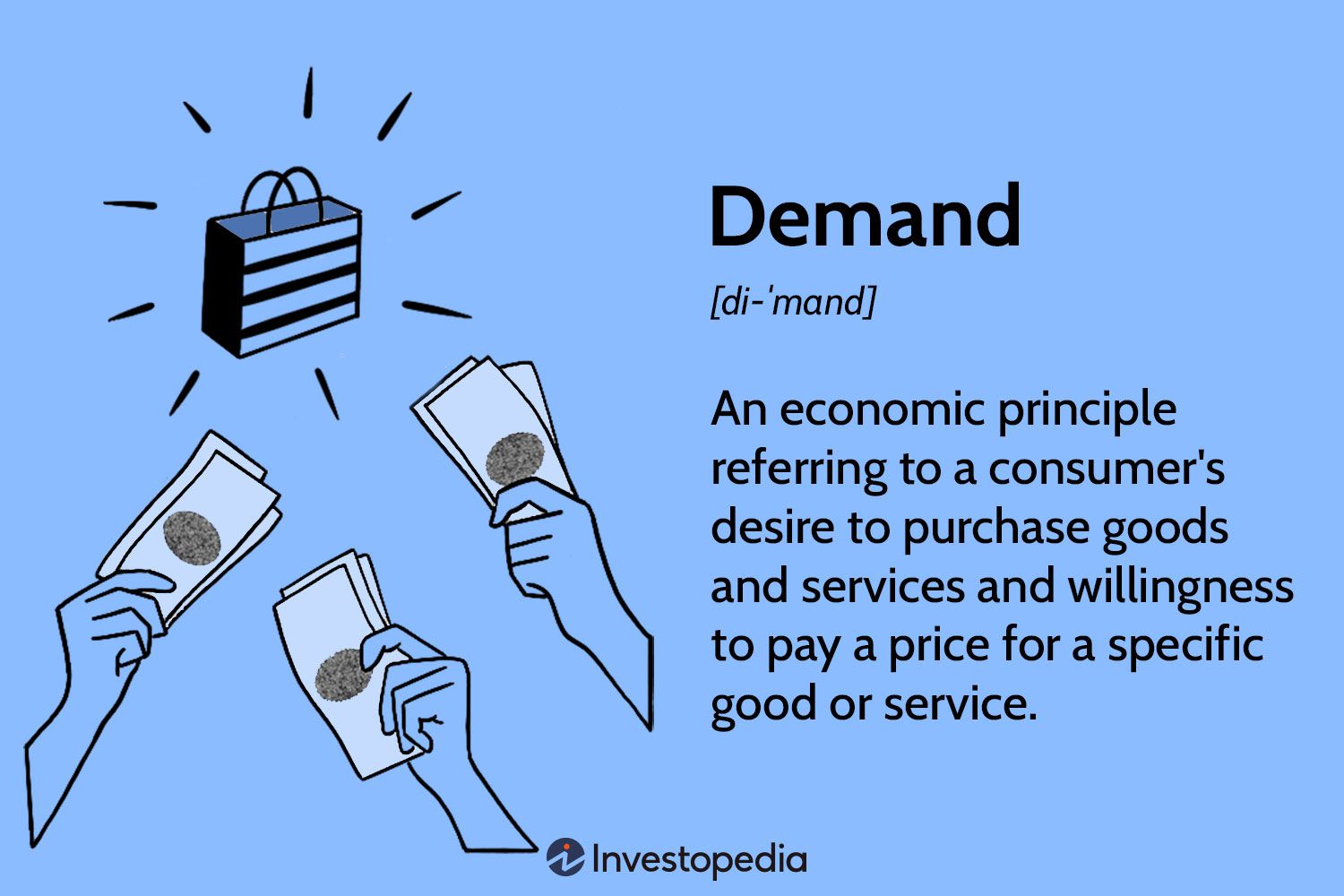
Demand
28
MENTIONS
14
EPISODES
13
PODCASTS
Search complete. 28 mentions across 14 episodes found for "Demand".
Nov 5, 2026

Jamus LimGUEST
Put that as one of the markets that they serve, but crowd out the ability of our local businesses to compete just because they happen to have deeper pockets where they can cross-subsidize with the other parts of their business.
Neil HumphreysHOST
Okay, Jameis, this is Economics 101, Supply and Demand.
Neil HumphreysHOST
When I go to Rivervale Plaza, which I do every single day, I see my Sengkang neighbors queuing up to go into Luckin Coffee.
Neil HumphreysHOST
Nobody's forcing them.

speaker_0NARRATOR
All
David C. BakerHOST
right, Blair, today I'm interviewing you on Demand is the New Supply.
David C. BakerHOST
Now, that's the title that you gave it.
David C. BakerHOST
Did you play with any other title? Like, what's another way to say this?
David C. BakerHOST
And now we have to pay a lot more attention to demand and how that relates to running our businesses.
Blair EnnsHOST
Well, now you've got me thinking, is my headline backwards? Is supply the new demand? No, but what's king here?
David C. BakerHOST
Demand.
Blair EnnsHOST
Yeah, demand.

speaker_4NARRATOR
demand and that a thing can
speaker_5NARRATOR
only be scarce
speaker_2NARRATOR
or abundant according to its demand Demand, once set aside, he assimilates exchange value to scarcity and use value to abundance.
speaker_5NARRATOR
Practically in saying that the things of which the utility is nil and which are extremely scarce will have an inestimable price, he simply says
speaker_7NARRATOR
that exchange value is nothing but scarcity.

Patrick McKenzieHOST
Those peaks include many individual decisions which could, in principle, be shifted.
Patrick McKenzieHOST
Demand response sets up economic, communications, and infrastructure layers to encourage some consumers of electricity to either shift their loads off-peak or to curtail, cease using electricity during peaks.
Patrick McKenzieHOST
This has led to an innovation called virtual power plants.
Patrick McKenzieHOST
Someone, probably in financial engineering, realized there is an economic equivalency between a peaker plant with lots of capex and emissions associated with it and a well-balanced combination of software and contracts.

Piers CurranHOST
It's dot-com bubble, you know, 2.0. There's such a big difference between now and then.
Piers CurranHOST
And actually the key deal, if you go through this fundamentally, well, Demand.
Piers CurranHOST
Is there still demand? What's the demand levels like for all of this stuff? And we know for sure demand is just off the scale.
Piers CurranHOST
And I mean demand right across the spectrum.
Piers CurranHOST
And that's just at the GPU level, right? But then if you think about demand from a consumer and a corporate level, I mean, that's only going up, right? I mean, for sure, we're really probably just at the beginning of that demand cycle.
Piers CurranHOST
So I think from a demand side, The thing about the dot-com bubble, the demand, basically the build-out of the internet and all the infrastructure, just got way ahead of itself compared to the demand.
Piers CurranHOST
Demand was restricted because, well, you needed an internet connection.
Piers CurranHOST
You needed a computer.

Sam ChopraHOST
When a destination becomes nationally visible, new hotels, guest houses, plotted schemes, apartments and the commercial project may all arrive.
Sam ChopraHOST
Demand can grow while individual asset performance disappoints because supply grows faster, the product is wrong or the location does not serve the actual user.
Sam ChopraHOST
So measure both sides.
Sam ChopraHOST
Then make three visits.

Darcy UngaroHOST
The other way to look at it is that inflation comes from too much credit creation that's occurring.
Darcy UngaroHOST
So really, the OCR changes are about fine-tuning demand so that the money supply growth rate occurs at the same pace as the productivity improvement in the economy.
Darcy UngaroHOST
The problem is, if we don't have productivity improvement, all we get is demand destruction every time the OCR increases.
Darcy UngaroHOST
But it does nothing to fix supply shocks or the root cause, which is too much money created in the first place.
Darcy UngaroHOST
See also March of 2020.
Darcy UngaroHOST
Quick disclaimer, please don't take action from... anything discussed in this episode think critically and ideally reach out for some financial advice which this is not let's get started the reserve bank of new zealand lifted the ocr to 2.75 on the 2nd of september another announcement 28th of october The reason why the increase I think was interesting, the RBNZ put it down to oil shock, persistent inflation, presumably from rising economic activity.
Darcy UngaroHOST
But at the same time, we've got this oil shock happening.
Darcy UngaroHOST
And if the official cash rate is at best a demand killer and an oil shock is already squeezing demand, why are we potentially hiking one more time before the end of the year?

Olena DobczanskyHOST
But thank you very much.
Olena DobczanskyHOST
Evolve Lactation presents Supply and Demand.
Olena DobczanskyHOST
Thanks, Christine.
Olena DobczanskyHOST
We'll see you next time.

BenHOST
So a lot of mixed data on the manufacturing side.
BenHOST
I think basically what we heard from Fastenal and some of the other carriers was that Demand had been a little bit more resilient over the last couple of months, and the outlook for holiday demand has improved.
BenHOST
And so they rushed a lot of extra production over the last four weeks or so.
BenHOST
So things have picked up, but that's going to be in pockets of the economy.

Akil StokesHOST
Now, if you want to know more about economics and the relationship between supply and demand, I highly recommend going back and listening to Trading Coach Podcast.
Akil StokesHOST
What is it? It's a title I remember.
Akil StokesHOST
Episode 1101, Supply and Demand for Dummies.
Akil StokesHOST
It's on YouTube as well if you want to check out the video version there.
Akil StokesHOST
It does a great job of breaking down what is probably the most important economic concept.
4 more episodes mention Demand.
Create an account to see the whole feed, search across every transcript, and follow the entities you care about.