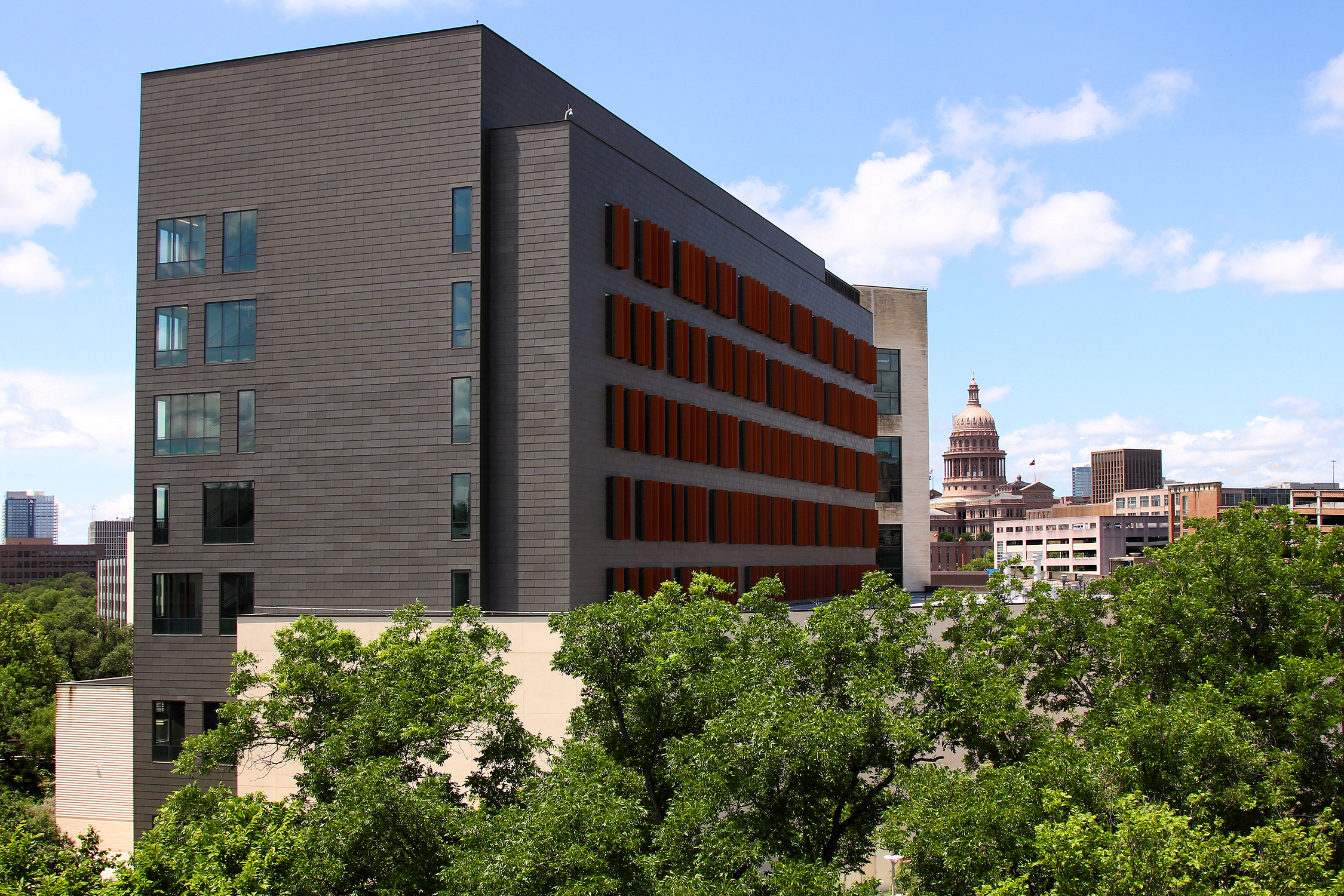
Dell Medical School
Medical school in TexasWikipedia
16
MENTIONS
9
EPISODES
9
PODCASTS
Search complete. 16 mentions across 9 episodes found for "Dell Medical School".
Sep 22, 2026

Jamie HollimanHOST
But first, I'd like to introduce Dr. Esther Melamed.
Jamie HollimanHOST
Dr. Melamed is a board-certified neurologist and associate professor in the Department of Neurology at Dell Medical School.
Jamie HollimanHOST
She completed her dual MD-PhD and neuroimmunology training at UCLA.
Jamie HollimanHOST
and her research focuses on how environmental factors and the immune system intersect in neuroinflammatory disease.

Todd JeffriesHOST
What do you mean? What do you mean? Like what? Like what?
Fred LewisGUEST
Well, they've underwritten Dell Medical School, and the funds have gone to pay for student affairs, medical school, fundraising, public relations, academic faculty support.
Fred LewisGUEST
Not one penny of the 490 million has ever gone to treat one patient.
Fred LewisGUEST
Wow.
Todd JeffriesHOST
and so the
Fred LewisGUEST
year
Todd JeffriesHOST
the the hospital district has been directing what 35 million a year to the ut dell medical school right to create that new hospital 35 that feels like double dipping it it feels like ut can generate their own income to build a to build a hospital right state dollars donations that sort of thing
Fred LewisGUEST
well it is first of all it is double dipping because taxpayers are not only paying for the 35 million for a slush fund to the university of texas until medical school but the medical schools receives tens of millions of dollars from central health taxpayers to actually pay for health care and i don't think anybody has a problem i certainly don't with central health paying for specialty and other medical care from the medical school, it's paying 35 million for what's clearly has nothing to do with healthcare.

Uchenna OssaiGUEST
Well, good job, mom and dad.
Uchenna OssaiGUEST
So, you know, prior to being at University of Utah, I was at Houston Methodist Hospital, Baylor College of Medicine, and most recently, University of Texas Dell Medical School, where we did this, where we educated our residents, our fellows, our med students on these issues so that they can recognize that and understand how it's going to be managed and navigated.
Uchenna OssaiGUEST
Now, that isn't commonplace.
Uchenna OssaiGUEST
So that's actually novel.

Jennifer WallaceHOST
The brain is plastic and healing is possible.
Jennifer WallaceHOST
Today, we're honored to sit down with Dr. Memba Jabi, a leading clinical neuroscientist at Dell Medical School.
Jennifer WallaceHOST
Dr. Jabi's groundbreaking work bridges neurogenetics, brain imaging, and effective neuroscience.
Jennifer WallaceHOST
helping us understand how genes, brain circuits, and trauma shape our emotional lives and how we can heal.
Mbemba JabbiGUEST
Yeah.
Mbemba JabbiGUEST
So you asked if I could say a bit.
Mbemba JabbiGUEST
So yeah, I'm a clinical neuroscientist by training and faculty member at the Dell Medical School, University of Texas at Austin, and leading the neurogenetics, affective neurogenetics laboratory.
Mbemba JabbiGUEST
And my work together with colleagues both in the lab as well as within the research community at Delmet UT and elsewhere are focused on trying to understand in a nutshell the biological basis of how we navigate the complex world around us and how we manage and deal with our emotions as we react to the world around us and how that has implications for both our physical and emotional health as well as well-being.

Justine ParadisGUEST
He goes by Ade.
Justine ParadisGUEST
He is a dermatologist and associate professor in internal medicine at the Dell Medical School at the University of Texas, Austin.
Ade AdamsonSOUNDBITE_SPEAKER
This is why, you know, you go online and you have influencers talking about sunscreens from other parts of the world.
Ade AdamsonSOUNDBITE_SPEAKER
They all have this stuff, and so this is now our opportunity to be able to catch up with the rest of the world as it comes to, you know, modern sunscreens.

Justine ParadisGUEST
He goes by Ade.
Justine ParadisGUEST
He is a dermatologist and associate professor in internal medicine at the Dell Medical School at the University of Texas, Austin.
Adewole AdamsonSOUNDBITE_SPEAKER
This is why, you know, you go online and you have influencers talking about sunscreens from other parts of the world.
Adewole AdamsonSOUNDBITE_SPEAKER
They all have this stuff.

Jim CornallHOST
Last time on the podcast we had conversations with Kareen Kondekanapa, CSO at Vallo Health, and a repeat guest, Cetera Therapeutics CEO Karsten Eastman.
Jim CornallHOST
This week we have two interviews, although three guests, as we chat with Thea Life President and CEO Thomas Ruggia about myopia and And then we have a conversation with Brian McClellan, who conducted research on pancreatic cancer as a postdoctoral fellow at Dell Medical School, and with William Matsui, the study's senior author and former executive vice dean for research at Dell Medical School.
Jim CornallHOST
And both of them are now in the Department of Stem Cell Transplantation and Cellular Therapy at University of Texas MD Anderson Cancer Center.
Jim CornallHOST
if you do have news or suggestions for who should be on the podcast or indeed any other suggestions or comments please do get in touch at jim at deeptechdigest.com which is also the address you can use if you're interested in advertising with us or sponsoring a podcast episode or for event coverage or to discuss places that should change their names First up this week, it's a conversation with Theolife president and CEO, Thomas Ruggia.
25 MINS LATER
Jim CornallHOST
So something that we need to be considering right now.
Jim CornallHOST
Next, we're going to be talking about research on pancreatic cancer.
Jim CornallHOST
with Brian McClellan, who conducted research as a postdoctoral fellow at Dell Medical School, and with William Matsui, the study's senior author and former executive vice dean for research at Dell Medical School.
Jim CornallHOST
Hello to you both, and thanks for coming on the podcast to share the details on your work with us today.

Wendy ZukermanHOST
Is it true that if you have darker skin you're at a lower risk of skin cancer?
Michelle DangHOST
So I talked about this with Dr. Ade Adamson, who's a dermatologist from Dell Medical School at University of Texas Austin.
Wendy ZukermanHOST
Mm.
Michelle DangHOST
And, um, based on Ade's own experiences in the clinic, like with melanoma, he told me...

Alan ColeGUEST
Yeah, great question, great area of focus.
Alan ColeGUEST
In addition to being a social worker at UT, I teach in Dell Medical School and Medical Humanities, and we spend a lot of time on physicians, practitioners being sensitive to the fact that for many people, their entire worldview is organized around or related to their religion or spirituality.
Alan ColeGUEST
So therefore, any experience, including that of illness, has to be integrated in some form or fashion in relationship to those domains of their life.
Alan ColeGUEST
And that's sort of true for me.