Deep tech
154
MENTIONS
18
EPISODES
18
PODCASTS
Search complete. 154 mentions across 18 episodes found for "Deep tech".
Sep 11, 2026

Tyler SellhornHOST
Alexander, welcome to KP Unpacked.
Tyler SellhornHOST
Listeners, Deep Tech has entered the chat.
Alexander GirouxGUEST
Happy to join.
Alexander GirouxGUEST
Love talking about batteries.

Lisa MuccioHOST
She's raising $3 million.
Josh MuccioHOST
Do you remember when we had a dry spell where no deep tech companies had ever gotten funding on our show?
Lisa MuccioHOST
I do remember that vividly.
Lisa MuccioHOST
[laughs]
Lisa MuccioHOST
Yes
Josh MuccioHOST
... which is insane, and that was the moment that I realized [laughs] that you all listening love science.
Josh MuccioHOST
You love deep tech.
Lisa MuccioHOST
Yeah.

Ava OppenheimerGUEST
How can we use technology for good that makes everyone happy and that's quite like a broad term and it's quite a difficult thing to do because I think there's a lot of you know there's people that profit off of fast fashion hence why it's such a big industry but I think there is a world where we can reduce waste and increase profit revenue for these businesses and that was kind of the way I started looking into it.
Claire BelhassineHOST
And what, for someone who doesn't know what deep tech means, like that's your world, your company fits into deep tech.
Claire BelhassineHOST
Can you explain what deep tech actually means? Because I think a lot of the problem with people not really understanding the chain of what happens or how they could help or how they're being manipulated is A, comes from a lot of vocabulary and lack of visibility about what the issues are.
Claire BelhassineHOST
So let's just start with deep tech.
Ava OppenheimerGUEST
What does it mean? I think it's funny because a lot of these words don't actually have clear definitions, which is another reason I think there's this gate-kept nature of people using words and there's not a defined meaning for it.
Ava OppenheimerGUEST
I've spoken to people before that deem deep tech to be really complex hardware.
Ava OppenheimerGUEST
But my definition would more be deep technology is any technology.
Ava OppenheimerGUEST
It doesn't have to be synonymous with AI.

Govindraj EthirajHOST
So what are the larger or other macro or micro signals that you're seeing right now or have seen in the last few months which gives you either encouragement or cause for concern?
Nilesh ShahGUEST
I think one, a lot of encouragement is coming from the way deep manufa- deep tech manufacturing is emerging We are seeing many entrepreneurs in our existing portfolio as well as IPO market, which are globally competitive.
Nilesh ShahGUEST
Uh, I think one big difference which is emerging is that courtesy artificial intelligence, the knowledge gap in doing a research or innovation is getting shrink quite rapidly.
Nilesh ShahGUEST
We have invested in a company where they're aiming for something which globally only two or three people make, and I said, "How will you get the knowledge?" And he said like, "70, 80% I'll get from AI."
Nilesh ShahGUEST
What was a proprietary knowledge in a research laboratory of a company is today available in a artificial intelligent world.
Nilesh ShahGUEST
And balance 23% will work around it.
Nilesh ShahGUEST
So this commitment to deep tech manufacturing excellence, thinking globe as your stage is very, very encouraging.
Nilesh ShahGUEST
What is, uh, worrying me, uh, will we take tough decisions for reform? The land reform, the labor reform, the colonization on deep technology, how will we overcome that? I think that's something which we'll have to keep in mind.

Demetri MaximGUEST
I think the hardest slide is like the what you do, because I think it's easy to say we deliver to the kidney as what we do, but then or the how you do it is what I really am trying to get at.
Demetri MaximGUEST
Like how you do something is the hardest to explain in deep tech in general, I think.
Demetri MaximGUEST
And so I think in the first draft, I didn't even have that at all.
Demetri MaximGUEST
I was like, oh, we just deliver to the kidney.
Demetri MaximGUEST
And it's like, well, like you know you could be making that up like how do you do it right and so like i think that was the hardest part of like the ai piece but like we're not just using software right we're also actually in a lab or like a proper biotech in that sense but like so how do you explain the business model yeah i think business model and then specifically the how of how your product works in deep tech are sort of more difficult in the pharma space maybe like in other deep techs like how you sell is a little more straightforward like oh we make rockets we sell them to the government we sell them to whoever.
Demetri MaximGUEST
But I think with health care, it's just a little bit more nuanced.
Isabel JohannessonHOST
Yeah.
Demetri MaximGUEST
So then I remember that in one of our sessions, you were like, is that a pilot? I was like, yeah, that's exactly what it is.

Matthew BlainGUEST
But these kinds of economic advantages are what we underwrite to.
Matthew BlainGUEST
And when it comes to deep tech and hardware, Voyager was founded with a 50% focus on hardware and deep tech and software.
Matthew BlainGUEST
In the end, we are now about 60-40, skewed towards hardware and deep tech.
Matthew BlainGUEST
I think, although there's a lot of generalist interest in hardware and deep tech at the moment, from some of the and larger, more historic VCs, three, four years ago, very, very few funds were still interested in backing true deep tech.
Matthew BlainGUEST
Now, we are comfortable in making those investments provided we see a return within a venture timeline.
Matthew BlainGUEST
In fact, we actually like it from an IP perspective.
Matthew BlainGUEST
I sit on the board of a brilliant company called Ali, which is AI for manufacturing play focused on food and beverage.
Matthew BlainGUEST
And they will do what they do for food and beverage better than a generalist platform like Claude is ever going to be able to do because it's so verticalized.

Tyler HamiltonGUEST
In fact, in the short term, it's going to create problems because we'll need all this additional electricity to run these data centers.
Tyler HamiltonGUEST
So I would say the secret is to support the hard tech behind clean tech.
Tyler HamiltonGUEST
And there's a reason why the word hard is in that word, because it's much harder.
Tyler HamiltonGUEST
It takes on more risk.

Kris GopalakrishnanGUEST
So if we are able to do that, I believe this will happen.
Rajan NavaniHOST
No, and you know, I think also, Chris, the, you know, the word that we keep talking about is deep tech innovation in India is missing or not happening at this scale.
Kris GopalakrishnanGUEST
Yes.
Rajan NavaniHOST
Because those companies are actually invest- I mean, completely innovating, right? And, and in areas that can, you know, reward the country immensely even over a longer term period.
Rajan NavaniHOST
So that's also an ecosystem play.
Rajan NavaniHOST
So when you use the word deep tech and you look India and the ecosystem today, and again, you know, over a 20 year frame, how, how do you see that evolving and how critical is it?
Kris GopalakrishnanGUEST
It's very, very critical.
Kris GopalakrishnanGUEST
You know, I was very glad when Skyroot, uh, launched Vikram 1.

Matt StaneyHOST
Bold ideas, fresh perspectives, and the strategies you can actually use.
Matt StaneyHOST
Today, I'm really excited to be joined by Evie Rose Dien from Talentful, who has helped scale some of the biggest AI and deep tech companies out there.
Matt StaneyHOST
And we are diving into what it's really like and what it really takes to build those types of teams in these fast-growing, innovative environments.
Matt StaneyHOST
Evie, welcome to the podcast.
Evie Rose-DeighanGUEST
Yeah, so I'm Evie.
Evie Rose-DeighanGUEST
I am a VP of the US.
Evie Rose-DeighanGUEST
I look after our AI and deep tech portfolio.
Evie Rose-DeighanGUEST
I made my start in AI and deep tech in 2019.

Chris ReichhelmHOST
We're on a mission to change that.
Chris ReichhelmHOST
My name is Chris Reichelm, and I'm the founder and CEO of Deep Tech Leaders.
Chris ReichhelmHOST
Each week, we speak with some of the world's leading entrepreneurs, investors, corporates, and policymakers about what it takes to succeed on the lab-to-market journey.
Chris ReichhelmHOST
Join us.
Chris ReichhelmHOST
I want to explore two things on today's podcast.
Chris ReichhelmHOST
Let me set some context first.
Chris ReichhelmHOST
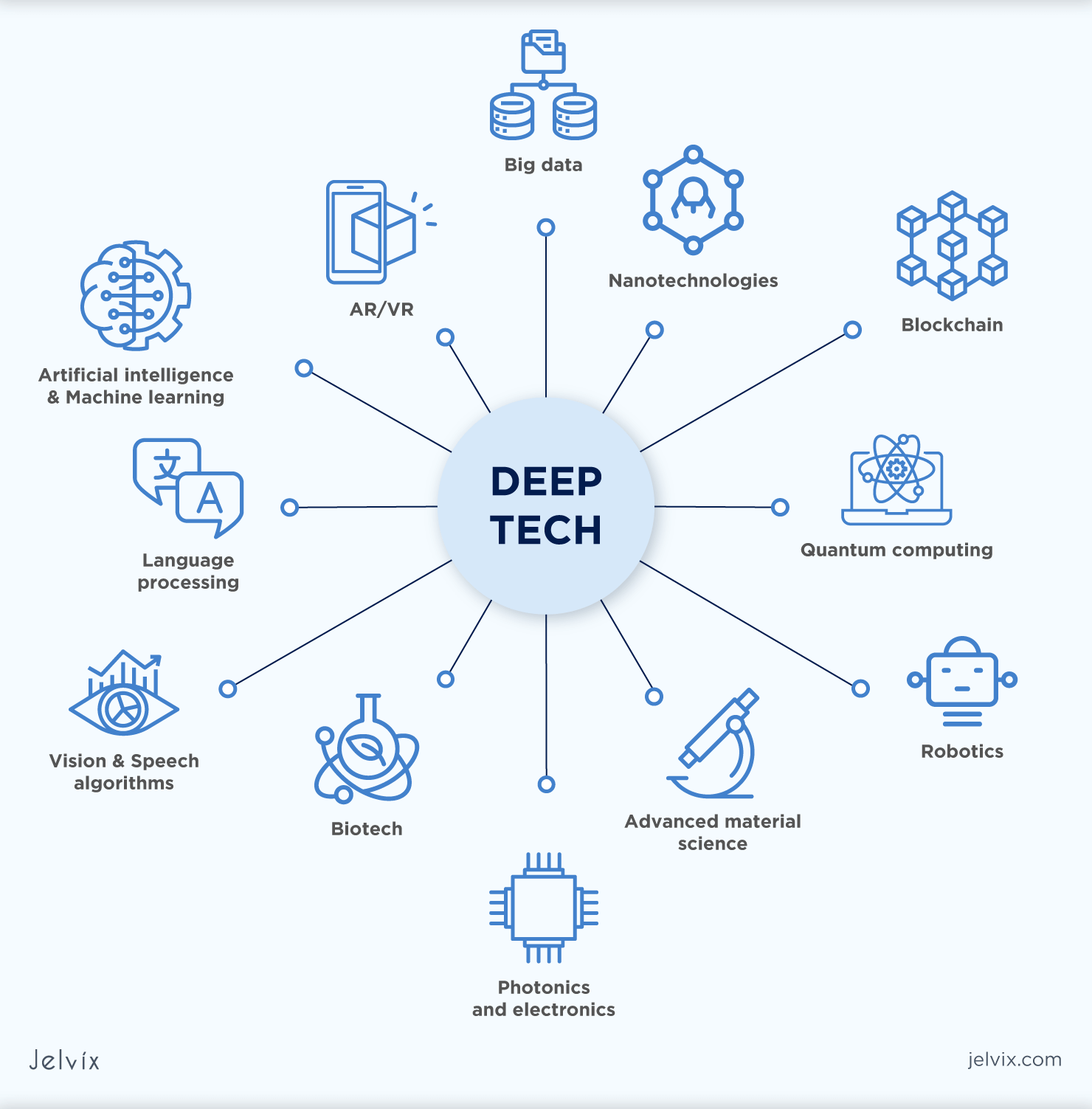
Deep Tech, as we know, is a broad church.
Chris ReichhelmHOST
We've got innovation happening in compute, industrials, health, and medical.
8 more episodes mention Deep tech.
Create an account to see the whole feed, search across every transcript, and follow the entities you care about.