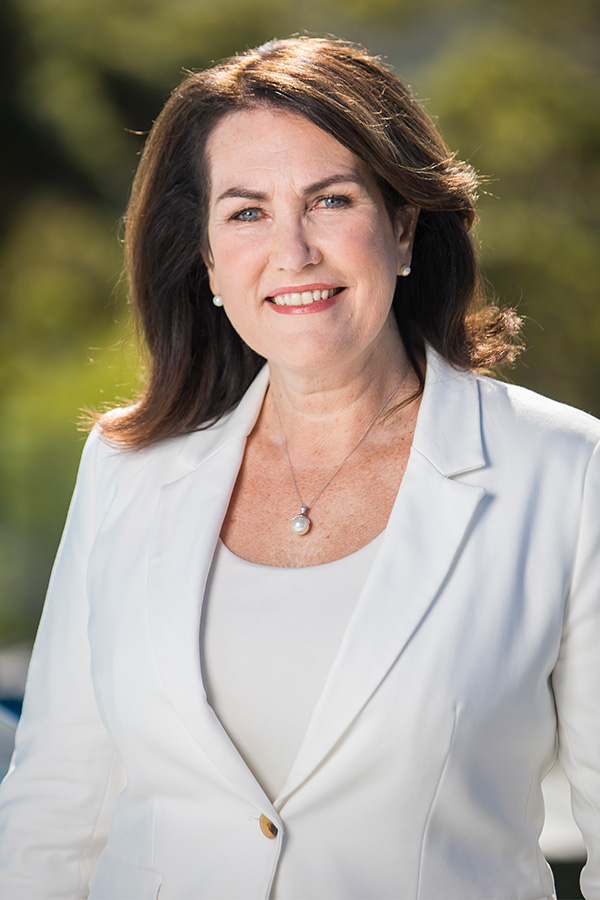
Deborah O'Neill
Senator of Australia
9
APPEARANCES
3
PODCASTS
Aug 13, 2026

Deborah O'NeillGUEST
Well, today we have former partners back to, uh, hopefully be a lot more transparent with the committee this time about things that they denied and tried to cover up.
Deborah O'NeillGUEST
You might recall the last time they were here, uh, both the old team, who were on their way out, now by- joined by a few more, and the new team that were c- well, the, the existing team at the time, all continued to say there was nothing to see here and really tried to, i- in our view, the committee's view, abuse a thing called legal professional privilege to try p- to prevent the committee from having the documents.
Deborah O'NeillGUEST
Ultimately, they saw that s- as a sensible thing to do, and having received the documents, we started to uncover how what they'd presented to us in a document on the 30th of April, which was nothing to see here, just a list of not substantiated, not substantiated responses to the allegations of the whistleblower, became a full-blown revelation of absolutely the whistleblower has been vindicated.
Deborah O'NeillGUEST
And the documently- the documentary trail reveals a very, very tawdry tale of the Office of General Counsel, the most senior legal person in there, using their powers to undertake what was called an investigation, then bringing in, uh, when things got hotter and hotter, Ashurst, the big law firm, and then Allens, the big l- law firm, and purporting to the public, to their clients, and to the general public of Australia, uh, and the Parliament, that what they had done was a series of investigations.

Deborah O'NeillGUEST
Oh, look, that, that's a matter for KPMG, but what I can say is it is, is certainly very, very serious.
Deborah O'NeillGUEST
Uh, we know that Mr. Abeid was operating through this whole saga, um, post the departure of Mr. Baird as the independent chair of the subcommittee that was supposedly overseeing the proper management of the whistleblower, about which so much of our inquiry has, uh, has, has investigated.
Deborah O'NeillGUEST
Um, the, the reality is, though, we have a challenge in this sector, this audit sector, clearly, with a failure to do the right thing, to do the honest thing, to do the professional and ethical thing.
Deborah O'NeillGUEST
Uh, and the problem is that despite the number of people who have had to acknowledge that the whistleblower's information was accurate and the number of heads that have literally rolled and moved out of KPMG Australia, we still have a situation where every partner ... is joint and severally liable for what has gone on.
Deborah O'NeillGUEST
And that's a very different model of what happens when there is a corporate failure, and the CEO and the chair of that, uh, entity can be moved on and a new leadership can come in.
Deborah O'NeillGUEST
Everybody who's leading there, bar Mr. Abid, has been a part of KPMG for a very, very long time already.

Ross GreenwoodHOST
Does that trouble you also that this is a, a much broader thing than just isolated to that audit team?
Ross GreenwoodHOST
Just take me to the types of changes you think might now come as a result of these inquiries that you have led.
Deborah O'NeillGUEST
led.Oh, look, thanks so much for covering this important story, and, uh, uh, I'm glad and sad to be back talking about this issue.
Deborah O'NeillGUEST
Uh, sad because of what's actually been revealed about the contempt, I think, that these partnerships have had for a very long period of time for the Australian public.
Deborah O'NeillGUEST
Um, they've been able to hide their affairs, as you indicated in your opening remarks, and they've also been able to pretend for a really, really long time that they had those critical ethical walls in place.
Deborah O'NeillGUEST
When, when one part of, uh, the partnership, uh, goes in and receives confidential information and then shares it with another part, [laughs] they have breached every single professional code that is fundamental to the trust in this sector.
Ross GreenwoodHOST
Do you get a sense that in the future, those partnership structures will need to be dismantled? The- these businesses could run through a company like any other company could, and therefore there would be oversight of ASIC, there would be better oversight in terms of the taxes paid a- and the profits made from something that is providing a valuable service to our government, uh, departments.

Deborah O'NeillGUEST
So we- we've had KPMG crowing into the public place after PwC about how they had a fantastic speak up culture.
Deborah O'NeillGUEST
In fact, Mr. Yates was in this parliament saying those very words and then, uh, very shortly afterwards, when a whistleblower comes and tries to speak up, it was shut down.
Deborah O'NeillGUEST
Within 24 hours, we found that the whistleblower's, uh, laptop was searched without their permission and within, you know, a month, there was a plan to get rid of this person and to characterize this as a HR issue.
Deborah O'NeillGUEST
Taking confidential information from Lendlease and trying to use that for the benefit of KPMG is hardly a workplace matter.
Deborah O'NeillGUEST
Um, Mr. Shepherd arrived here in the parliament refusing an order of production of documents on which he's relied in the public place.

Sally SaraHOST
Does the government, in your view, need to take steps to increase regulation and accountability of these Big Four firms, including KPMG?
Deborah O'NeillGUEST
So we, we've had KPMG crowing into the public place after PwC about how they had a fantastic speak up culture.
Deborah O'NeillGUEST
And then, uh, very shortly afterwards, when a whistleblower comes and tries to speak up, it was shut down.
Deborah O'NeillGUEST
Within 24 hours, we found that the whistleblower's, uh, laptop was searched without their permission.
Deborah O'NeillGUEST
And within, you know, a month, there was a plan to get rid of this person and to characterize this as a HR issue.
Sally SaraHOST
Does the government, in your view, need to take steps to increase regulation and accountability of these Big Four firms, including KPMG?
Deborah O'NeillGUEST
... huge entity, they have access to all of the documents of any company when they go in to audit.
Deborah O'NeillGUEST
That, that is part of the deal, and involved in that is a currency of trust.
Deborah O'NeillGUEST
What we have seen alleged by the whistleblower, who was finally called a whistleblower by KPMG just on Friday, is a failure to actually have in place proper probity provisions that are necessary for trust in that sector.
Deborah O'NeillGUEST
So, for example, big company like Lendlease, um, this audit company, uh, KPMG, did, did not tell, uh, Lendlease that it had gone in and accessed confidential files that it had no entitlement to access.
Deborah O'NeillGUEST
And I guess if they, a company like P- KPMG can do that to Lendlease, they can do it to anyone.
Deborah O'NeillGUEST
Um, the whistleblower alleges other companies have been treated in a similar fashion.
Sally SaraHOST
Why is this coming up through a whistleblower and the use of parliamentary privilege rather than being caught by regulation and/or enforcement?


Deborah O'NeillGUEST
So whether that's MIT venture mentoringUm, you know, we've, ONE has run programs that have, have been cross-sector, but it's been great to see all the life science community be part of things like, you know, intensive sessions on adopting AI into your business.
Deborah O'NeillGUEST
Um, and even the bus- business fundamentals, not necessarily specific to your sector.
Deborah O'NeillGUEST
Um, having networking sessions where we can connect, you know, startups to IP attorneys.
Deborah O'NeillGUEST
Being on the Foresterhill campus is really important as well for that triple helix, um, environment, being able to connect our companies and our founders with the clinicians who they need to speak to so they're not doing what they're doing, which you still can as a company, um, you know, often too far into your development journey, speak to those clinicians about what's actually needed.
9 MINS LATER
Edward BoydHOST
It is clear that in this case we have let ourselves down and I take accountability." I spoke to Labor Senator Deborah O'Neill a little earlier.
Deborah O'NeillGUEST
Well, the first thing I wanna say is to thank the whistleblower for, um, their persistence and their determination to make sure that these matters came to light in a public way.
Deborah O'NeillGUEST
Um, you have to say that Mr. Yates and, uh, Mr. McPherson have been involved in managing the person who came forward as a whistleblower whose, whose evidence was so compelling that I put it on the record in the Senate, um, under privilege to make sure that it got into the public place.
Deborah O'NeillGUEST
So I, I, I don't know that it's just Mr. Yates and Mr. McPherson who are responsible for the reality of the culture that allowed those, um, incredible behaviors [laughs] that, that are documented in my speech to the Senate and reported to me by the whistleblower.
Deborah O'NeillGUEST
Uh, I, I think this is a cultural problem that goes far wider than the CEO and the head of audit, and I, I don't have any personal animus for either of those gentlemen, and I, I, I wish them well in what comes next.
Deborah O'NeillGUEST
But they have taken, finally, finally taken responsibility, uh, for what was a, a long and protracted period of trying to hush up the whistleblower and to deny using every tool in the trade book, prevent- to prevent that truth about what was going on inside KPMG to come to, come, come into the public place.
Deborah O'NeillGUEST
A- and, and it matters, it really matters, uh, that this is known to people and that change occurs in the audit sector.
Edward BoydHOST
I mean, what's your react- what was your reaction when you first heard about all these allegations from the whistleblower back then?

Deborah O'NeillGUEST
And so we thought, okay, what, what molecules can, can we see that we could potentially introduce as adjuncts to help break that biofilm down even further? And if it is mucolytic at the same time, great.
Deborah O'NeillGUEST
So not really thinking this is a direct therapy, but something with our peptides and what the data showed, uh, completely blew our hypothesis out of the water in that actually, and I'll come on to why we picked cysteamine, which is another great story.
Deborah O'NeillGUEST
What we saw from the data was actually the peptide plus cysteamine mixture was only really additive.
Deborah O'NeillGUEST
You know, it wasn't synergizing, it wasn't really giving us one plus one equals 10, which, which we were going after.