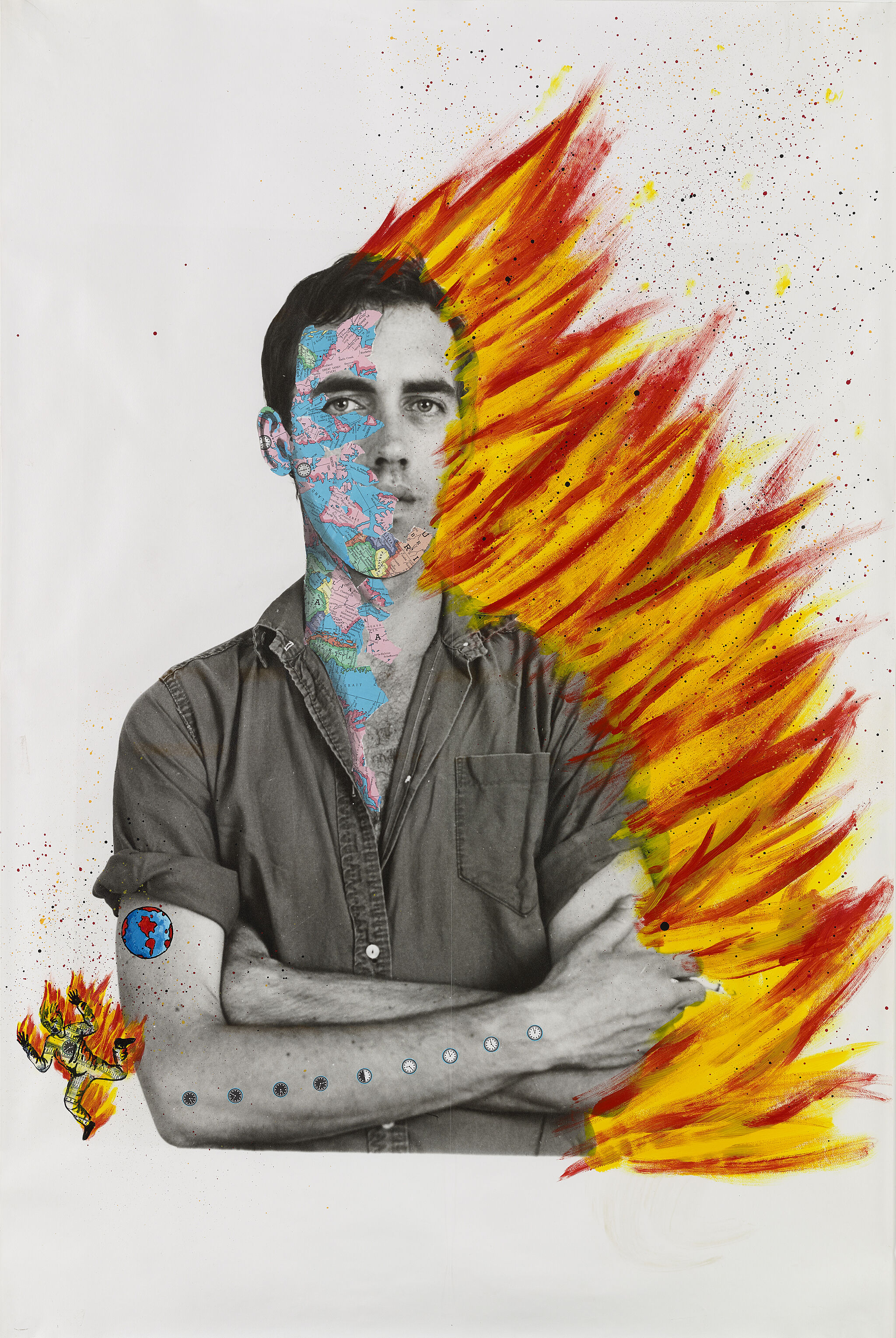
David Wojnarowicz
American painter and photographerWikipedia
48
MENTIONS
15
EPISODES
15
PODCASTS
Search complete. 48 mentions across 15 episodes found for "David Wojnarowicz".
Nov 19, 2026

Peter KuperGUEST
And it's...
Peter KuperGUEST
To see a book come out of what started in the magazine and then it turns into a book, Seven Miles a Second by James Romberger, first appeared, and also David Wojnarowicz, it's his autobiography.
Peter KuperGUEST
Seeing books like that, that ended up getting published by Vertigo, but first appeared in World War III.
Peter KuperGUEST
This is some of the things that we can do in participating in Getting people work virtually.

Davy KnittleGUEST
As I kept working on the project, I became more interested in how an attention to more than human life in the city shows up in queer and trans urbanist writing.
Davy KnittleGUEST
And so I thought about the work of David Wojnarowicz, who I discussed in the book's third chapter, which gave me a kind of hinge between the beginning of the book that's thinking about urban renewal era in New York as it shows up in the work of queer writers, and more recent trans literature about New York City that's really thinking about multi-species life as a way of indexing broader conversations about survival.
Davy KnittleGUEST
And so I had this set of five artists and writers, and I really liked the idea of grouping together people who aren't necessarily thought of as a cohort, but who are all invested in using urbanist tools to understand how planning, design, and policy shape their lives.
Davy KnittleGUEST
And so this group of writers are thought of usually as part of very different groups, very different cultural moments, very different kinds of aesthetic practices, but I think they have something important in common that's really only apparent by reading them together.
Davy KnittleGUEST
They're also a group of writers who are really spanning the range of how well-known they are.
Davy KnittleGUEST
So I'm pairing really canonical queer writers like David Wojnarowicz, differently like James Schuyler, with contemporary writers like Zain Juqadar, who really aren't as well-known.
Davy KnittleGUEST
And I thought that this kind of set of unlikely pairings, this unlikely set of queer and trans urbanists, brought something new to a conversation about what queer studies has to contribute to other fields, including more professional fields.
Miranda MelcherHOST
This idea of the grouping of artists and kind of who to focus on and why is definitely something that comes through kind of throughout the book for a lot of the reasons you just mentioned.

Davy KnittleGUEST
As I kept working on the project, I became more interested in how an attention to more than human life in the city shows up in queer and trans urbanist writing.
Davy KnittleGUEST
And so I thought about the work of David Wojnarowicz, who I discussed in the book's third chapter, which gave me a kind of hinge between the beginning of the book that's thinking about urban renewal era in New York as it shows up in the work of queer writers, and more recent trans literature about New York City that's really thinking about multi-species life as a way of indexing broader conversations about survival.
Davy KnittleGUEST
And so I had this set of five artists and writers, and I really liked the idea of grouping together people who aren't necessarily thought of as a cohort, but who are all invested in using urbanist tools to understand how planning, design, and policy shape their lives.
Davy KnittleGUEST
And so this group of writers are thought of usually as part of very different groups, very different cultural moments, very different kinds of aesthetic practices, but I think they have something important in common that's really only apparent by reading them together.
Davy KnittleGUEST
They're also a group of writers who are really spanning the range of how well known they are.
Davy KnittleGUEST
So I'm pairing really canonical queer writers like David Wojnarowicz, differently like James Schuyler, with contemporary writers like Zain Juqadar, who really aren't as well known.
Davy KnittleGUEST
And I thought that this kind of set of unlikely pairings, this unlikely set of queer and trans urbanists, brought something new to a conversation about what queer studies has to contribute to other fields, including more professional fields.
Miranda MelcherHOST
This idea of the grouping of artists and kind of who to focus on and why is definitely something that comes through kind of throughout the book for a lot of the reasons you just mentioned.

Davy KnittleGUEST
As I kept working on the project, I became more interested in how an attention to more than human life in the city shows up in queer and trans urbanist writing.
Davy KnittleGUEST
And so I thought about the work of David Wojnarowicz, who I discussed in the book's third chapter, which gave me a kind of hinge between the beginning of the book that's thinking about urban renewal era in New York as it shows up in the work of queer writers, and more recent trans literature about New York City that's really thinking about multi-species life as a way of indexing broader conversations about survival.
Davy KnittleGUEST
And so I had this set of five artists and writers, and I really liked the idea of grouping together people who aren't necessarily thought of as a cohort, but who are all invested in using urbanist tools to understand how planning, design, and policy shape their lives.
Davy KnittleGUEST
And so this group of writers are thought of usually as part of very different groups, very different cultural moments, very different kinds of aesthetic practices, but I think they have something important in common that's really only apparent by reading them together.
Davy KnittleGUEST
They're also a group of writers who are really spanning the range of how well-known they are.
Davy KnittleGUEST
So I'm pairing really canonical queer writers like David Wojnarowicz, differently like James Schuyler, with contemporary writers like Zain Juqadar, who really aren't as well-known.
Davy KnittleGUEST
And I thought that this kind of set of unlikely pairings, this unlikely set of queer and trans urbanists, brought something new to a conversation about what queer studies has to contribute to other fields, including more professional fields.
Miranda MelcherHOST
This idea of the grouping of artists and kind of who to focus on and why is definitely something that comes through kind of throughout the book for a lot of the reasons you just mentioned.

Davy KnittleGUEST
As I kept working on the project, I became more interested in how an attention to more than human life in the city shows up in queer and trans urbanist writing.
Davy KnittleGUEST
And so I thought about the work of David Wojnarowicz, who I discussed in the book's third chapter, which gave me a kind of hinge between the beginning of the book that's thinking about urban renewal era in New York as it shows up in the work of queer writers, and more recent trans literature about New York City that's really thinking about multi-species life as a way of indexing broader conversations about survival.
Davy KnittleGUEST
And so I had this set of five artists and writers, and I really liked the idea of grouping together people who aren't necessarily thought of as a cohort, but who are all invested in using urbanist tools to understand how planning, design, and policy shape their lives.
Davy KnittleGUEST
And so this group of writers are thought of usually as part of very different groups, very different cultural moments, very different kinds of aesthetic practices, but I think they have something important in common that's really only apparent by reading them together.
Davy KnittleGUEST
They're also a group of writers who are really spanning the range of how well known they are.
Davy KnittleGUEST
So I'm pairing really canonical queer writers like David Wojnarowicz, differently like James Schuyler, with contemporary writers like Zain Juqadar, who really aren't as well known.
Davy KnittleGUEST
And I thought that this kind of set of unlikely pairings, this unlikely set of queer and trans urbanists, brought something new to a conversation about what queer studies has to contribute to other fields, including more professional fields.
Miranda MelcherHOST
This idea of the grouping of artists and kind of who to focus on and why is definitely something that comes through kind of throughout the book for a lot of the reasons you just mentioned.

Davy KnittleGUEST
As I kept working on the project, I became more interested in how an attention to more than human life in the city shows up in queer and trans urbanist writing.
Davy KnittleGUEST
And so I thought about the work of David Wojnarowicz, who I discussed in the book's third chapter, which gave me a kind of hinge between the beginning of the book that's thinking about urban renewal era in New York as it shows up in the work of queer writers, and more recent trans literature about New York City that's really thinking about multi-species life as a way of indexing broader conversations about survival.
Davy KnittleGUEST
And so I had this set of five artists and writers, and I really liked the idea of grouping together people who aren't necessarily thought of as a cohort, but who are all invested in using urbanist tools to understand how planning, design, and policy shape their lives.
Davy KnittleGUEST
And so this group of writers are thought of usually as part of very different groups, very different cultural moments, very different kinds of aesthetic practices, but I think they have something important in common that's really only apparent by reading them together.
Davy KnittleGUEST
They're also a group of writers who are really spanning the range of how well-known they are.
Davy KnittleGUEST
So I'm pairing really canonical queer writers like David Wojnarowicz, differently like James Schuyler, with contemporary writers like Zain Juqadar, who really aren't as well-known.
Davy KnittleGUEST
And I thought that this kind of set of unlikely pairings, this unlikely set of queer and trans urbanists, brought something new to a conversation about what queer studies has to contribute to other fields, including more professional fields.
Miranda MelcherHOST
This idea of the grouping of artists and kind of who to focus on and why is definitely something that comes through kind of throughout the book for a lot of the reasons you just mentioned.

speaker_0NARRATOR
Volunteer readers include artists, activists, leaders from citywide AIDS service organizations including Callen-Lorde, Visual AIDS, Prep for All, the Save HIV Funding Campaign, and Planned Parenthood of Greater New York Project Street Beat and elected officials, including Manhattan Borough President Brad Hoylman Seigel, New York State Senator Eric Botshear, New York State Assembly Members Linda Rosenthal and Tony Simone, and New York City Council Member Carl Wilson.
speaker_0NARRATOR
Beginning at 5 p.m., Jenny Holzer's artworks will appear on mobile LED trucks in Times Square, displaying texts on love, loss, and anger from artists, writers, and poets such as Cookie Mueller, David Wojnarowicz, Robert Gluck, Harvey Giebert, Ricardo Hernandez, Eileen Miles, Stephen Andrews, Emily Dickinson, C.A. Conrad, Derek Jarman, and Noel Cowart.
speaker_0NARRATOR
From 6 to 7 p.m., Tony, Olivier, Emmy, Drama Desk, and Outer Critics Circle award-winning director and choreographer Rob Ashford will direct We Remember, a major public performance featuring a choir of Broadway performers.
speaker_0NARRATOR
Acclaimed actor and director Tony Goldwyn will co-host this special moment with renowned multi-hyphenate performer Julianne Hoff, guiding an hour of music and words celebrating the lives, artistry, and resilience of those lost to the epidemic.

Davy KnittleGUEST
So the five chapters are single author chapters.
Davy KnittleGUEST
They focus on, in chronological order, the New York school poet, James Schuyler, the Black feminist writer, June Jordan, the AIDS activist and multi-genre cultural producer, often thought of as an artist, David Wojnarowicz, Julian Talamantes-Brolasky, who is a trans and two-spirit poet who wrote a collection called Gowanus Atropolis in 2011 about their relationship to thinking about the toxicity of the Gowanus Canal in the 2000s.
Davy KnittleGUEST
And then Zayn Jukadar's wonderful 2020 novel, The Thirty Names of Night.
Davy KnittleGUEST
Those are the main texts I'm thinking about over the arc of the book.

Hanya YanagiharaGUEST
And, you know, I – I mean, I have to say – well, this is the second biggest fight was the cover, and this went on for months.
Hanya YanagiharaGUEST
And I was looking kind of – I was kind of thinking about what I wanted to do with this cover – And Jared said, well, what about Peter Hujar? So Peter Hujar, the photographer who took this image, was a contemporary in the 70s and 80s of, you know, Robert Mapplethorpe, of Keith Haring, Chen Kuang-Chi, David Wojnarowicz.
Hanya YanagiharaGUEST
He was part of the sort of East Village, Nan Golden crowd of photographers and visual artists.
Hanya YanagiharaGUEST
And this picture is called Orgasmic Man.
5 more episodes mention David Wojnarowicz.
Create an account to see the whole feed, search across every transcript, and follow the entities you care about.