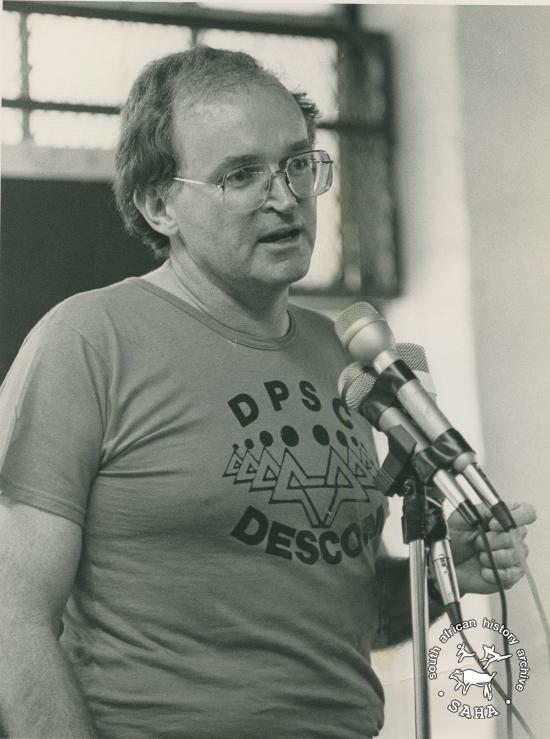
David Webster
South African anthropologist
5
APPEARANCES
4
PODCASTS
Aug 7, 2026


Adrian WilcoxGUEST
So we'll see how it goes, but from my perspective, it is about bringing the team along with you and you know it can drag them to the water you can't make them drink so so that that piece about encouraging them to you know ask questions want to learn uh because everything in our job is about learning to do things better and and because we've got to we've
David WebsterGUEST
got to make as many efficiencies as we possibly can in our farming operations because
30 MINS LATER

Sarah BlackwellHOST
So what gives you confidence about the direction of travel and how can Leaf best support you?
David WebsterGUEST
First thing I would say is just how incredibly positive it is listening to all the comments that have been sent around the table.
David WebsterGUEST
And it's not just the comments which I'm hearing here, it's the conversations I'm having in farmers when I've been out and about.
David WebsterGUEST
And I can tell you the number of people, Ian, who have mentioned that course and what an impact that's had.

David WebsterGUEST
So the couloir I'm skiing there in that video, the Jaeger Couloir, I think that is technically the steepest thing that I've skied in terms of sustained gradient.
David WebsterGUEST
That averages about 55 degrees if you believe the guidebook, which is- Very extreme on the scale of extreme skiing.
David WebsterGUEST
But thankfully when I was doing it, the snow was pretty friendly in terms of skiing down.
David WebsterGUEST
It was very hard work on the climb up, but it was powdery, at least on one side of the couloir, which always makes things nicer when you're trying to ski very steep things.
David WebsterGUEST
Probably the most extreme experience I've had, I think, would be the Col de Plan, North Couloir, where you're skiing off the north face of the Aiguille du Midi into the void almost, off of the Midi Arete.
David WebsterGUEST
Similar to if you're doing the Mallory Porter but a bit further along to skier's right along the ridge.
6 MINS LATER


David WebsterGUEST
It's a very unfiltered, "Hey, why wouldn't we get excited about this?" kind of vibe.
David WebsterGUEST
And when Sean came to IDEO, I had just changed role to leading our Palo Alto studio, and we had done what we could to express our creative culture in our space.

Sean DuffyGUEST
Like, actually, we think you and Adrian should, like, run this thing." You know, Adrian, who ran medical products.

Iain MartinHOST
Would you say that you've seen changes in the Vallee Blanche due to climate change on the Mer de Glace, you know, during that time?
David WebsterGUEST
Every single season you can really s- notice the difference the first time you come down how much the glacier has receded.
David WebsterGUEST
Not just the glacier r- retreat, which is very shocking and very obvious as you're down in the lower p- lower portion on, on the Mer de Glace, but even up on the mountain.


Oz WoloshynHOST
I mean, when, when, when does Science Suite and, and this foothills of the singularity lead to radically better outcomes in terms of health potentially?
David WebsterGUEST
So Science Suite is this set of tools that Google Labs, our group, has been working on in collaboration with Google DeepMind, Google Research and Google Cloud that, uh, massively enhance scientists' ability to do their kind of creativity, which is a sort of inquisitive kind of creativity.
David WebsterGUEST
And in particular, within the Science Suite, what we've been working on are, are, are three different applications o-o-of the models.