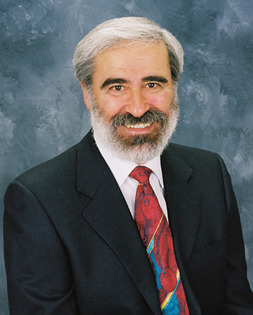
David Schnarch
American therapistWikipedia
12
MENTIONS
9
EPISODES
9
PODCASTS
Search complete. 12 mentions across 9 episodes found for "David Schnarch".
Oct 20, 2026

Jennifer Finlayson-FifeGUEST
Well, then you have another hurdle around this because being sexual... having pleasure can be pretty deeply connected to the experience of an erosion of self.
Jennifer Finlayson-FifeGUEST
And so as Dr. Schnarch would often say, we want to belong to ourselves more than we want to be sexual.
Jennifer Finlayson-FifeGUEST
This is true for men and women.
Jennifer Finlayson-FifeGUEST
But if you think being sexual is a threat to your integrity of self or to your sense of who you are or your sense of safety, often sexual desire is the first to go.

Amanda LouderHOST
When closeness tips over into emotional fusion, desire can drop off.
Amanda LouderHOST
So emotional fusion is a term out of Murray Bowen's family systems work and Dr. David Schnarch, who wrote Passionate Marriage, built much of his thinking about marriage and sex around it.
Amanda LouderHOST
It means the two of you have blended so completely that there's not much of a separate person left on each side.
Amanda LouderHOST
You share every opinion.

Kendra HarveyHOST
Yeah.
Adrian HarveyGUEST
Well, and it's also David Schnarch.
Adrian HarveyGUEST
You know, his differentiation theories of how you have to be independently confident and, and secure in yourself, and you have your own self identity, um, and that only then can you have intimacy in a relationship.
Kendra HarveyHOST
There was the marriage before that, and then there's kind of the marriage after.
Adrian HarveyGUEST
There wasn't this, um, just intimacy, uh, uh, in, in who we were.
Adrian HarveyGUEST
So...
Kendra HarveyHOST
You, you mentioned David Schnarch.
Kendra HarveyHOST
Was that-

Alexandra KatehakisGUEST
But that was really the driving force between my interest, um, you know, in human sexuality.
Alexandra KatehakisGUEST
And then when I got to graduate school, I read, uh, David Schnarch's stunning book called Constructing the Sexual Crucible, uh, which I imagine you're aware of, and that book just turned my life upside down.
Jeff AlbaughHOST
Mm.
Alexandra KatehakisGUEST
I was so moved by that book, and while I didn't fully understand all of it, it really resonated as true for me.
Jeff AlbaughHOST
Um, but you certainly have to redefine it in a lot of different ways.
Jeff AlbaughHOST
So, um, I just don't want-
Alexandra KatehakisGUEST
Well, I mean, one of the things David Schnarch left us with was that he believed that we had the best sex of our lives in our 50s and 60s.
Jeff AlbaughHOST
Mm-hmm.

Catherine RoebuckHOST
... things."
Jackie AstonHOST
Yes, and there's a brightening that comes with that, that term Dr. Schnarch uses-
Catherine RoebuckHOST
Mm-hmm
Jackie AstonHOST
... where it's like you don't feel great because everything's going so smoothly, but you feel brighter, lighter because you can handle it well, and you've gotten to that place 'cause you've worked through it.

EmmaHOST
Differentiation is what makes deep intimacy possible.
EmmaHOST
The psychologist David Schnarch built much of his work on this, and he put it bluntly: "What we often call intimacy is really our wish for someone else to make us feel acceptable and worthwhile." He argued that we have to develop and validate ourselves first, and only then can we experience the closeness we actually want, because intimacy built on fear and neediness can never actually fulfill us.
EmmaHOST
When you can self-regulate, processing your own feelings before you bring them to someone, conflict stops escalating into shared crisis.
EmmaHOST
When you can hold a boundary, the other person finally gets to meet the real you instead of the accommodating, fawning version.

Vanessa BennettHOST
It sounds good, and then it doesn't translate, right? There's nothing tangible.
Vanessa BennettHOST
There's a psychologist I researched, David Schnarch.
Vanessa BennettHOST
In his work on differentiation in relationship, he made an argument that runs, I think, counter to what maybe most couples therapy says, which is, like, the goal of less friction.
Vanessa BennettHOST
No, the goal is more Self, capital S.

Corey AllanHOST
Because here's, here's the differentiation model which I love thoroughly and have been trained in m- a majority of my career.
Corey AllanHOST
The focus in the differentiation world, particularly as it pertains to Dr. Schnarch's training-
PamHOST
Yeah
Corey AllanHOST
... is it's on health and growth rather than pathology and clinical labels.

Carl MorrisHOST
You're always gonna be de- denied the access to your full repertoire of skills.
Jeff HallerGUEST
David Schnarch wrote a book called Passionate Marriage, and he talks about this crucible for learning.
Jeff HallerGUEST
And but there's, there's an image that he makes of, of a person who has a particular power within themselves that wants to escape their historic gravitational field.
Carl MorrisHOST
Right.