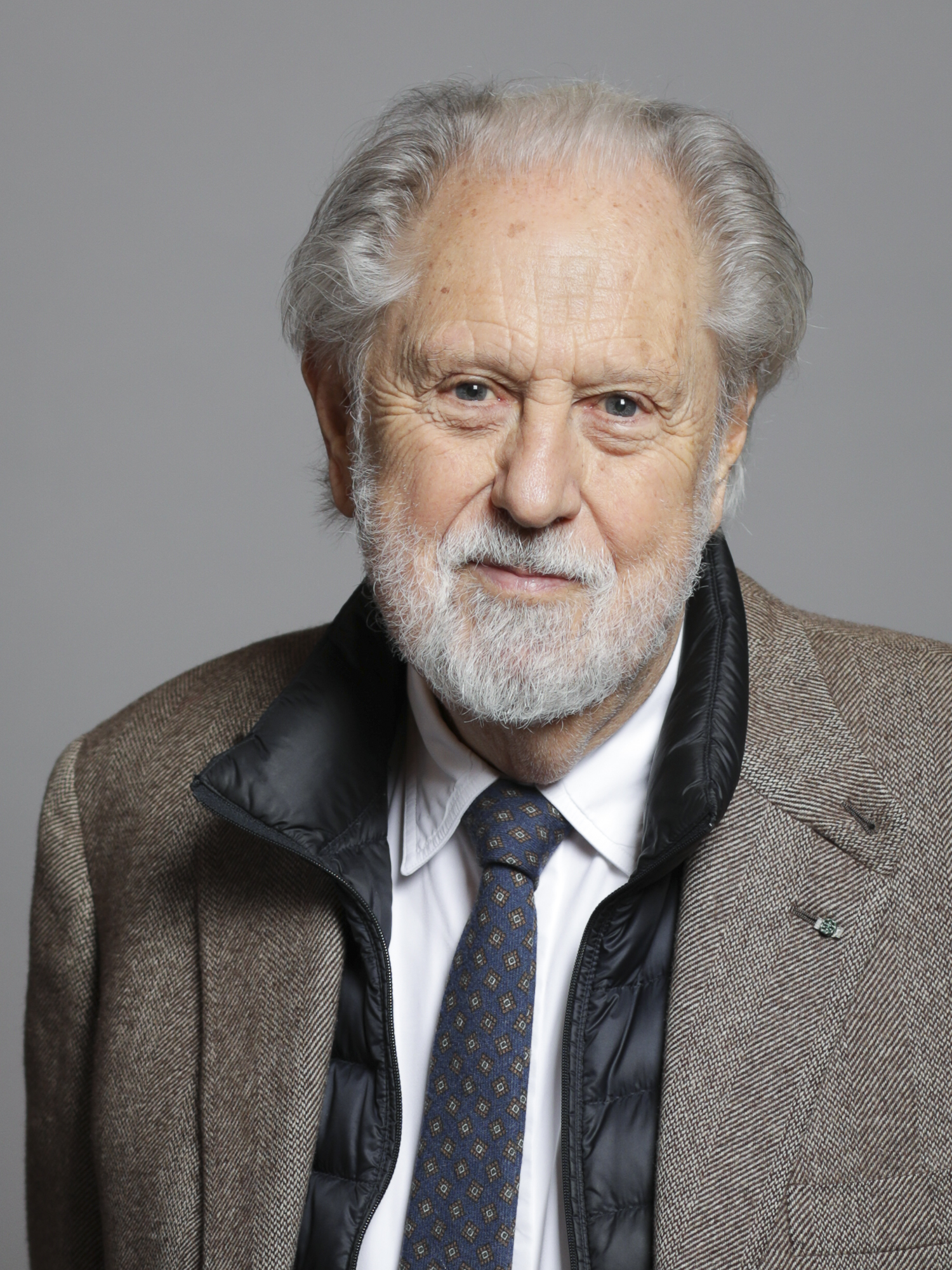
David Puttnam
British film producer and educatorWikipedia
11
MENTIONS
7
EPISODES
7
PODCASTS
Search complete. 11 mentions across 7 episodes found for "David Puttnam".
Sep 24, 2026

David HughesHOST
The worm in question being shoe leather tabloid journalist Nick Mullen, played brilliantly by Gabriel Byrne, who breaks a big story about a former left-wing MP with alleged links to the KGB, only to suspect that he's been played and that there's more to the matter than meets the eye.
David HughesHOST
Huge thanks to Martin for rewatching the film for the first time in decades, and walking us through the development of the story with director David Drury and producer David Puttnam.
David HughesHOST
Thanks also to the National Film and Television School for hosting the recording.
David HughesHOST
There are spoilers a-plenty, so if you haven't seen it, be sure to track down the film before you dig in.
59 MINS LATER
David HughesHOST
Um, so, uh, yeah, no, this is kind of, kind of nice stuff there.
David HughesHOST
And actually, I felt like the, um, again, that Greta Scacchi's character, Nina, might have been, uh, a residual...
David HughesHOST
Oh, there, and you can see David and, you, uh, David Puttnam and you in the apartment.
David HughesHOST
This is the view from Linda's, uh, apartment [laughs] on the other side.

Scott MasonHOST
So Frank, let's talk about everything that went into making this movie to begin with before we get into the nuts and bolts of the plot.
Scott MasonHOST
Producer David Puttnam was looking for a story in the mold of A Man for All Seasons regarding someone who follows his conscience and felt that sport provided clear situations in this sense.
Scott MasonHOST
He discovered Eric Liddell's story by accident in 1977 when he happened upon An Approved History of the Olympic Games, a reference book on the Olympics, while he was home with the flu in a rented house in Malibu.
Scott MasonHOST
Screenwriter Colin Welland, commissioned by Puttnam, did an enormous amount of research for his Academy Award-winning script.
Scott MasonHOST
Huge Ian Holm fan.
Scott MasonHOST
I thought he was terrific in The Homecoming, and I also thought he was terrific many years after Chariots of Fire in the lead role of The Sweet Hereafter.
Scott MasonHOST
Hudson and producer David Puttnam did months of fruitless searching for the perfect actor to play Eric Liddell.
Scott MasonHOST
They then saw Scottish stage actor Ian Charleson performing the role of Pierre in the Royal Shakespeare Company's production, Pee-off, and knew immediately they had found their man.

Adam ReaderHOST
He played a working class rocker in pre-Beatles England and wanted to track for the film's closing moments.
Adam ReaderHOST
But the film producer, a guy named David Putnam, he thought its dark, sparse arrangement was just too weird and he turned it down for the climax.
Adam ReaderHOST
Hi, McClane.
Adam ReaderHOST
How you doing? David didn't care.

MauriceHOST
The second film stars David Essex, Adam Faith, Larry Hagman, Marty Wilde, Keith Moon, Dave Edmunds, and Paul Nicholas.
MauriceHOST
The producer of the first film and the second film was a fellow called David Puttnam, who went on to have something of a incredible career to say the least.
MauriceHOST
So I should just preface this by saying that Scott's covered this film before on Real Britannia, and I covered this film back in 2013 with our very good friend Dr. Zomb on the Love That Album podcast.
MauriceHOST
But I thought it was about time that this particular crew got together to talk about this film for Real Britannia/See Here.
22 MINS LATER
Scott PhippsGUEST
What's interesting as well, Maurice, is although this probably was a basis, you know, the basis of this movie was something to do with Harry Nilsson and 1941, originally, Tim might know this, I don't know, there was a Canadian TV company that wanted to promote a 40-track compilation of 1950s rock 'n' roll hits, and they needed a movie to base around it I mean, I don't know if that's, that, that sounds so fantastical if that's the case
TimHOST
It could have been K-Tel
MauriceHOST
There was a company, I, I read up about this in the Ray Connolly essay, where he said there's a company called Ronco, and while David Puttnam was trying to get the funds to get That'll Be the Day made, it was partly financed, I can't remember by which film company, but he got some of the financing from Ronco, who said, "If you go and use songs from our back catalog, then we'll put up £200,000."
TimHOST
Now, this is gonna sound weird, but there was a guy named Ron Popeil.

Stuart WrightHOST
I didn't know this.
Stuart WrightHOST
Producer Dave Putnam used the song by Harry Nielsen, 1941, and got the screenwriter Ray Connolly in to create a screenplay based on it.
Stuart WrightHOST
And that became That'll Be the Day.
Stuart WrightHOST
replacing the funfair, sorry, funfair substitutes the circus in the song, apparently.

Edgar Bronfman Jr.GUEST
Uh, and I, uh, met a lot of wonderful people there.
Edgar Bronfman Jr.GUEST
It happened to have been David Puttnam was the producer.
Edgar Bronfman Jr.GUEST
It was his first movie.
Edgar Bronfman Jr.GUEST
Alan Parker was the writer.
Edgar Bronfman Jr.GUEST
It was his first movie.
Edgar Bronfman Jr.GUEST
Uh, and, a-and there were just so many great people a-around, and I said, "You know, that's...
Edgar Bronfman Jr.GUEST
I think that's, this is what I wanna do." Uh, and David Puttnam was kind enough to invite me back the next summer, he was shooting another movie, to be, quote-unquote, his assistant.
Edgar Bronfman Jr.GUEST
And it was just instead of being a gopher for everyone, I was really just a gopher for David.

John KirkHOST
For all the second-site releases, we get the same on discontent, so whether you get limited edition or not.
John KirkHOST
So it's got a new Goldcrest Films 4K restoration from the original Camera Negative, audio commentary with the director, which I think is archival, new interviews with the director, producer David Putnam and writer Bruce Robinson, a lesson interview with the late actor Julian Sands, an archive interview with Putnam, and deleted scenes.
John KirkHOST
Now, we're closing our deep dive with Arrow, because Arrow's sub-label, Steve, is finally launching Toy Robot Video.
John KirkHOST
So it's technically a two-label.