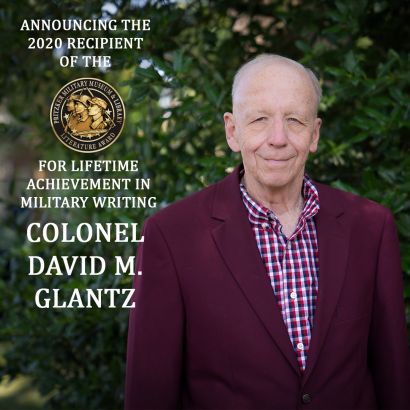
David M. Glantz
American military historianWikipedia
5
MENTIONS
4
EPISODES
4
PODCASTS
Search complete. 5 mentions across 4 episodes found for "David M. Glantz".
Oct 21, 2026

Simon WaringGUEST
So it was two offensive operations in October film.
Simon WaringGUEST
There was also a very messy airborne component that David Glantz actually touches on in his volume on Soviet airborne operations.
Simon WaringGUEST
But nevertheless, the October offensives fail and Vatutin, who had experienced operational setbacks in his military career earlier in the year, who had actually advocated for an aggressive Soviet posture in the summer of 1943, yet a person who Stalin allowed to stay on in a front-level command position.
Simon WaringGUEST
He and his staff develop a concept of switching the point of main effort from Bukrin and secretly repositioning forces in that Lutej bridgehead this very small, very, very small swampy area north of Kyiv, and using that as the staging point for this third and ultimately successful Kyiv offensive operation.

Craig WatsonHOST
Instead, both advanced alternative proposals based on their understanding of the actual situation on the ground.
Craig WatsonHOST
According to historian David Glantz, Eremenko's alternative plan would eventually form the conceptual basis for Operation Uranus, the strategic masterpiece that would encircle and destroy the Sixth Army.
Craig WatsonHOST
Yet at this moment in early October, neither alternative was accepted.
Craig WatsonHOST
Instead, Rokossovsky was pressured to restart the Kotluban offensive, the very operation he had warned against.

Jesse AlexanderHOST
However, independent of that public discussion, there's been a lot of historians writing away at whatever university that are not motivated to, uh, publish an opinion piece in a newspaper.
Jesse AlexanderHOST
Uh, people like Gerhard Weinberg or David Glantz.
Jesse AlexanderHOST
If you've read some books, listeners and viewers out there, about World War II especially, about the Eastern Front in English, Glantz is a big, is a big, uh, significant figure there, well respected.
Jesse AlexanderHOST
And, uh, they're also interested in this, and they're not trying to publish an opinion piece during the Cold War.

Prit ButtarGUEST
Yeah, Leningrad was something I had always wanted to write about and very rapidly realized this is not something you can...
Prit ButtarGUEST
If you do massage it into one volume, either you leave a lot of stuff out or you do what David Glantz did, which is you end up with, you know, a cinder block of a book.
Prit ButtarGUEST
It's just enormous.
Prit ButtarGUEST
So by doing it in two volumes, I thought it was... a way of making it more digestible, shall we say.
Prit ButtarGUEST
I have loads of stuff that I have barely scratched the surface of.
Prit ButtarGUEST
I am blessed with having a lot of very kind friends and acquaintances who have been astonishingly generous in sharing their collection of, you know, from their raids on the archives.
Prit ButtarGUEST
It's impossible to write about the Eastern Front without spending a lot of your time stepping in the footsteps of David Glantz, for example.
Prit ButtarGUEST
And David has been astonishingly kind and generous in sharing a lot of his data.