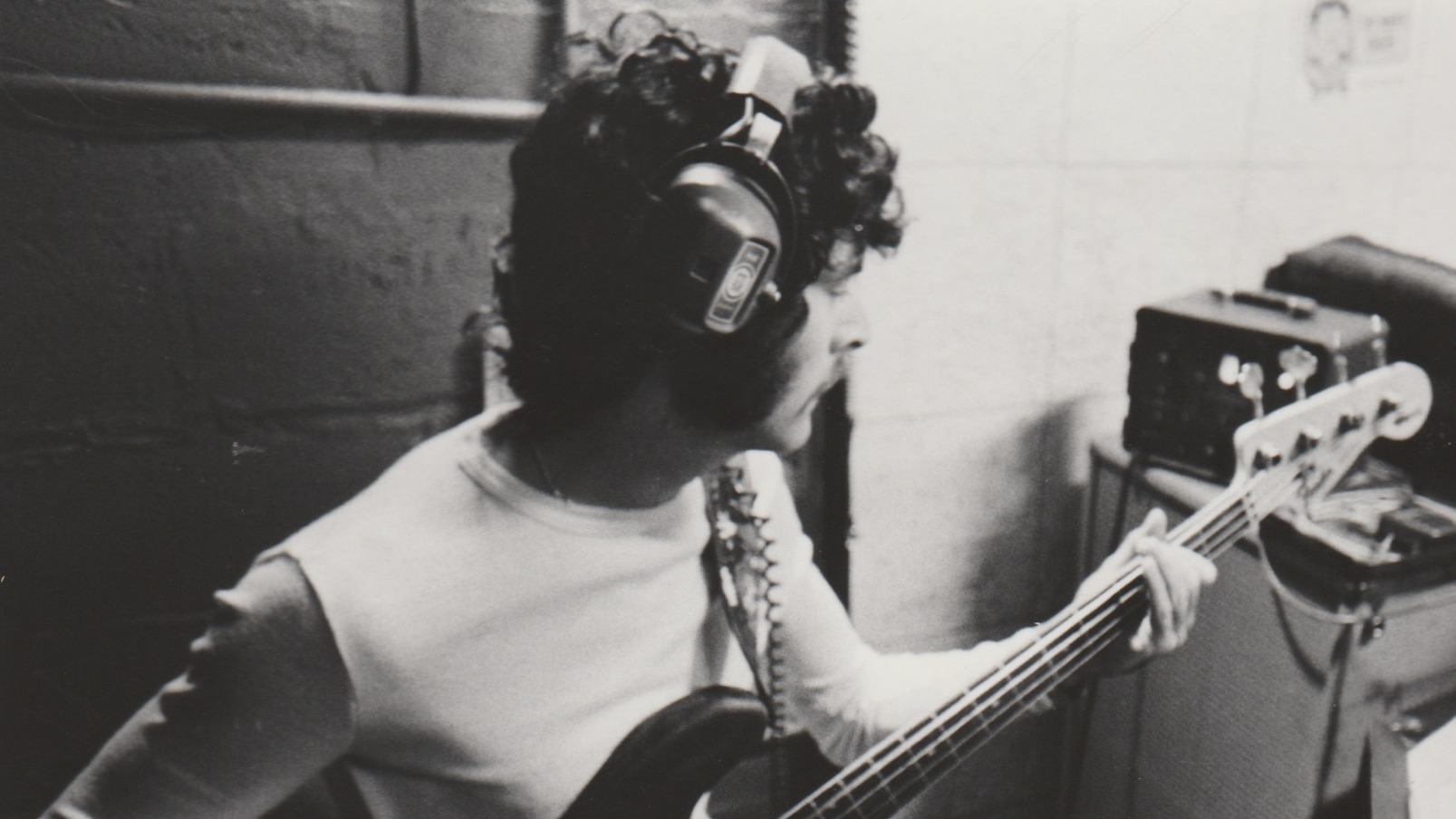
David Hood
American musicianWikipedia
28
MENTIONS
8
EPISODES
5
PODCASTS
Search complete. 28 mentions across 8 episodes found for "David Hood".
Nov 16, 2026

Ben EisenHOST
But anyway, the session musicians worked at the studio became known as the Muscle Shoals Horns and the Muscle Shoals Rhythm Section or the Swampers.
Ben EisenHOST
And in 1969, after Hall signed a deal with Capitol Records, the four primary Muscle Shoals Rhythm members, Barry Beckett, Jimmy Johnson, Roger Hawkins and David Hood, left to found a competing business, the Muscle Shoals Sound Studio in nearby Sheffield.
Ben EisenHOST
Muscle Shoals Rhythm Section was the first group of musicians to own a studio and to eventually run their own publishing and production companies.
Ben EisenHOST
That's pretty sweet.
15 MINS LATER
Ben EisenHOST
They started doing Take Me to the Mardi Gras.
Ben EisenHOST
That was the first one.
Ben EisenHOST
And David Hood says the following.
Ben EisenHOST
He said, we did it on the second take.

Jeff WalkerGUEST
But this song to me is probably one of my favorite country songs, if not my favorite, even though it's at number two, because of how it makes me feel.
Jeff WalkerGUEST
It takes me back because I remember as a kid going to spend time at my cousin's house.
Jeff WalkerGUEST
It would have been the early 80s probably.
Jeff WalkerGUEST
And they had a red Trans Am.
Jeff WalkerGUEST
And my cousin David, I was going to play at his house and spend the night.
Jeff WalkerGUEST
And they'd come to pick me up in the Trans Am.
Jeff WalkerGUEST
They'd always have some old outlaw country going on.

Christine OhlmanHOST
We led off today down in Muscle Shoals with an icon that I'm proud to call both a bandmate and a brother.
Christine OhlmanHOST
That great low-end founding member of the Muscle Shoals rhythm section called the Swampers, David Hood.
Christine OhlmanHOST
He started off at fame, believe it or not, on trombones.
Christine OhlmanHOST
Percy Sledge's Warm and Tender Love was his first union session on a number one hit, but before long, the Four Fat Strings became his claim to fame.
Christine OhlmanHOST
And we just heard a track that cut the airwaves like a well-sharpened knife when it appeared in 1968, with David Hood laying down one of the snakiest, most sensual bass lines ever recorded.
Christine OhlmanHOST
It's such an integral part of the hypnotic groove.
Christine OhlmanHOST
Clarence Carter wrote, played guitar on, and lent his ultra-sexy voice to Slip Away, recorded, of course, at famed studios in Muscle Shoals, and featuring, by many accounts, although not Spooner Oldhams, because I asked Spooner directly, very young Dwayne Allman on slide.
Christine OhlmanHOST
No one would ever argue with that.

Jax HollowGUEST
It's Spooner! Isn't
Brian JonesHOST
David Hood still alive? Yeah.
Jax HollowGUEST
No, I said one of.
Brian JonesHOST
Right, right, right.

Max GillHOST
So he was in the Muscle Shoals area.
Max GillHOST
And I think one interesting detail is he got to know David Hood, Patterson's father, who we talked about, I think, in our first episode on DBT, before he ever met Patterson.
Max GillHOST
David Hood, as we mentioned, he was a Muscle Shoals musician.
Max GillHOST
And like a lot of the Muscle Shoals session people, he was playing in various venues around town.
Max GillHOST
Iswell was going to these venues, checking out the scene.
Max GillHOST
And he got to know David Hood.
Max GillHOST
And David kind of took him under his wing.
Max GillHOST
He became sort of a surrogate father, which is interesting.
Michael MurrayHOST
And I wanted to start this out by mentioning somebody else who is a singer-songwriter, guitar player, who's Eddie Hinton.
Michael MurrayHOST
Eddie Hinton was in The Swampers, played guitar at Muscle Shoals from like 69 to 71, and would have been playing with David Hood.
Michael MurrayHOST
And Patterson knew him from the time that he was a kid because, of course, he worked with his father.
Michael MurrayHOST
And Eddie Hinton had a short career.
Michael MurrayHOST
Like Sean Connery.
Michael MurrayHOST
But this album, the album it comes from is called New Roots, the version of Where's Eddie? And it was done at Muscle Shoals.
Michael MurrayHOST
And David Hood is on the album.
Michael MurrayHOST
And Arif Mardin was one of the producers, and I don't know who that is, but Jerry Wexler and Tom Dowd, who we've talked about on more than one occasion, were producing on this record.
Michael MurrayHOST
I don't know if I can wrap my head around it, but please help me out.
Michael MurrayHOST
There's a line in this song, you know, so his father is not around, but his father says when he's a kid, his father has said to him, it comes down to what they say about you.
Michael MurrayHOST
when you're not around, but his father is not around.
Michael MurrayHOST
And then the narrator says about himself, nobody talks about me.
Michael MurrayHOST
The voices are too loud and I cannot put all that together, but I feel like there's something that needs to be unpacked there.
Max GillHOST
yeah,
Michael MurrayHOST
yeah.
Michael MurrayHOST
But it's just, there's some, yeah, but to not, but he talks about, like, I wish he says, I think he says, I wish my father could see something.
Michael MurrayHOST
I mean, the Staple Singers, I'll Take You There is all over the radio.
Michael MurrayHOST
And I'm listening to the father of someone that I'm going to come to, you know, the leader of a band that I'm going to come to adore later in life.
Michael MurrayHOST
And I've already been listening to his father play bass on songs from the time I was a kid.
Michael MurrayHOST
And I love that.
Max GillHOST
Yeah.
Max GillHOST
But, of course, as you grow older and you sort of come into your own, you acquire your own kind of music.
Max GillHOST
He got into punk and post-punk music.
Max GillHOST
which his father was not so much into.