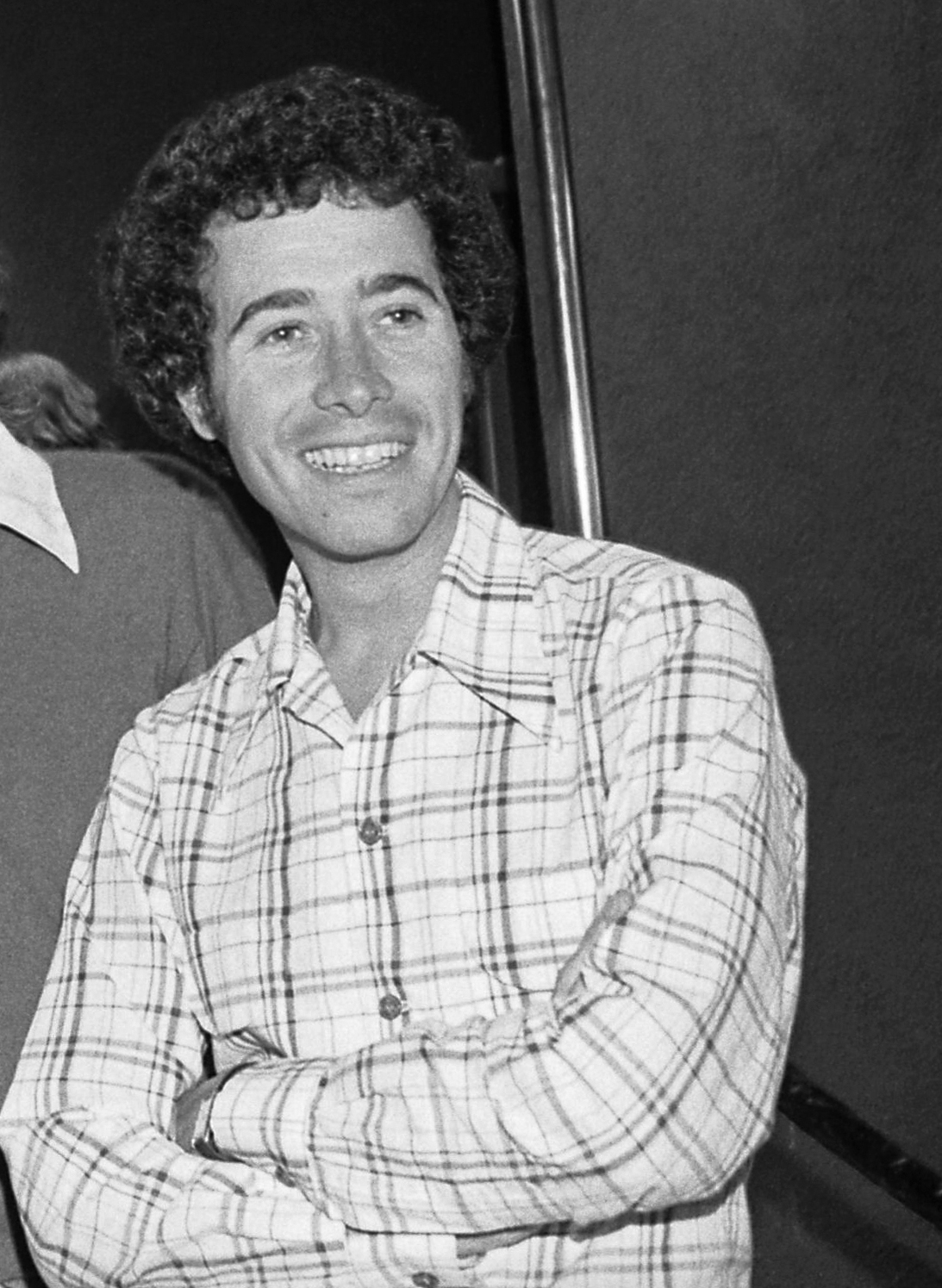
David Geffen
American film producerWikipedia
159
MENTIONS
86
EPISODES
81
PODCASTS
Search complete. 159 mentions across 86 episodes found for "David Geffen".
Oct 28, 2026

Ben MontgomeryHOST
stepdad was
Hannah StokesGUEST
stepdad okay yeah um excuse me and she yeah grew up in um a very tumultuous situation she ended up committing some crimes some like petty theft crimes and like went to jail and stuff so she got um was sent to um like a girl's school that was super religious and this is where she learned how to play organ and got all this you know religious indoctrination so to speak all this language that she uses in her music um And then was the first artist signed to David Geffen's label before Joni or any of the other people.
Hannah StokesGUEST
This is the first record he released, which I didn't know.
Hannah StokesGUEST
I thought it was really cool.
Hannah StokesGUEST
She didn't want to be opening for the bands that she was opening for.
Hannah StokesGUEST
She thought she deserved to be the headliner and to, you know, play with other people.
Hannah StokesGUEST
But she had trouble with the business the whole time that she was kind of in it and burnt her relationship with David Geffen and, you know, kind of, yeah,
Hannah StokesSOUNDBITE_SPEAKER
just

Alan KatzHOST
You see, at about that time, a new studio called DreamWorks had come into being.
Alan KatzHOST
That was Steven Spielberg, along with Jeffrey Katzenberg and David Geffen, leaving his deal at Universal to become an entity unto themselves.
Alan KatzHOST
As new studios must, DreamWorks began making talent deals with other movie makers.
Alan KatzHOST
Universal was desperately afraid of losing another huge piece of talent.

Jim HillHOST
But you had an angry Ron Miller who was determined to prove Don Bluth wrong, that Disney could in fact do an animated film.
Jim HillHOST
So it reminded me of when Spielberg and Katzenberg and David Geffen launched DreamWorks SKG in 94.
Jim HillHOST
Yeah.
Jim HillHOST
And I forget which member of the business press wrote this article.

Rena MalikGUEST
Yeah.
Jesse MillsHOST
I mean, you're basically the A&R of medical infotainment, right? Jordan, the Clive Davis, Barry Gordy, the Jerry Moss, the David Geffen, UCLA School of Medicine, dare I say, dropping medical knowledge into the ears of the world.
Jesse MillsHOST
But I think it's really important because your voice carries so much weight.
Jesse MillsHOST
So the fact that you kind of stratified the integrity levels of I mean, my other thing that bugs me a little bit is the extrapolation of very small data sets, sometimes mirroring sets, you know, mouse models and saying, yeah, maybe, you know, and there's mice, they live six, eight weeks longer.

Jim HillHOST
But you had an angry Ron Miller who was determined to prove Don Bluth wrong, that Disney could in fact do an animated film.
Jim HillHOST
So it reminded me of when Spielberg and Katzenberg and David Geffen launched DreamWorks SKG in 94.
Jim HillHOST
And I forget which member of the business press wrote this article.
Jim HillHOST
Basically, what they said was that Katzenberg was angry that he'd been forced out from Disney.

Kute BlacksonGUEST
No, I tracked down Steven Spielberg in a park.
Kute BlacksonGUEST
I tracked down David Geffen, Richard Branson, every manager, talent agent in Hollywood, you name it.
Kute BlacksonGUEST
I tracked them down at parks everywhere.
Kute BlacksonGUEST
It was this 20-year-old coup, right, at parks, outside of restaurants, outside of yoga studios.

KatieHOST
Yeah, that sounds right.
KatieHOST
It's one of those things, it's like, was anybody reading the script? Was anybody watching the dailies? Why was this allowed to continue? And the only guess I can come up with is, speed and twister like this was a dreamworks movie and dreamworks had only been around for a couple of years at this point so for those of you who aren't aware steven spielberg jeffrey katzenberg and david geffen decided to found a new studio which there has been a new big studio in hollywood for like 50 years at this point and kind of go off on their own and there was a there were a lot of A lot of crazy swings in the DreamWorks era because they had a lot of money and wanted people to do what they wanted to do.
KatieHOST
Nobody reeled them in.
KatieHOST
It didn't last long.

David EastaughHOST
And so the record label one is often the moment that a lot of musicians say, that's when we decided to give it up as well.
Kathryn PepperGUEST
Well, Joni Mitchell was very, very lucky in that she was with a manager called David Geffen.
Kathryn PepperGUEST
He was one of those early managers who gave the musicians their royalties, their publishing.
Kathryn PepperGUEST
So they became very wealthy under his deals.
23 MINS LATER
David EastaughHOST
And there was even people wrote books, I mean, on the groupie as this is just what is kind of expected of for a lot of bands to have that as a, as a just that's what it is that's where you got into music so to have a feminist role model was very important during that time because you had you know like you had Grace Slick and Janice Joplin and lots of others but then you know out of the 70s you got Carole King, Joni Mitchell, Janice Ian you know, there was this sort of the birth of the singer-songwriter that then goes into the 80s with Susan Vague and Michel Schacht and Tracy Chapman but they, and oh yeah, before that you'd had Joan Armatraden in the 70s as well but, you know, it was, it probably wasn't an easy sell because I would imagine each of those record labels were saying could we just, could you just have a bit more, I don't know.
David EastaughHOST
flesh on display and sexualize your look whereas like not
Kathryn PepperGUEST
only got very lucky in the sense that not luck well luck luck was part of it but obviously she was she was in a position where she was allowed to be herself as an artist and I think partly that is I mean I could be wrong but it could be because when she met David Crosby he was massively in awe of her and I know he remained in awe of her the whole of his life But he introduced her to his manager, which was David Geffen.
Kathryn PepperGUEST
Right.

Dustin LentzGUEST
well the song did get i think number six it peaked at number six on the alternative chart so it got heavily heavily heavily pushed in that time and there's a rumor and this was a rumor back then and i i tried to read up on it and there's rumors and it's on the internet you know if it's on the internet it's true Sure.
Dustin LentzGUEST
So when they signed a major label, they didn't sign to David Geffen or any of these labels that were stereotypical punk or alternative labels.
Dustin LentzGUEST
They signed to Epic.
Dustin LentzGUEST
That's Michael Jackson and Quincy Jones and stuff like that.

Dave MadeloniHOST
My approach... was much more primitive.
Dave MadeloniHOST
What would it sound like if David Geffen had, in fact, left the humdrum of the music industry for a fantasy weekend getaway to Paris? I decided to conjure up a party song, with strings and trumpets and trombones and vibraphones marching in a parade down the Champs-Élysées to the Loc de Triomphe, all lit up with fireworks.
Dave MadeloniHOST
Wouldn't we all like to be there right now? Unquote.
Dave MadeloniHOST
Well, let's ask James McMurtry.
76 more episodes mention David Geffen.
Create an account to see the whole feed, search across every transcript, and follow the entities you care about.