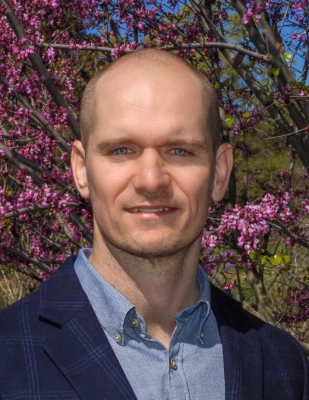
David E. Olson
Chemist and neuroscientistWikipedia
11
MENTIONS
5
EPISODES
3
PODCASTS
Search complete. 11 mentions across 5 episodes found for "David E. Olson".
Sep 17, 2026
P
Unknown podcast
Episode 9: Engineering Around the Problem - 18-MC, Tabernanthalog & Next-Generation Analogs
Sep 17 · 6 Mentions
S
25:02speaker_0HOST
If tweaking the molecule was a great modification, could the original iboga molecule be simplified even further? Which brings us to the next massive leap in our timeline, Pabernantholog or TBG?
S
25:14speaker_1HOST
Yes, this takes us to the laboratory of David Olson at the University of California, Davis, and their landmark 2020 publication in the journal Nature.
S
25:22speaker_1HOST
the Olson lab took a completely different conceptual approach compared to Glick and Kuhn's work on 18MC.
S
25:28speaker_1HOST
How so? Well, while 18MC was about carefully tuning receptor affinities by making small structural adjustments, Olson's team utilized a strategy called function-oriented simplification.
S
25:40speaker_0HOST
Function-oriented simplification.
S
25:42speaker_0HOST
That sounds like a fancy way of saying they took a chainsaw to the molecule.
S
26:06speaker_1HOST
It has multiple interlocking rings of carbon and nitrogen atoms.
S
26:10speaker_1HOST
That rigidity makes it very difficult to synthesize from scratch in a laboratory setting.
P
Unknown podcast
Episode 7: Polypharmacology - How Ibogaine Actually Works (and Noribogaine)
Sep 17 · 1 Mention
S
27:32speaker_0HOST
What exactly makes a chemical a cycloplastogen?
S
27:35speaker_1HOST
The term was formally popularized around 2018, heavily referenced and codified in the groundbreaking work by David Olson's lab at UC Davis, among others.
S
27:44speaker_1HOST
It was coined to describe small molecules that are capable of rapidly, potently promoting structural and functional neuroplasticity.
S
27:51speaker_1HOST
We are not just talking about changing electrical signals.
P
Unknown podcast
Episode 6 · Building the Cage - Total Synthesis Semi-Synthesis
Sep 17 · 1 Mention
S
44:01speaker_0HOST
Tabernanthalogue.
S
44:01speaker_0HOST
This came out of David Olson's laboratory at UC Davis, right?
S
44:04speaker_1HOST
Yes.
S
44:05speaker_1HOST
The Olson lab took a very aggressive editing approach.
Three Theories of Depression and the Promise of Psychedelics: The Drugs That Shape Us, Episode 3
M
5:30Margot WallHOST
And if we think differently about the causes of depression, then of course we'll be looking for different ways to treat it.
M
5:37Margot WallHOST
And that's why I wanted to chat with both of our guests in today's episode, Perry Hashmi, an associate professor in brain diagnostics and therapeutics at Imperial College London, and David Olson, director of the Institute for Psychedelics and Neurotherapeutics at the University of California, Davis.
M
5:55Margot WallHOST
Both actually contribute to the peer-reviewed journal, ACS Chemical Neuroscience, Perry as an associate editor and David as editor-in-chief.
M
6:04Margot WallHOST
And they have varying theories on the causes of depression, but neither theory chalks it up to just a chemical imbalance.
23 MINS LATER
S
29:33Sam JonesHOST
Yeah, it could be really scary.
M
29:34Margot WallHOST
Yeah.
M
29:35Margot WallHOST
So this feels like a good time to introduce our next guest, David Olson, and his approach has been to explore the potential of a class of drugs that, until recently, were mostly used recreationally.
S
29:48speaker_5VOICE_ACTOR
My full chemical name is Dextrolysergic acid diethylamide tartrate 25.
#149 - Meet The Father Of Modern DMT Research
R
60:56Rick StrassmanGUEST
It's called TBG.
R
60:58Rick StrassmanGUEST
Um, you know, David Olson at UC Davis has been working on that.
R
61:03Rick StrassmanGUEST
You know, Deborah and I spoke a year or two ago, and she said, "You know, TBG, we invented that years ago." You know, that's not a new compound.
R
61:10Rick StrassmanGUEST
Uh, you know, but, you know, you know, but be that as it may, I think, you know, TBG is going into human trials.