David Carson
American graphic designerWikipedia
15
MENTIONS
7
EPISODES
7
PODCASTS
Search complete. 15 mentions across 7 episodes found for "David Carson".
Oct 6, 2026

Tricia BurnsHOST
These are the duo that really like... made the early transworld snowboarding scene happen.
Tricia BurnsHOST
The art direction was via now-design superstar David Carson, who was also laying out the skate mags.
Tricia BurnsHOST
So Guy Motil and Kevin Kinnear, they'd worked together on surf magazines.
Tricia BurnsHOST
They were, you know, the story goes that they were ready to do something different.
Jennifer ScherowskiHOST
So they, you know, they finally saw they needed snowboarders probably.
Jennifer ScherowskiHOST
Anyway, even the design of the magazine at the first was to support like what you're talking about, that goal of professionalism and helping snowboarding get to be accepted and versus being counterculture accepted.
Jennifer ScherowskiHOST
David Carson is a magazine art director.
Jennifer ScherowskiHOST
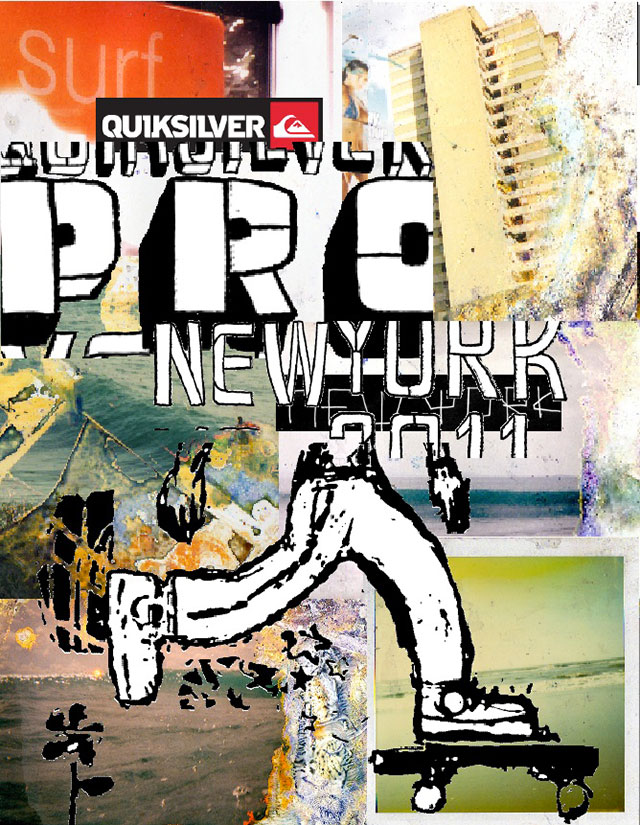
He's known a lot for that avant-garde design, kind of like throwing the design rulebook out the window and doing crazy deconstructed collage-style work and using typography in ways that no one had ever seen used before.

Lee-Sean HuangHOST
Okay, I love it.
Lee-Sean HuangHOST
Since you were mentioning like the 90s in that moment, and that was kind of my formative, like I was a teenager in the 90s, right? And like the Ray Gunn magazine and all of that, you know, David Carson era of like, you know, playing with legibility and like, you know, and it seems like very much like the the full pendulum swing away from that like post-war Swiss, you know, strict grid thing.
Lee-Sean HuangHOST
And now we have this like cultural homogeneity, homogeneity of like the AI aesthetic, right? Where everything's looking the same.
Lee-Sean HuangHOST
And so it's like, maybe there's like a similar pendulum swing away from that now.

Alex HammondGUEST
I mean, in retrospect, it almost feels like a peak 90s moment, but at the time it wouldn't have played like that, right? I still think we hadn't had Trent Reznor and later, you know, obviously Atticus Ross collaborating so much with Fincher, you know, as his soundtrack people.
Alex HammondGUEST
um and uh yeah it was like just it was just disturbing imagery it was the mind of the killer it was fantastic short-handing but you know i don't think anybody was prepared for something like that um and very much also i guess that sort of design aesthetic too was was again i mean i think it was maybe slightly ahead of its time i'm trying to think of when ray i don't think ray gun magazine and all that david carson was pushing out Yeah, Rogan
Garth JonesGUEST
was late 90s, yeah.
Alex HammondGUEST
Yeah, right.
Justin HamiltonHOST
It had an effect on you, didn't it, Garth?
Garth JonesGUEST
Yeah, I mean, that was sort of, I was about to start studying design in Sydney a couple of years later.
Garth JonesGUEST
And I think that aesthetic, I could just say Alex definitely sort of fed Ray Gunn, David Carson was around already, the famed typographer from the 90s who sort of, blew up everyone's ideas around how type works on the page and this is sort of a reimagining for cinema and you know every title sequence you saw after this you know you were flying through debris you you know they were they were playing with typography they were playing with the way that music interacted with the typography I mean, you know, David Fincher went on to do the Fight Club title sequence with a similar sort of, you know, avant-garde approach to that sort of stuff.
Garth JonesGUEST
But, you know, even stuff like Lost in Space, I remember in 97, sort of cribbed from this as well.

Henrik KubelGUEST
And we started drawing farts on the course, like...
Henrik KubelGUEST
Not very good, but it's a funny story because at the time there was a guy called David Carson.
Henrik KubelGUEST
He was traveling the world doing workshops.
Henrik KubelGUEST
So the school I got into eventually changed his name to Denmark's Design School.
Clare BlytheHOST
Was that for a year or so?
Henrik KubelGUEST
Yeah, that was a year.
Henrik KubelGUEST
And then during that time, David Carson came to the school and he did this workshop.
Henrik KubelGUEST
I happened to come in and everyone was giving him their typefaces on floppy disks.

Alex CenterHOST
He said, uh, "Let's get the best of the best." And so these are all people that we, um, have coming up on the show, uh, through the end of this year.
Alex CenterHOST
So Studio Dunbar, Porter Rocha, shout-out to Alex from Mouthwash, and even David Carson's gonna come and bring some chaos.
Kevin BatoryHOST
He's gotta respond to the email, though.
Alex CenterHOST
Yeah, he's hard to book.
Kevin BatoryHOST
He's hard to track down
Alex CenterHOST
... [laughs] some of these are recorded, some of them are not.
Alex CenterHOST
David Carson, again, hard to schedule.
Alex CenterHOST
But none of these shows are as important as tonight's show, because these shows were recorded in front of an audience of six people in our studio, and they didn't really wanna listen.

Alice GregoryHOST
And our show art was designed by Shawn Carney.
Leon NeyfakhHOST
This episode featured interviews with Ursula Mathers-Nairt, Myra McNulty, and Leanne and Garrow Gerwig, with voiceover by Margot Avery and David Carson.
Leon NeyfakhHOST
Special thanks to Caitlin Rege, Felix Poon, Bill Wilson, and Sam Gurwitz.
Leon NeyfakhHOST
Death of an Artist is a production of Pushkin Industries.

Corey MonteroGUEST
Yeah.
Corey MonteroGUEST
There's, there's a, there's a designer, uh, Chris Ashworth, and he, I th- I don't know exactly, I could be misspeaking, but he is adjacent to David Carson, and they worked on "Ray Gun" magazine together, and it's, like, a total just anti-design kind of magazine, surf magazine, art, all the stuff.
Corey MonteroGUEST
And, um, it's...
Corey MonteroGUEST
They would make things intentionally, like, hard to read.