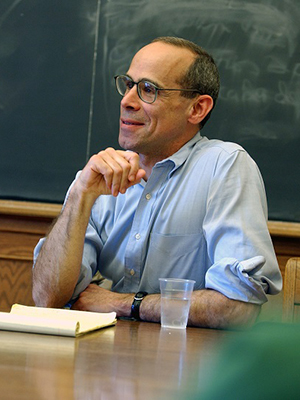
David Bromwich
Professor
5
APPEARANCES
5
PODCASTS
Aug 22, 2026

JiangHOST
Uh-

David BromwichGUEST
Uh, let, let me, um, set this up in a slightly classroom way and point out that Shakespeare is, um, uh, a, an irregular and unwieldy, a sort of, uh, untamed author in many ways, and, uh, this is shown especially in the way he was received by neoclassical French critics, who held against him that he wrote plays that didn't obey the unities, the supposed all-important Arist- Aristotelian unities of, uh, uh, action, time, and place.
David BromwichGUEST
The ideal play would have an action that took place in the amount of time it took you to watch the play.
David BromwichGUEST
Um, but Shakespeare was... we- went astray of it far more than most, um, successful playwrights.
David BromwichGUEST
And, uh, I chose Macbeth in part because this is a, this is a, a relatively rare instance among his works where you do have strong unity of action, and it's, it's welded together with character, a portrait of character that is really, um, brought out by the nature of the action.
24 MINS LATER
JiangHOST
Um, in fact, in heaven, it is Mary who's Queen of Heaven, it is Mary who redeems humanity, not Jesus, okay? So these are the three concerns that Dante would have about this play, right? First, to, to summarize, is Shakespeare pessimistic about human nature? Second question is, does Shakespeare believe in God? The third question is, how does Shakespeare feel about woman? So...


David BromwichGUEST
I'm not sure, I was just looking up the etymology, and I'm not sure if he had an inkling that it might well have been derived etymologically from an Arabic word meaning damaged merchandise.
David BromwichGUEST
But his idea, sorry to sound psychobabble of our time, but his idea, and it's all over his poetry and prose, that we are all damaged, And that this is the sense in which we can care for each other and need to.
31 MINS LATER

David BromwichGUEST
I'm not sure, I was just looking up the etymology, and I'm not sure if he had an inkling that it might well have been derived etymologically from an Arabic word meaning damaged merchandise.
David BromwichGUEST
But his idea, sorry to sound psychobabble of our time, but his idea, and it's all over his poetry and prose, that we are all damaged, And that this is the sense in which we can care for each other and need to.
31 MINS LATER

David BromwichGUEST
I'm not sure, I was just looking up the etymology, and I'm not sure if he had an inkling that it might well have been derived etymologically from an Arabic word meaning damaged merchandise.
David BromwichGUEST
But his idea, sorry to sound psychobabble of our time, but his idea, and it's all over his poetry and prose, that we are all damaged, And that this is the sense in which we can care for each other and need to.
31 MINS LATER


Yascha MounkHOST
Um, uh, what are the findings of the committee? What do you think does lie at the heart of, uh, the, the loss of faith in universities in the United States?
David BromwichGUEST
The, the official name of the committee, I think, was Restoring Trust, Trust in Higher Education.
David BromwichGUEST
Uh, but trust, as anyone who has studied moral philosophy or just speaks English knows, uh, is mutual, and it depends on an understanding that is shared of what the purpose is of this or that institution, this or that custom or ritual.
David BromwichGUEST
And I think the understanding that was lost is how pub-- uh, higher education, and specifically liberal arts education, prepares you for life, uh, in a way that, uh, both will serve students who graduate well in getting jobs, but also make them thoughtful citizens, uh, so that there's some, uh, effect from the education that they wouldn't get just from reading a lot of books or even watching a lot of television.
David BromwichGUEST
So, uh, some of the causes of, uh, waning trust that we looked at were, uh, the process of admissions.
17 MINS LATER
Yascha MounkHOST
Um, why not go the whole way and get rid of the holistic admissions altogether?