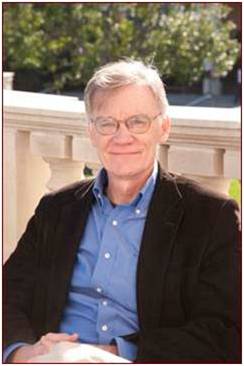
David W. Blight
Professor of History
26
APPEARANCES
17
PODCASTS
Sep 9, 2026


Judy WoodruffCORRESPONDENT
Is there anything in our history that w- we can compare what happened on 9/11 to?

David BlightGUEST
And if you think back to the press coverage at that very moment, immediately people were using Antietam, 'cause it was the largest single casualty, uh, count of the Civil War.
Garrett GraffSOUNDBITE_SPEAKER
I also think, you know, Americans are very bad at understanding even our own recent history, and it is impossible to separate from 9/11 the events that we are living through roiling our domestic politics here in the United States today in terms of the immigration crackdown by ICE, by CBP, by the border patrol, by DHS, all of which are an invention of the post-9/11 world and in an attempt to ensure that these types of terror attacks never happen again.

David BlightGUEST
And if you think back to the press coverage at that very moment, immediately people were using Antietam.


David BlightGUEST
And if you think back to the press coverage at that very moment, immediately people were using Antietam.


Colleen ShoganHOST
How does that affect the conversation on slavery? You have to decide what to do about these new territories when it comes to slavery.
David BlightGUEST
Right, and for a very long time, from the 1830s through the '40s, high politics in America between the Whigs and Democrats tried to keep the slavery issue, the expansion issue in a shell.
David BlightGUEST
And of course, the Mexican War unshucked this from its shell, if you like, and forced it into American politics as never before.
David BlightGUEST
Will those territories become slave states? Will they become free states? Will they somehow be divided? How can they be divided? And that's important because it has everything to do with the representation of the two sections, the free North, the slave South, in the US Congress and the Senate.
27 MINS LATER

39:21

Uh, tell us about the context in which the Trump people are using it, and what it, what it means to you.
David BlightGUEST
Um, they used it in this report put out by the Domestic Policy Council of the White House.
David BlightGUEST
Uh, uh, they accused, uh, the leadership of the American History Museum of trying to instill ideology in visitors and so forth and so on.
David BlightGUEST
But then they advocated instilling a certain triumphal version of American history in the American public.
David BlightGUEST
Um, essentially, what the White House is doing is accusing the Smith- the great Smithsonian Institution of doing exactly what the White House is doing, which is trying to take over some kind of control of the narrative of American history, how American history is represented, how it is presented, uh, in our great museums.
41:23
As you sit there and testify, when you write something like this for The New York Times that you know is the kind of source that 100 years from now historians would be looking for to try to find out the, the, the details of this part of this era, do you feel that, that burden? Do you feel yourself trying in any way to communicate with the future Yale professor 100 years from now in the history department who's trying to study this era?

Greg CarrHOST
net exactly at u texas and where toyan falola was on his committee that's what i'm like this guy knows better doesn't
David BlightGUEST
he he was he is a trained historian but he's gone over to you know, being a political operative, to say the least.
David BlightGUEST
And we were going to try to see if it's possible to, you know, debate and discuss across these boundaries.
6 MINS LATER
speaker_0NARRATOR
right.


Alison StewartHOST
How did her initial treatment of him change him forever? And I think we should point out, she starts to teach him to read.
David BlightGUEST
Sophie Auld was his mistress, white mistress in Baltimore, where he is sent when he's seven years old.
David BlightGUEST
And in the first year and a half or so that he was there, he was supposed to be there to be the companion of the Auld's son, whose name was Tommy.
35 MINS LATER


Malcolm GladwellHOST
To break the electoral impasse, a group of men from both parties got together to make a deal
David BlightGUEST
And the deal that was struck is that whatever the vote counts were, Hayes would get the presidency, but the Democrats were gonna get a lot as well.
David BlightGUEST
Supposedly, the Republicans promised the Speaker of the House to the Democrats.
Malcolm GladwellHOST
There would be no more Federal effort to enforce the rights of Black people, or for anyone else for that matter.

18:44

So, um, but, but this is all submerged as if we hadn't lived through it, and as if we're not connected to it, and as if this is not an attempt to bring parts of it back.
David BlightGUEST
Well, it's why I always end up, and, and I'm sure, Sean, you do this, constantly being asked, "Well, how can the past help us today?" And so on and so forth.
David BlightGUEST
You gotta understand how an issue like slavery tore pa- apart the political party system.
David BlightGUEST
I always stop and say, "Beware, if you get fundamental realignment in the party system, look out." I mean, you might think that's great, and maybe it is, maybe it isn't.
5 MINS LATER

David BlightGUEST
It isn't recognized before law, that equal protection means we don't do race anymore.
10 MINS LATER

David BlightGUEST
But even that, he had an alternative plan for, which was to require them to apply to him personally for pardons.
David BlightGUEST
working for the executive branch, just processing pardons for ex-Confederates.
21 MINS LATER

Kai WrightCORRESPONDENT
We met him earlier in the series, and he says Douglass really loved this whole idea.
David BlightGUEST
Well, I think it was so important to Douglass because it, it does fit in the best, uh, sentiments of that idea of self-reliance.
David BlightGUEST
If you had 10 bucks or 20 bucks or 100 bucks, put it in that bank, earn some interest, become your own capitalist, become self-sustaining.
David BlightGUEST
It meant that if the government creates this and it sustains it, it becomes one of the principal examples, physical examples, that the United States truly means the emancipation they committed, and they will sustain it.
27 MINS LATER
Frederick DouglassSOUNDBITE_SPEAKER
A disposition is seen to shake off the Negro and accept the old master's class.
31:58
[whooshing] Last night, Pulitzer Prize-winning historian, Yale professor David Blight, said this about Justice Ketanji Brown Jackson's opinion in the birthright citizenship case.
David BlightGUEST
[whooshing] I, uh, already, uh, emailed the executive director of the Organization of American Historians, and I said, "Is, is there any way we could put Jackson's opinion in the next issue of the Journal of American History?" Because frankly, Lawrence, it reads like a historical essay.
David BlightGUEST
She not only quotes from me, or quotes Frederick Douglass several times, but six, seven other historians, the best historians of reconstruction.
David BlightGUEST
Um, and you know, it, it sets up her essential argument, which is that Section 1 of the 14th, and especially birthright citizenship, is rooted in universalist principles.
David BlightGUEST
In fact, I, uh, already, uh, emailed the executive director of the Organization of American Historians, and I said, "Is there any way we could put Jackson's opinion in the next issue of the Journal of American History?" Because frankly, Lawrence, it reads like a historical essay.
David BlightGUEST
She not only quotes from me or quotes Frederick Douglass several times, but six, seven other historians, the best historians of Reconstruction.
29:47
And it seems, uh, one just wonders w- w- what, how Samuel Alito thinks he got his citizenship in this country.

Thomas DonnellyMODERATOR
Love to hear your reflections on that phrase, David.
David BlightGUEST
Jeff would tell us, as he did in that book, that for the founders this meant it's rooted in their many, many readings about virtue, about the history of virtue, about virtue as a moral philosophy, Cicero, Aristotle, many others.
David BlightGUEST
Being Your pursuit of happiness being protected means you are free to pursue virtue.
42 MINS LATER
Thomas DonnellyMODERATOR
Yes, David.

17:00

Was that deliberate then or is that just a modern set of eyes looking back at that line?
David BlightGUEST
This speech can be read as a kind of embittered but deeply honest form of patriotism as demand for what the country has not yet done, demanding the principles of the founding, demanding the promise be fulfilled.
David BlightGUEST
A key thing here, and those wonderful young voices capture it, Douglass was writing a literary work here.
18 MINS LATER
35:40
So I'm wondering if in Frederick Douglass, you see this notion that perhaps and hopefully is still well and alive in the country today, that in the traditions of our founding, there continues to be Let's call it an energetic core of justice that has been used by Americans who have had to fight for that justice in the past 250 years.
David BlightGUEST
But even that, he had an alternative plan for, which was to require them to apply to him personally for pardons.
27 MINS LATER

Kai WrightHOST
We ought to have our government so shaped that even when it is in the hands of a bad man, we shall be safe." Ooh.
David BlightGUEST
Well, I'd have read it before at some point, but you know, you can read a Douglass speech s- six times and find something new in it.
David BlightGUEST
But I used to end, occasionally I used to end talks on Douglass with that during Trump's first term.


David BlightGUEST
Every culture does it, every church does it, every institution does it, every country does it.
David BlightGUEST
Marc Bloch, the great French historian, uh, killed in the Holocaust, uh, warrant...
26 MINS LATER


David BlightGUEST
Uh, well, uh, Bingham and the authors of, of Section 1 would say, "Oh, no, no, no, no.
David BlightGUEST
They meant it that way because they intended it, and this was a rowdy debate back, oh, a few years ago.
David BlightGUEST
But they meant it not just for that moment of the status of the freed people, the four million former slaves.
21 MINS LATER

Frederick DouglassSOUNDBITE_SPEAKER
You declare before the world that we are unfit to exercise the elective franchise and, by this means, lead us to undervalue ourselves.
David BlightGUEST
You can say that Black people who were enslaved are not as well-educated, but they know how to till a field.
David BlightGUEST
They know something about economic power because they were slaves living under this system.
David BlightGUEST
So he says over and over and over, "Don't tell us we're not educated as a means of not letting us vote.

Rund AbdelfatahHOST
At the time, some Black men were voting, but not consistently, and it definitely wasn't a guaranteed or protected right.
David BlightGUEST
And then he uses the word "your" over, and over, and over, and over again, dozens and dozens of times.
David BlightGUEST
"It's your Declaration, it's your country, it's your, um, creeds." And then in the end, [exhales] nevertheless, lets the audience back up after some masterpieces of rhetoric.
David BlightGUEST
It's like he hands out towels and lets them wipe o- wipe off after the hailstorm he's just rained on them, and he said, "But don't, don't be, don't be too concerned.
12 MINS LATER

Jeffrey RosenHOST
Uh, tell us about that speech, their complicated relationship, and their joint embrace of the principles of the Declaration.
Andrea SheaADVERTISER
Take a dip and a trip by searching for Jaws Island wherever you get your podcasts.
David BlightGUEST
The Nazis also found a way, uh, and Richard Evans builds this story brilliantly.
David BlightGUEST
If this law sort of prevented them or blocked them, well, they changed the law.
David BlightGUEST
They created a whole new narrative, they created an ancient past for the Germanic peoples and so on.
22 MINS LATER
39:07
Let's have it in a way that the country can hear it and judge." What brought you, uh, to this point and to this idea?
David BlightGUEST
Uh, what brought me to this, first of all, was the viciousness of the attacks that Kevin Roberts has made on us, on my profession, on American historians, on the last half to three quarters of a century of revolutions in scholarship, of which he was part with that dissertation you just cited.
David BlightGUEST
But what also brought me to this proposal or invitation to Mr. Roberts is that I don't see what else we can do at this point.
David BlightGUEST
I mean, it is at the end of the day, we hope, but it's not about, um, interpretations that may differ.

Jeffrey BrownCORRESPONDENT
For critics like the President and others, this has meant a loss of acknowledgement of, of heroes, of heroism, of, of many of the positive aspects of American history.
David BlightGUEST
It also depends on what people consider to be, as the Trump administration has explicitly said, patriotic history.
David BlightGUEST
It is not the job of professional historians, whether they're in universities, in the National Park Service, in the Smithsonian, or anywhere else, to fashion an openly patriotic history.
David BlightGUEST
Our job is to search everywhere and anywhere for the truth and then to convert it into narrative and convert it into stories that are compelling.
Jeffrey BrownCORRESPONDENT
So, what should the Smithsonian Institution and other museums do now? What should professional historians do?
Scroll for more appearances