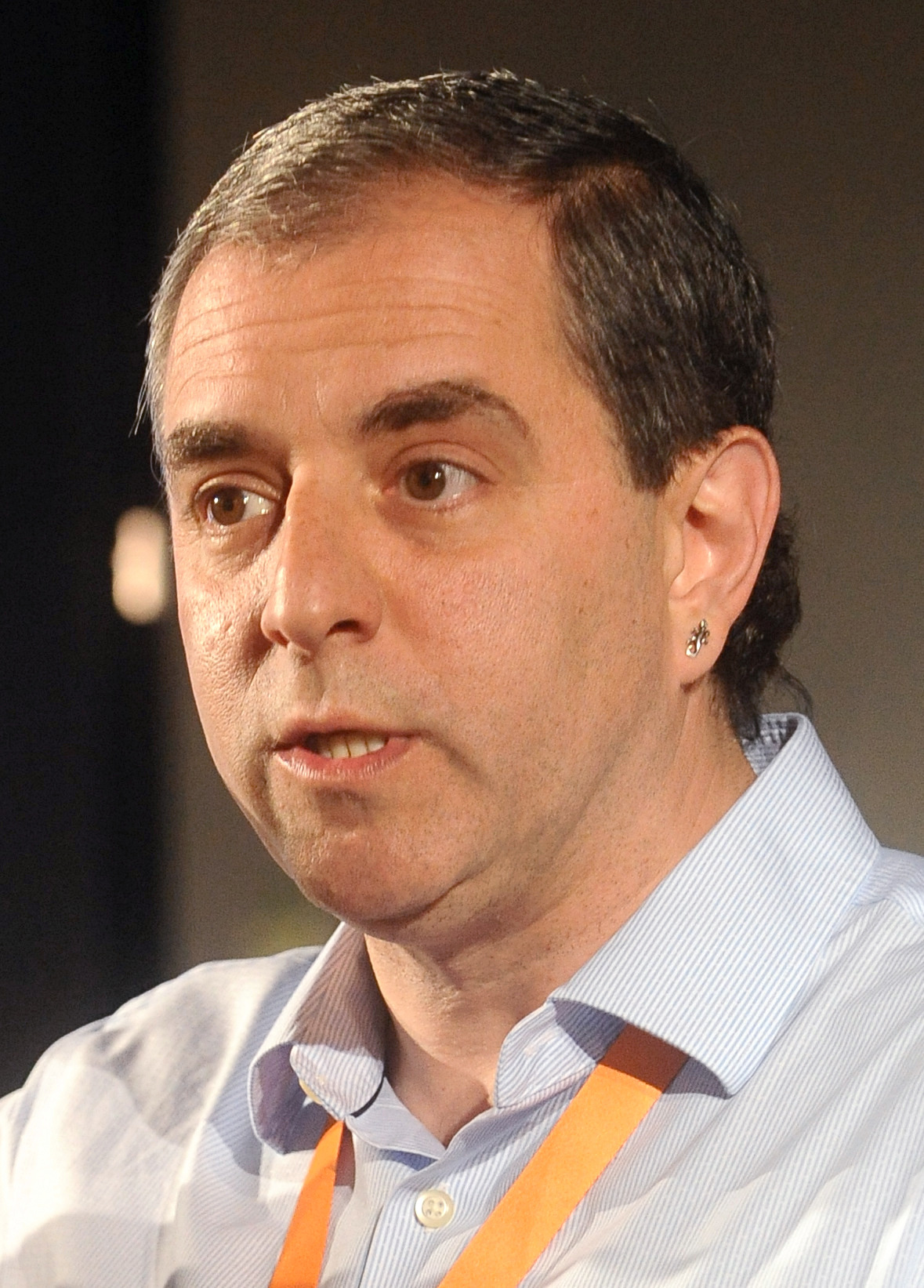
David Autor
American economistWikipedia
25
MENTIONS
18
EPISODES
13
PODCASTS
Search complete. 25 mentions across 18 episodes found for "David Autor".
Sep 11, 2026

Jacob MorganHOST
It doesn't work like that.
Jacob MorganHOST
MIT economist who I've profiled on this podcast before, David Autor, he and his colleagues found that about 60% of American jobs in 2018 were in job titles that didn't exist in 1940.
Jacob MorganHOST
60%.
Jacob MorganHOST
The economist is making the same point in their article.

Andrew HaleGUEST
For example, um, if you look at a, a paper which all of your, your viewers can just Google, it's called Help for the Heartland.
Andrew HaleGUEST
It's a National Bureau of Economic Research paper by David Autor, and it shows that all those people in the Rust Belt and the working class who moved their voting demarcation from Democrat to Republican to vote for President Trump in 2016 were the people who were most adversely affected by the, um, by the, uh, Trump's tariffs in his first term, particularly people in downstream industries.
Andrew HaleGUEST
But actually, when I've actually done my own focus groups and talked to people in the Rust Belt, I say to them, "What do you...
Andrew HaleGUEST
Well, first of all, can you define a tariff?" And most often not, they can't.
Mark ZandiHOST
Yeah, and I don't know if anyone told you, but we're having a series of podcasts around artificial intelligence, AI.
Mark ZandiHOST
Our first one was with David Autor.
Mark ZandiHOST
Do you know David? He's the MIT economist.
Mark ZandiHOST
Yeah, really good guy.

Kai WuGUEST
Um, and then, you know, agricultural tools developed and, you know, jobs changed.
Kai WuGUEST
Um, there's an economist I like called David Autor at MIT, and he found, um, that, um, the majority, I think 60% of jobs that exist today did not exist in 1940, right? Like airline pilot-
Ignacio RamirezHOST
Mm-hmm
Kai WuGUEST
... things like that.

Samantha HawleyHOST
That's because it's all about cutting-edge technology and AI.
Samantha HawleyHOST
Today, David Autor, economist who helped coin the phrase China shock, one of Time magazine's most influential people of 2026, on whether nations, including Australia, are ready for it.
Samantha HawleyHOST
I'm Sam Hawley.
Samantha HawleyHOST
On Gadigal Land in Sydney, this is ABC NewsDaily.
14 MINS LATER
David AutorGUEST
It will have a very significant enduring impact because once you lose frontier sectors, it's very, very rare to get them back, and it will also change the military balance of power along with the kind of economic balance of power.
David AutorGUEST
So yeah, I think, you know, we are seeing the changing of the guard in terms of the leading powers of the 21st century.
Samantha HawleyHOST
[Instrumental music] David Autor is a labor economist, professor of economics, and the head of the MIT Department of Economics.
Samantha HawleyHOST
This episode was produced by Ilaria Brophey and Louise Milan.

Kim KomandoHOST
When the smartest people in Washington and Silicon Valley want to know exactly what tech is doing to American jobs, this is the man they call.
Kim KomandoHOST
David Autor is the Gail Rubenfeld Professor of Economics at MIT.
Kim KomandoHOST
He's a pretty big deal.
Kim KomandoHOST
He's the economist who proved how trade with China hollowed out factory towns.
Mark ZandiHOST
There's a podcast called Inside Economics.
Mark ZandiHOST
We just had David Autor, MIT professor, on.
Mark ZandiHOST
It was actually one of the best podcasts we've ever – Correct me if I'm wrong, guys, but it was a great podcast on the value of labor.
Mark ZandiHOST
So it just came out.

Lynda GrattonGUEST
It does exactly that.
Lynda GrattonGUEST
And when I teach this to my MBA class, I always use this sort of David Autor model, which is to say, if you think about your work in terms of tasks, some are very routine, some are non-routine, some are manual, some are cognitive.
Lynda GrattonGUEST
And the piece that we're really excited about is the non-routine cognitive work, which is writing reports, doing analytics, which actually, you know, I go back to doing my PhD, I don't know, 40 years ago.
Lynda GrattonGUEST
I mean, I used a computer that was the size of a medium-sized room, and I put the you know, punch cards in the evening.

Mark ZandiHOST
Uh, you, you can dodge if you want, but I'll, I'll try.
Mark ZandiHOST
And I did this with David.
Mark ZandiHOST
We had David Autor on, uh, a couple weeks ago.
Ernie TedeschiGUEST
He'll-- I don't know what the question is, but I'm sure he'll have answered it much better than I.
Mark ZandiHOST
No, no, no.

Luis GaricanoGUEST
You can actually get, that's the robot above, jobs which were...
Luis GaricanoGUEST
Th-this is the expansion of the middle class that David Autor likes to talk about.
Luis GaricanoGUEST
You can get jobs which were more physical and more, um, uh, less cognitive intense to cover more cognitive terrain.
Luis GaricanoGUEST
And to the extent, this doesn't mean wages are going to increase because everybody can now become a nurse practitioner, because everybody can use this cognition on a box.
Luis GaricanoGUEST
So this is the opposite of a superstar effect.
Luis GaricanoGUEST
It's, uh, the middle class kind of does more cognitive work.
Luis GaricanoGUEST
I mean, the idea that David Autor has here, which I think is very true, is that many of the skills, emotional and physical skills, are more widely spread than extreme cognitive skills.
Luis GaricanoGUEST
People who play chess very well are very far, far apart, but people who can have a good conversation and be kind, uh, there are many more.
8 more episodes mention David Autor.
Create an account to see the whole feed, search across every transcript, and follow the entities you care about.