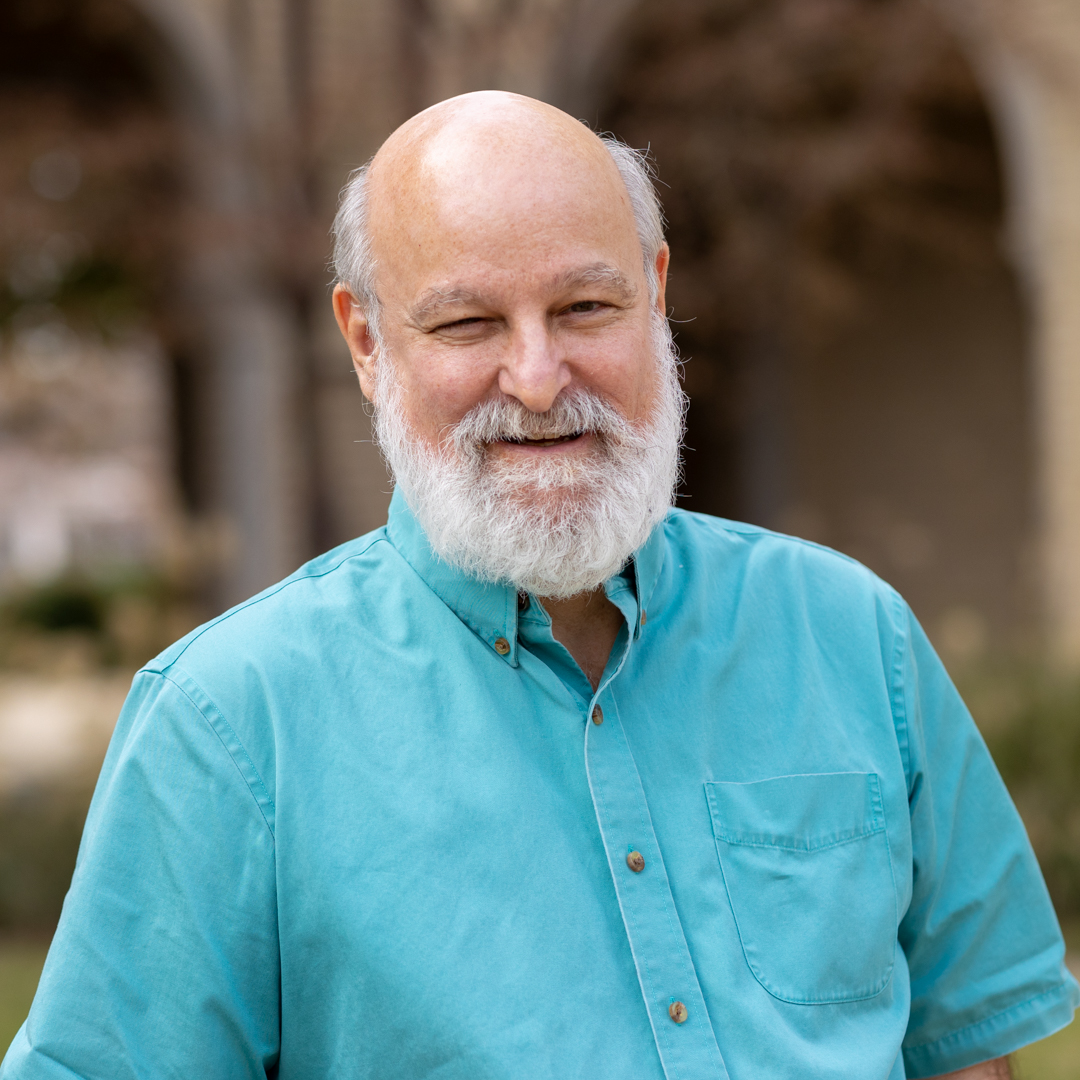
Darrell L. Bock
American theologian
7
APPEARANCES
5
PODCASTS
Sep 16, 2026

Rob WestHOST
How does that change the picture from everyone liquidating everything at once to a community continually responding to one another?

Darrell BockGUEST
Well, it shows, how can I say this? It shows some reflection and discernment about how to go about doing this.
Darrell BockGUEST
The fact that they didn't sell everything all at once, but that they took their time doing it.
Darrell BockGUEST
You know, the example I like to use, I like to contrast what Jesus says to the rich ruler when he tells him to sell everything and contrast that with Zacchaeus.
Darrell BockGUEST
who said he sold half of what he had and he ends up being commended for the fact that he's generous and holds his possessions with loose hands.
Darrell BockGUEST
The requirement is to be generous with the resources God gives you in a wise way and in a way that allows you to be generous and to continue to be generous.
Rob WestHOST
So how are relational unity and financial generosity connected? And can we practice the generosity of Acts without first recovering that sense of Christian community?


Simon SmartHOST
How does that relate to, though, the sort of sense of continuity between the Old Testament's ideas of a chosen people and what happens in the New Testament? I think you'll say there's a shift that happens there that seems like some Christians want to draw a kind of straight line there between those two.
Darrell BockGUEST
But the reason God was going to really work there, the hope was, is that that blessing that would come to Israel would spread out into all the world.
30 MINS LATER
David SmithGUEST
And people from different parts of the political spectrum all over the world take inspiration from things that are happening in the United States.

Darrell L. BockGUEST
Um, I, I recognize that when I did this slide, uh, uh, that, um, we speak the same language, but we don't spell words the same way.
Darrell L. BockGUEST
So, um, polarization, if, if you see that Zed, turn it into an S, and you'll know what I'm talking about.
Darrell L. BockGUEST
Okay? So, uh, and let me tell you a background of what I'm gonna share with you.
Darrell L. BockGUEST
Um, about a year ago, I was at the World Evangelical Alliance global meeting in Seoul, Korea, which, um, produced a statement out of that meeting about evangelicalism around the world.
Darrell L. BockGUEST
And in the midst of that, I was asked to write a chapter for a book that came out of that meeting, uh, on cultural engagement, on social engagement.
Darrell L. BockGUEST
So what you're getting is the chapter that I wrote for that book, along with the benefit, uh, hopefully, o- of my comments beyond what I wrote.
1 HR 9 MINS LATER
speaker_5AUDIENCE
Is there a pla-- Is there still a place for engagement?
ShabuHOST
here.
Darrell BockGUEST
It says, now one of the experts in the law came and heard them debating, and when he saw that Jesus answered them well, he asked them, which commandment is the most important of all? Jesus answered, the most important is, listen Israel, the Lord our God, the Lord is one.
Darrell BockGUEST
love the Lord your God with all your heart, with all your soul, with all your mind, with all your strength.
33 MINS LATER
ShabuHOST
no, no, no.

Darrell BockGUEST
So I better be consistent in what I'm talking about as being a believer and a Christian in the way I engage and the way we as a community engage with the world.
Darrell BockGUEST
I better be consistent, or else I'm gonna be shut down before I even try and talk to them, because they're gonna see me as being a, a hypocrite or not being genuine or however you wanna put it.
Darrell BockGUEST
I, we actually talk about relational evangelism at the center that I'm at, because we think that's the most important part of it.

Dominic SteeleHOST
... it's not an evangelistic course, it's a course about how to do evangelism.


Darrell BockGUEST
He said he would form a people, a seed out of Abraham, and he made very specifically as we move through Genesis, uh, what specific seed of Abraham was in view.
Darrell BockGUEST
And then he gave them a land a- and with a land promise, and then he said that through that nation the world would be blessed.
24 MINS LATER
Dominic SteeleHOST
When I read it, I thought he was getting at the idea that in Acts 2 where they're all sharing their material goods with each other-
Darrell BockGUEST
other-Um, there was a, a kind of an evenness in, in poverty, uh Well, no, actually what it means that the reason they're sharing with one another is because there are some people who have legitimate needs.
Darrell BockGUEST
Yeah, so that means there's some poor in their mix, and they're taking care of them.
8 MINS LATER
Dominic SteeleHOST
Why does Luke articulate the Lord's supper in the way that he does, um, uh, differently to Matthew and Mark?