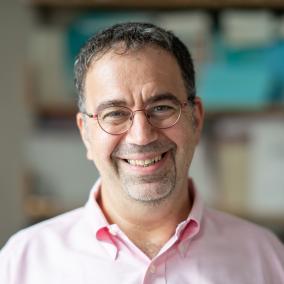
Daron Acemoglu
Turkish-American economistWikipedia
24
MENTIONS
17
EPISODES
16
PODCASTS
Search complete. 24 mentions across 17 episodes found for "Daron Acemoglu".
Nov 20, 2026

Trevor TombeGUEST
the ingenuity and intelligence that we're bringing to bear on our problems.
Trevor TombeGUEST
The generic point that you mentioned in the Acemoglu paper is that innovation is not this random process where ideas are just popping every which way.
Trevor TombeGUEST
It responds to the environment that you're in.
Trevor TombeGUEST
And you can direct technical change, if you will, to address some of the challenges that you face.

David ShapiroHOST
Elites only grant rights when the cost of repression exceeds the cost of concession.
David ShapiroHOST
Acemoglu and Robinson are on the same page.
David ShapiroHOST
Throughout all of modern history, this has been the way that we extract rights.
David ShapiroHOST
Whether that is anything from the right to vote, to civil rights, to women's rights, to the eight-hour workday, to the weekend, all of those are examples of

Erik BrynjolfssonGUEST
The government has tax policy and hundreds of other policies that reward managers and others for making certain kinds of investments.
Erik BrynjolfssonGUEST
And if you unpack that, according to my former MIT colleague, Daron Acemoglu and Pascal Restrepo, there's about a 5x gap between what happens if you invest in capital versus labor.
Erik BrynjolfssonGUEST
And so in particular, you end up paying a lot more taxes when you invest in labor than when you invest in capital.
Erik BrynjolfssonGUEST
So that's basically the government putting its thumb on the scale.

Tian YangGUEST
But the problem is, all it does is exacerbate your existing institution.
Tian YangGUEST
So if you go back to, this is a work of, you know, Daron Acemoglu or original, right? Whatever institutional constraints and biases you have, your productivity boom merely exaggerates it and delays it, right? So unfortunately, that wasn't really a good one.
Tian YangGUEST
Believe me, I tried to be optimistic and look.
Joe WeisenthalHOST
First of all, also another headline.

Ethan MollickGUEST
I mean, a lot of people are modeling this out, right? And this is an ongoing debate.
Ethan MollickGUEST
And I've debated, you know, Daron Acemoglu about this stuff.
Ethan MollickGUEST
I've, you know, there's Eric Brynjolfsson doing really interesting work out of Stanford on this.
Ethan MollickGUEST
And the answer is, you know, we don't really know.

Reid HoffmanHOST
I think
Ronnie ChatterjiGUEST
Daron Acemoglu has been articulating a lot of, you know, sort of counterpoints on AI that are really useful.
Ronnie ChatterjiGUEST
You know, some people would say, oh, you know, is that threatening? And I say, no, no, that's how you get better.
Ronnie ChatterjiGUEST
You know, and he's written a lot of influential books and I've learned a lot from his work.

Eva IllouzSOUNDBITE_SPEAKER
It is something I already mentioned, and many people have mentioned that.
Eva IllouzSOUNDBITE_SPEAKER
It's the sense of, you know, I found in Daron Acemoglu's latest book on the failures of liberalism.
Eva IllouzSOUNDBITE_SPEAKER
How is it called? Daron Acemoglu's latest book.
Thomas Chatterton WilliamsSOUNDBITE_SPEAKER
I'm
Eva IllouzSOUNDBITE_SPEAKER
not sure.

Adrian MaHOST
As AI gets better, certain jobs could be automated out of existence.
Adrian MaHOST
But as our other guest, MIT's Daron Acemoglu, argued during the event, there is another way.
Adrian MaHOST
Daron talked about what he calls pro-worker AI, and he gave us an example of how AI could support educators in their work.
Daron AcemogluSOUNDBITE_SPEAKER
A lot of new technologies in the ed space are aimed at replacing teachers.

Nicholas ThompsonHOST
There are all kinds of ways that AI could make it harder for democracies to function, and there are all kinds of ways it could empower autocracies and their surveillance states.
Nicholas ThompsonHOST
I figured there's almost no one better to discuss all of this than Daron Acemoglu.
Nicholas ThompsonHOST
He's a Nobel laureate economist at MIT, and he's also just written a remarkable book, What happened to liberal democracy? In it, he argues that the West made the wrong decisions with automation and social media, and that those choices made inequality worse, thus democracy harder.
Nicholas ThompsonHOST
He sees that continuing today with the ways we're building and deploying AI.
1 HR 5 MINS LATER
Nicholas ThompsonHOST
you.
Daron AcemogluGUEST
Thanks, Nick.
Nicholas ThompsonHOST
That was MIT's Daron Acemoglu.
Nicholas ThompsonHOST
If you enjoyed this episode, you might also like my conversation with Jeremy Allaire of Circle, which also gets into the economics and politics of AI.

Francesco CaselliGUEST
We could think of developing an AI which is a collaborator of the worker, which increases the productivity of workers rather than replacing them.
Francesco CaselliGUEST
Daron Acemoglu calls it pro-worker AI.
Francesco CaselliGUEST
And I think that's a very good idea.
Francesco CaselliGUEST
Why is AI today developed to be substituting for workers? Because that is what the companies that buy the AI products want.
7 more episodes mention Daron Acemoglu.
Create an account to see the whole feed, search across every transcript, and follow the entities you care about.