Daniel Wegner
American social psychologistWikipedia
15
MENTIONS
8
EPISODES
8
PODCASTS
Search complete. 15 mentions across 8 episodes found for "Daniel Wegner".
Oct 12, 2026

speaker_2HOST
What I wanna know is why my brain is so rebellious.
Lady LuckHOST
This brings us to Harvard psychologist Daniel Wegner's ironic process theory.
speaker_2HOST
Ironic process theory.
Lady LuckHOST
Wegner found that when you try to suppress a thought, your brain actually engages two distinct processes.

Adriane ThompsonHOST
And this is really fun.
Adriane ThompsonHOST
A psychologist named Daniel Wegner, he...
Adriane ThompsonHOST
Or Weiner.
Adriane ThompsonHOST
Wegner.

Aimee PrasekHOST
Everybody else, did you think of a pink elephant? So this is called ironic process theory.
Aimee PrasekHOST
Daniel Wegner was the pioneer of this work kind of in the late 1980s.
Aimee PrasekHOST
Actually, I think, uh, Fyodor Dostoevsky introduced it in one of his books in the mid-1800s.
Aimee PrasekHOST
He wrote something like, "I'm paraphrasing."

Srini PillayGUEST
So if you're emotionally overwhelmed, just naming the emotion can actually help.
Srini PillayGUEST
And the way, uh, Daniel Wegner has a theory called ironic process theory in which he talks about the fact that if we say do not do something under stress, w- the, the brain is more likely to do that.
Srini PillayGUEST
So if-
Jerry SnyderHOST
Hmm

Kayla MacDonaldHOST
But the harder you try not to do something, the more focus and attention you're giving that unwanted thing.
Kayla MacDonaldHOST
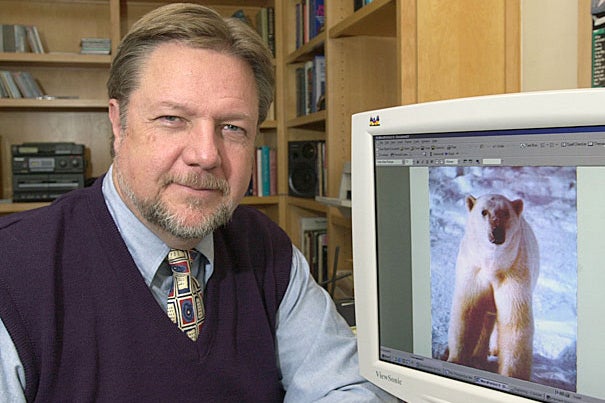
So Daniel Wegner did a study on polar bears, and he reveals what happens when you focus on not doing something.
Kayla MacDonaldHOST
He told a bunch of people not to think about a polar bear.
Kayla MacDonaldHOST
Suddenly, they were having more thoughts about white bears than they'd had all year.

Peter Ulric TseGUEST
Then you might say, okay, well then in that case, the real cause of your sneeze is dust in the nose and the feeling that you're about to sneeze is epiphenomenal in the sense that it is not the real cause of your sneeze.
Peter Ulric TseGUEST
So Libet and also Dan Wegner make the argument that consciousness is It's not the real cause.
Peter Ulric TseGUEST
Really, the real cause of things is all in the unconscious, and then they make the leap that there is no free will.
Peter Ulric TseGUEST
And I think philosophy has been very focused on this sort of gain mistakenly.

Srini PillayGUEST
Two, when you're framing your goals, try not to frame them using not.
Srini PillayGUEST
Studies have shown, based on ironic process theory, which was discovered by Daniel Wegner and described by Daniel Wegner, if you put on eye tracking devices and you say you're trying to score a penalty and you say do not kick the ball to the right, your eye goes to the right.
Srini PillayGUEST
So what you want to say is what you want to do.
Srini PillayGUEST
You don't want to not lose your temper.