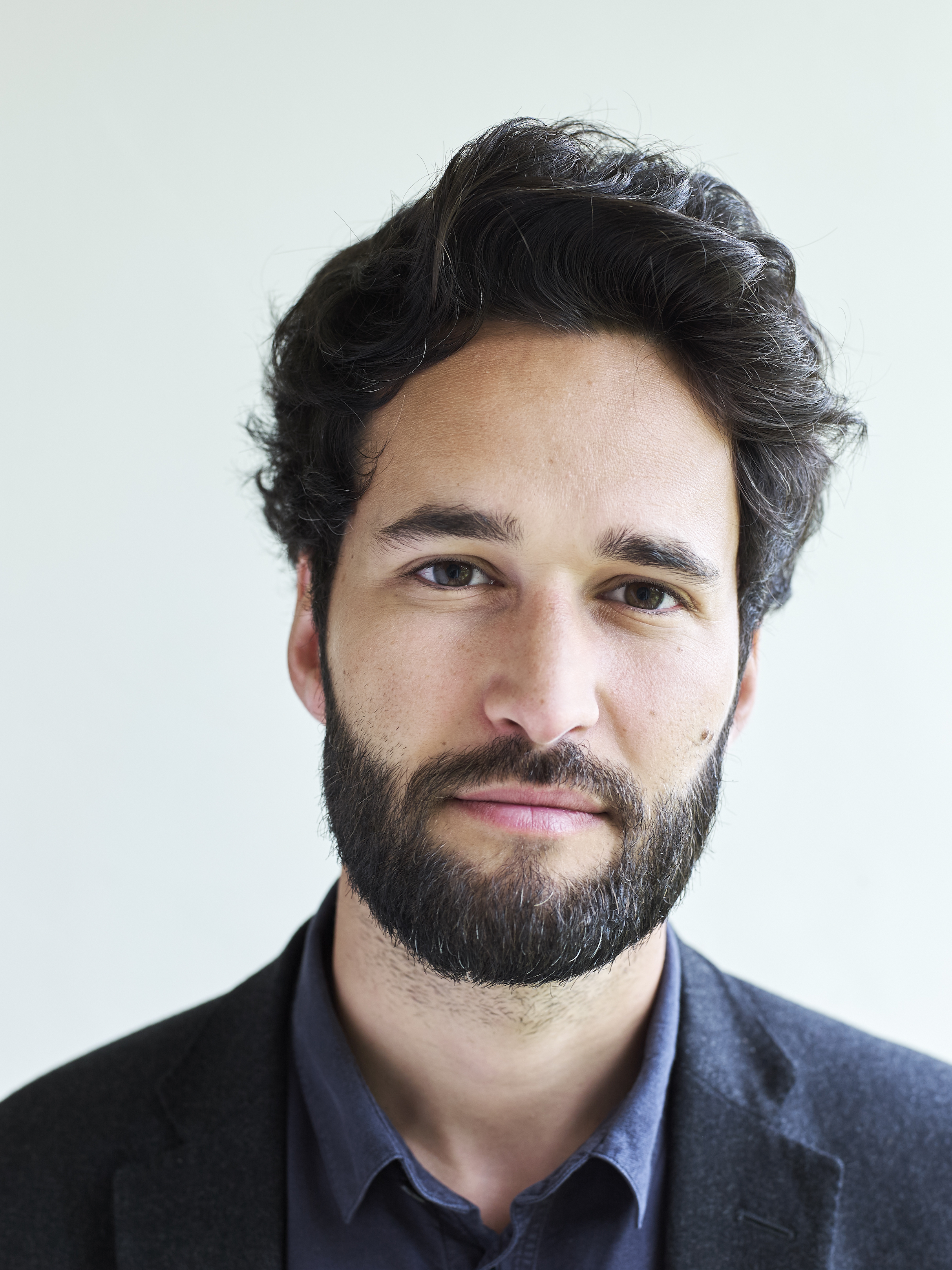
Daniel Susskind
Economist
24
MENTIONS
10
EPISODES
8
PODCASTS
Search complete. 24 mentions across 10 episodes found for "Daniel Susskind".
Sep 23, 2026

Bruce DaisleyHOST
And if you're seeking to be informed about what's happening next with work and our jobs, this is a good place to start.
Bruce DaisleyHOST
Here's my discussion with Daniel Susskind.
Bruce DaisleyHOST
Daniel, thank you so much for joining me.
Bruce DaisleyHOST
I wonder if to kick off, you could just introduce who you are and what you do.

EricHOST
And I don't know when they expect that to happen or how.
EricHOST
maybe with AI, it's not what Susskind says directly, but the answer that well, we don't have, we have this gap of meaning.
EricHOST
So the state will just create it.
EricHOST
That's the solution, feels very frustratingly weak to me.

James MenendezHOST
You're listening to News Hour.
James MenendezHOST
[news jingle] Still to come on the program, the economist Daniel Susskind tells us why traditional school subjects will continue to be essential in a future driven by AI.
Daniel SusskindGUEST
These technologies are not perfect.
Daniel SusskindGUEST
They exhibit biases, they make mistakes, they hallucinate.
Daniel SusskindGUEST
And it-- we need to keep those basics, in particular our critical faculty sharp to always be sort of testing and interrogating and pushing back on them.
James MenendezHOST
What AI means for the next generation.
James MenendezHOST
Uh, more from Daniel Susskind coming up in half an hour.
James MenendezHOST
Our main headlines from the newsroom at the moment, as we've been hearing, Germany's Chancellor Friedrich Merz has described the results of a state election as a disaster for his party.
James MenendezHOST
Well, if you're a parent, it's especially worrying.
James MenendezHOST
How do we equip the next generation with the skills to navigate the new AI era? It's a question the economist and AI ethicist Professor Daniel Susskind's been grappling with in his new book.
James MenendezHOST
It's called What Should My Children Do? When Daniel came into the News Hour studio earlier, I began by asking him what he worried about when it came to his own children's future.
Daniel SusskindGUEST
Uh, there's sort of two sets of worries.
6 MINS LATER
Daniel SusskindGUEST
The promise of resolving the, the environmental challenges.
Daniel SusskindGUEST
And so what we have always had to do with our technologies is constrain those risks, manage them, regulate them, while trying to take advantage of the benefits.
James MenendezHOST
And that was the economist and AI ethicist, uh, Professor Daniel Susskind talking to me about his new book, What Should My Children Do, uh, about how they should navigate, uh, the AI future.
James MenendezHOST
And that is it for this edition of News Hour.

Mark Pearson-FreelandHOST
Last week, we had Morgan Housel.
Mark Pearson-FreelandHOST
This week, we have a brand new author for the Moonshots podcast, which is Daniel Susskind and his 2024 book, Growth.
Mark Pearson-FreelandHOST
Which, Mike, it was pretty prolific when it came out.
Mark Pearson-FreelandHOST
You know, growth is inherently good, as we all know.
Mark Pearson-FreelandHOST
For example, with the idea of data centers all front of mind for us.
Mark Pearson-FreelandHOST
So it's an interesting one when we see, and you said this just before we hit the record button, if Morgan was our direction on how to choose what to spend on, I think Daniel's book here is helping us understand why.
Mike ParsonsHOST
The big old why question and you know, what it really was for us, I think in choosing the work of Daniel Susskind was what a perfect time to ask about why How do we want to grow? How do we want the businesses that we're in to grow, the communities that we're in to grow? These are all these kind of framing questions.
Mike ParsonsHOST
And we wanted to mix it up a little bit because we don't want to mindlessly grow for just more money.

Daniel SusskindGUEST
There's lots of strange things on the beach, shells and jellyfish, and there was this bone.
Ros AtkinsHOST
Last year, the economist Daniel Susskind was on holiday.
Daniel SusskindGUEST
I picked it up and had no idea what it was, but it was fascinating.
Daniel SusskindGUEST
Sent a picture to ChatGPT.
speaker_5UNKNOWN
The letters A, E, and T each appear more than twice when you say the alphabet.
speaker_5UNKNOWN
Most letters appear just once-
Ros AtkinsHOST
But these day-to-day uses barely scratch the surface of what this technology can do and the value it's likely to bring in the coming years Here's Daniel Susskind again.
Ros AtkinsHOST
He's a University of Oxford economist and author of the book What Should My Children Do? How to Flourish in the Age of AI.
Ros AtkinsHOST
A decade on, what looked like a safe bet as a career doesn't anymore.
Ros AtkinsHOST
I talked this through with Daniel Susskind, professor of economics at the University of Oxford.
Daniel SusskindGUEST
Fast-forward 10 years, and what does it turn out that these new technologies are particularly good at doing? Writing code.
Daniel SusskindGUEST
This idea, which was meant to prepare the next generation for the rest of the century, barely prepared them to the end of school.

Shona McCallumHOST
For Tech Life, I recently looked at how we can protect children from threats online.
Shona McCallumHOST
So is AI the next thing parents need to worry about, or should we be embracing the opportunities it offers? I've been speaking to Daniel Susskind, a writer and economist who spent years examining the impact of technology on work.
Shona McCallumHOST
He is the Gresham Professor of Business and the author of a new book, What Should My Children Do? How to Flourish in the Age of Artificial Intelligence.
Shona McCallumHOST
Given all the latest warnings about AI, I began by asking Daniel, should we be allowing it anywhere near school classrooms?
8 MINS LATER
Daniel SusskindSOUNDBITE_SPEAKER
And it's really important that we, you know, we teach the next generation to, you know, take a critical, active stance with respect to these technologies, to always be, you know, pushing back and, and trying to, you know, being able to tell when these technologies are behaving idiotically.
Daniel SusskindSOUNDBITE_SPEAKER
If the next generation don't have these basics, literacy, numeracy, critical thinking, they're not going to be able to tell when these systems are behaving wonderfully or when they're behaving mistakenly.
Shona McCallumHOST
And that was Daniel Susskind, a writer and economist with a new book out, What Should My Children Do? How to Flourish in the Age of Artificial Intelligence.
Shona McCallumHOST
[upbeat music]

Mark BennettHOST
Super intelligence is the foundation for it.
Mark BennettHOST
In that kind of world, why even say that the human needs to be involved at all? And then I guess the second part of that is how many humans? Do you see, like some commentators, Daniel and Richard Susskind, predicting the professions are going to contract in terms of numbers of people employed there? What is going to be the role in terms of the human labor market in the legal realm?
Benjamin AlarieGUEST
Yeah, I think this is very difficult to predict precisely how it's going to play out.
Benjamin AlarieGUEST
And I think the articulation of the challenge, it's a real one.
15 MINS LATER
Armin AlimardaniHOST
And I think in the age of AI, that's something that is more important than before.
Armin AlimardaniHOST
And yeah, we are not talking about it enough and we are not encouraging universities to hold on to that.
Mark BennettHOST
There's this book that's coming out from Daniel Susskind called which is called What Should My Children Do? I think that's the title.
Mark BennettHOST
And it's on everyone's mind who have got kids or are worried about the future generation.

Oscar OrucheGUEST
A world without work is very interesting because it predicts the world that is run by automated machines, which we are slowly going into.
Oscar OrucheGUEST
But by Daniel Susskind as well.
Oscar OrucheGUEST
That's a very, very good book.
Oscar OrucheGUEST
And the third book is Small Actions.