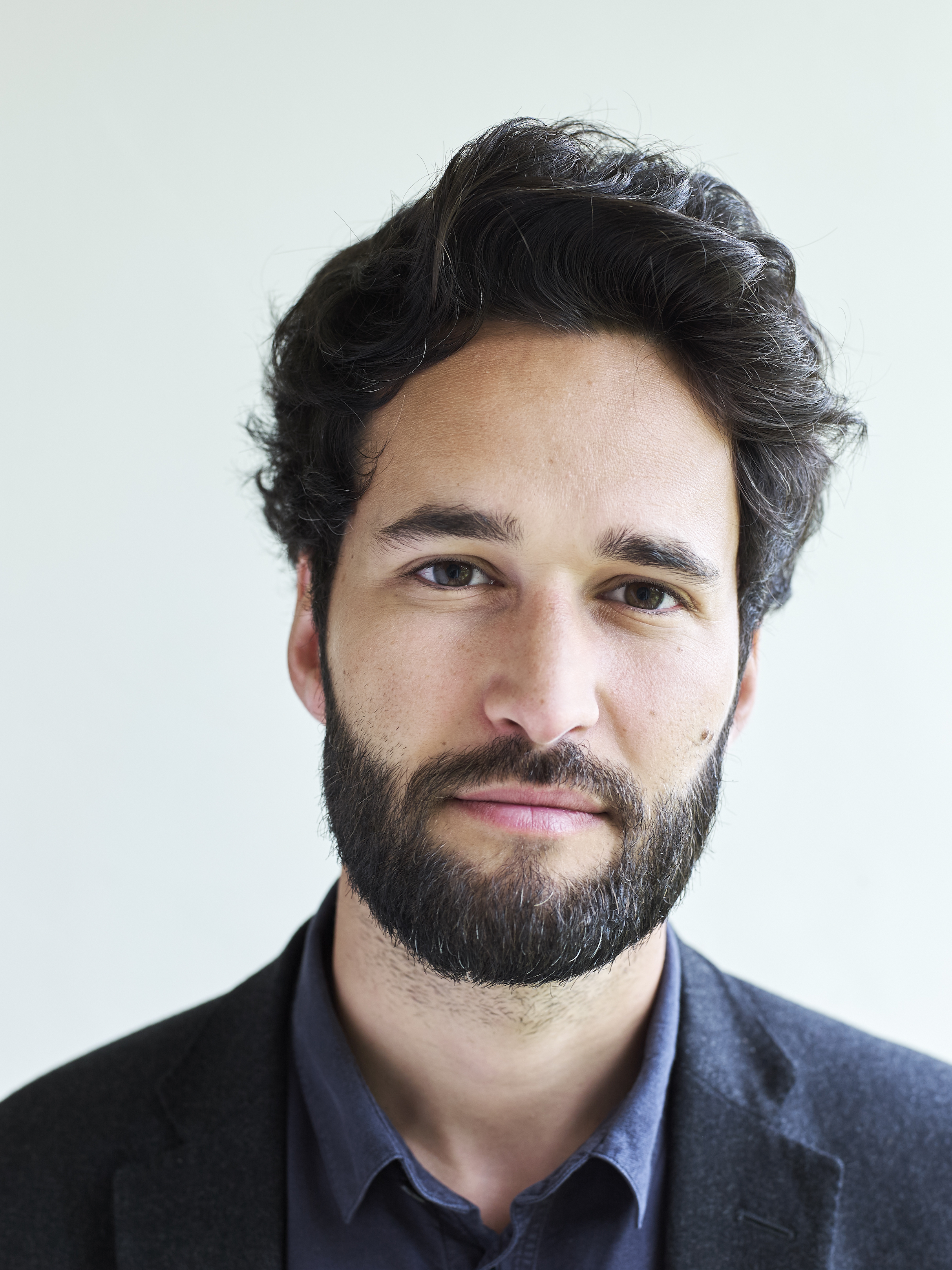
Daniel Susskind
Economist
8
APPEARANCES
6
PODCASTS
Sep 23, 2026

Bruce DaisleyHOST
Is that why your view is you've got to sort of teach both the framework of the future and the best of the old traditional methods? You're going to have a foot in both camps because no one really does know?

Daniel SusskindGUEST
So I think exactly as you're saying, the technological changes of the last few years are a death knell for the idea of future briefing.
Daniel SusskindGUEST
We just cannot predict what jobs are going to matter and what skills are going to be most valuable and important.
Daniel SusskindGUEST
2013, the then Prime Minister David Cameron says, And it's radical, it's exciting, it's bold.
23 MINS LATER
Bruce DaisleyHOST
Is that going to be something that we have to do? And if that is the case, how do we separate How do we prevent a caste system developing where, until now, our jobs have been the means for social elevation and for us breaking out of our birth becoming the determinant of our death? I'd love your brief perspective on one of the biggest questions facing society.


Daniel SusskindGUEST
I think one of the, one of the biggest pieces would be I, I, I think, you know, the, the way in which we prepare people for work is to say, "You know, what job do you want to do?" And then to say, "You know, because you want to do that job, these are the skills and capabilities you need." And, and I think actually that approach is going to le-lead to disappointment.
Daniel SusskindGUEST
So what I write about in the book is that actually you've got to ask the question not what job do I want to do, but what problem am I interested in spending my life solving? You know, if you go into law because you want to be the sort of lawyer you saw on "Suits" or you go into medicine because you want to be the sort of doctor you saw on "House," you're going to be bitterly disappointed because what those jobs look like are going to change dramatically in the coming years.
Daniel SusskindGUEST
But if you go into these worlds because you're interested in, say, yeah, improving access to justice or solving legal problems, or you go into medicine because you're interested in solving medical problems, and you're far more agnostic, um, about what that job might look like, then I think the future's a very exciting one 'cause these problems aren't going away.
Daniel SusskindGUEST
It's just the way in which we solve those problems are going to look very, very different.
6 MINS LATER
James MenendezHOST
Just tell us a bit more about that, 'cause in a way, that was a sort of-- that, that provoked a similar scare, didn't it?
Daniel SusskindGUEST
You know, I, I think one of the most important tensions that we face is, well, look, Daniel, you say we ought to be spending a third of our time teaching young people to use these technologies, but doesn't using these technologies undermine those basics? You know, why bother learning to do long division if, you know, one of these systems can do a hard calculation for you? Why- Take the time to learn the discipline of sitting with a difficult text if you can ask one of these systems a question, and it will, you know, give you an answer in a matter of seconds.
Daniel SusskindGUEST
And what I find reassuring is that we've actually been here before, exactly as you say.
Daniel SusskindGUEST
Uh, what at that time was an extraordinarily powerful technology, and people worried in exactly the same way, "Oh my gosh, what's gonna happen to arithmetic?" And what happened, which was really interesting, in the UK was that the, the British government asked this relatively obscure academic, a man called Wilfred Halliday Cockcroft, who was a professor at the University of Hull, to do a report into the state of mathematics education in the UK, and wrote this vast report.
Daniel SusskindGUEST
There's this amazing chapter in it where he thinks about the response to the electronic calculator, and he-- and, and part of it's just really realistic.
James MenendezHOST
Uh, and, uh, in a similar bent, another sort of more optimistic example you give is that computers can play better chess than anybody else in the world now, and yet people are still playing chess, and in fact it's growing in popularity.

James MenendezHOST
Just tell us a bit more about that, 'cause in a way, that was a sort of-- that, that provoked a similar scare, didn't it?
Daniel SusskindGUEST
You know, I, I think one of the most important tensions that we face is, well, look, Daniel, you say we ought to be spending a third of our time teaching young people to use these technologies, but doesn't using these technologies undermine those basics? You know, why bother- Learning to do long division if, you know, one of these systems can do a hard calculation for you.
Daniel SusskindGUEST
Why take the time to learn the discipline of sitting with a difficult text if you can ask one of these systems a question and it will, you know, give you an answer in a matter of seconds? And what I find reassuring is that we've actually been here before, exactly as you say.
Daniel SusskindGUEST
Uh, what at that time was an extraordinarily powerful technology, and people worried in exactly the same way, "Oh my gosh, what's gonna happen to arithmetic?" And what happened, which was really interesting, in the UK was that the, the British government asked this relatively obscure academic, a man called Wilfred Halliday Cockcroft, who was a professor at the University of Hull, to do a report into the state of mathematics education in the UK, and wrote this vast report.
Daniel SusskindGUEST
There's this amazing chapter in it where he thinks about the response to the electronic calculator, and he-- and, and part of it's just really realistic.
James MenendezHOST
Uh, and, uh, in a similar bent, another sort of more optimistic example you give is that computers can play better chess than anybody else in the world now, and yet people are still playing chess, and in fact, it's growing in popularity.


Daniel SusskindGUEST
And I look at this moment in the 70s and 80s when people are really unsettled by the powerful new technology of their time, which is the calculator.
Daniel SusskindGUEST
And it sounds sort of silly to us today, but actually at the time people were really concerned.
Daniel SusskindGUEST
And one of the concerns that they had is quite similar to the one you're talking about, which is what is going to happen to arithmetic in this country if people are able to use this powerful little computer they have in their pockets? And what happens, and it's actually a sort of great British innovation, is that this relatively obscure academic, a man called Wilfred Halliday Cockcroft, who's a professor at Hull, one of the few people in the country who's been thinking about maths education in the 70s and 80s, The British government asked him to do a report into the state of maths education.
11 MINS LATER


Ros AtkinsHOST
But if we can't hear the difference, why is that? Daniel Susskind offers an explanation.
Daniel SusskindGUEST
[soft music] If I walk into the Sistine Chapel, for instance, and look at the ceiling, I think, "Gosh, not only is that extraordinarily beautiful," but I also think, "Isn't it amazing that a human hand, flesh and blood like my own, came up with that? A mind like mine dreamt up something like that." I think there are many parts of our lives where we value not simply the outcome, but also the process, and in particular, the fact that a human being is involved.
6 MINS LATER
Ros AtkinsHOST
But we should be honest, there are examples, many of them, where the reverse may be true
Daniel SusskindGUEST
I was once in a room of accountants and a particularly boisterous accountant stood up and said, "Look, you don't understand.
Daniel SusskindGUEST
They want the human process." And I said, "That isn't why they come to you.
Daniel SusskindGUEST
They come to you because they want their taxes done efficiently and effectively.
Daniel SusskindGUEST
And if they can find a way to do it that isn't going to rely upon coming to sit with you, they're going to do it instead
Ros AtkinsHOST
I can definitely think of moments where I think, "Well, what do I specialize in? I specialize in, I hope, being able to write and speak clearly about the events that are going on in our world." I like to think those skills still have value, but of course, we're all looking at this technology around us and thinking, "Is what I'm offering gonna be replaced?"
Daniel SusskindGUEST
There's also a question that I think is on many people's minds at the moment, which is, in a world of extraordinarily capable technologies, is the work that I do, is the work that I've trained to do, is the work that I wanted to do, is it still there for me? I think there's going to be a kind of big reshuffling in the working world.
Ros AtkinsHOST
Surely one of the things that's most unsettling about this moment isn't just the value shift that's occurring, it's the pace of it and the scale of it.
Daniel SusskindGUEST
It's partly the scope in the sense that for the first time it's really seems like white-collar activities are at risk.
Daniel SusskindGUEST
Partly it's the generality that these systems just seem to be so very good at so very many things.

Jun 8 · 39m
Viet Thanh NguyenGUEST
These are very, very bad signs, but they're also repetitions of things that the United States has been doing fairly consistently in the post-World War II era.
Daniel SusskindGUEST
I think Brexit is a really good example of a difficult trade-off being badly [laughs], badly managed by our existing political institutions.
Daniel SusskindGUEST
The idea of resolving such a difficult question through a referendum, a sort of one-shot yes or no mechanism, where the deliberation that informs that referendum isn't the kind of careful, considered deliberation of a citizens' assembly where you've got lots of time and you're well briefed and you can discuss civilly, but instead it's done politically through political campaigns and through adversaries.
Daniel SusskindGUEST
Because, you know, fundamentally, Brexit is a trade-off between growth and other things that we might value and care about.
Daniel SusskindGUEST
That stuff has a value, but of course, so does the economy and so does growth in the economy.
speaker_13UNKNOWN
They're not gonna go away all by themselves, and yet that's the way this society is dealing with the fire in Los Angeles or each, uh, of the other problems.