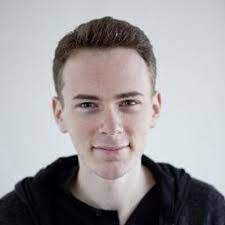
Daniel Gross
Israeli businessmanWikipedia
12
MENTIONS
8
EPISODES
8
PODCASTS
Search complete. 12 mentions across 8 episodes found for "Daniel Gross".
Sep 14, 2026

Scott BrickNARRATOR
He paid $14.3 billion for a stake in Scale AI and installed its founder, Alexander Wang, as Meta's head of AI.
Scott BrickNARRATOR
He recruited ChatGPT co-creator Shengjia Zhao, former GitHub chief Nat Friedman, safe superintelligence co-founder Daniel Gross, and picked off dozens of other defectors from OpenAI, Anthropic, and Google DeepMind.
Scott BrickNARRATOR
He cut hundreds of employees from the older organizations, and LeCun soon left.
Scott BrickNARRATOR
Within one quarter, MSL was up and running.

Joseph CarlsonHOST
This is, to him, the biggest race that he could be in, and Mark Zuckerberg has given him every resource to continue.
Joseph CarlsonHOST
He recruited the Chachapiti co-creator, Shengjia Zhao, from former GitHub chief, Nat Friedman, the safe super intelligence co-founder, Daniel Gross, and picked off a dozen of other defectors from OpenAI, Anthropic, and Google DeepMind.
Joseph CarlsonHOST
He cut hundreds of employees from the older organizations.
Joseph CarlsonHOST
Within one quarter, MSL was up and running.

Federica NicolardiGUEST
While we were col-collaborating on the open pro... uh, on the open papyri, uh, Brent at some point told me, "You know, um, we have this thing going on." I, I knew about his, uh, uh, experiences and his idea of trying to open virtually, uh, the Herculaneum papyri, and we were discussing possibilities of, um, writing, uh, proposals together and everything.
Federica NicolardiGUEST
At some point, he talked to me about this, uh, competition because he was contacted by a guy in the, in the Silicon Valley, Sohrab Friedman, uh, an investor who, together with his colleague Daniel Gross, wanted to fund, uh, the, uh, this competition.
Federica NicolardiGUEST
So he talked to me about it and, uh, and, uh, you know, at the beginning I thought, "Okay, this is very interesting, but I, I probably stay...
Federica NicolardiGUEST
I, I probably need to stay with my feet on the ground.
44 MINS LATER
BennyHOST
And would that be something that you as a, a papyrologist could then discover and maybe the, the connection could make? Or is the, is the, the, the quality of this scrolls, you know, specific maybe to, to faint to, to discover that? Or what is the kind of like, um, um, discovery that you hope to make the most, and, and what has stood out for you at the moment, uh, Mariachiara, from reading this? Because you're working on this scroll specifically, right, to write a, a, a, a post doctorate on it as well?
Maria Chiara RobustelliGUEST
Um, yes, in the Visuis Challenge work I...
Maria Chiara RobustelliGUEST
In the Visuis Challenge project, I worked for, on these papyrus with my colleagues.
BennyHOST
Mm-hmm.

Kate WillettHOST
Him and Tyler Cowen started a think tank together whose name I'll remember in a little bit.
Kate WillettHOST
But then there's also Daniel Gross, an Israeli-American, I'm just reading from Wikipedia now, an Israeli-American businessman who also serves as a partner at Y Combinator.
Kate WillettHOST
Wow.
Kate WillettHOST
What a cursed sentence.

Patrick BoyleHOST
The fund was called Situational Awareness, and the Wall Street Journal reports that this was a crash he never saw coming, which does raise a small question about the name of the firm.
Patrick BoyleHOST
He'd raised the money mostly from Silicon Valley tech executives, the Stripe founders Nat Freeman, Daniel Gross, then borrowed a great deal more from Wall Street prime brokers to bet heavily and in one direction on the rapid advancement of artificial intelligence.
Patrick BoyleHOST
Now, borrowing billions to make a concentrated bet on a single volatile sector is generally considered a high-risk strategy.
Patrick BoyleHOST
When the market recently reconsidered whether artificial intelligence would be immediately profitable, his lenders sent a wave of margin calls, and the fund lost about 67% of its value in a single month, which is generally considered a poor month.

Keith RaboisGUEST
But I think the art is finding people and identifying their abilities beforehand.
Keith RaboisGUEST
they've demonstrated with work product so you know one of the predictions prognostications and quora posts i'm most proud of is in 2010 i was asked who are the people you would fund under any circumstance sort of regardless of what idea they were chasing and i listed about eight people that one looks pretty good in retrospect remember this was written in april i believe in 2010 it was sam altman Daniel Gross, and a bunch of other pretty good calls.
Keith RaboisGUEST
So Brian Chesky.
Keith RaboisGUEST
So that's the hard part and the hard part of venture capital as well.
58 MINS LATER
Keith RaboisGUEST
Well, the funny thing is, as you probably know, I never ask people this question.
Keith RaboisGUEST
It shocks people all the time.
Keith RaboisGUEST
A lot of very good investors who are founder-driven, like Daniel Gross, for example, or Doug Leone, really dive into people's childhood, and that's an important part of their assessment.
Keith RaboisGUEST
I'm a very founder-driven investor, and I almost never ask questions about their childhood.

Jay SinghGUEST
Um, you know, so basically his seeds were, like, Patrick and John Collison, you might know them, the co-founders of Stripe.
Jay SinghGUEST
Uh, Nat Friedman, the former GitHub CEO, and Daniel Gross, and then Graham Duncan, who's the founder of East Rock Capital.
Jay SinghGUEST
So they actually only gave him about $225 million of initial capital to start.
Jay SinghGUEST
Um, and so then he got other investors as his, as his returns started to be good last year.