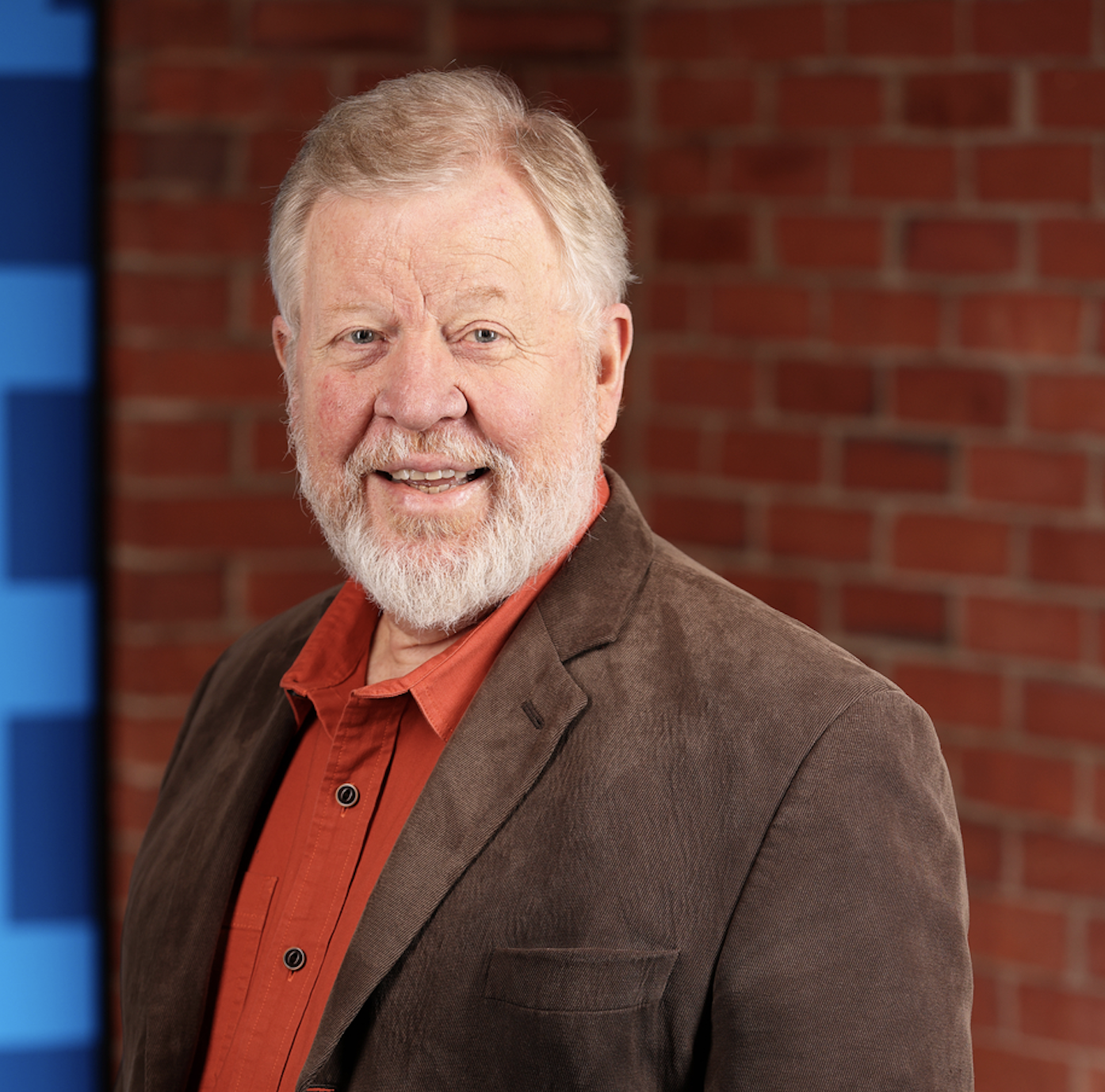
Daniel Everett
American linguist and authorWikipedia
13
MENTIONS
9
EPISODES
9
PODCASTS
Search complete. 13 mentions across 9 episodes found for "Daniel Everett".
Oct 26, 2026

India RakusenHOST
That is, until a young American missionary in his mid-20s turned up.
India RakusenHOST
He's called Dan Everett.
India RakusenHOST
And actually, he's one of the voices you can hear
speaker_3SOUNDBITE_SPEAKER
now.
39 MINS LATER
Dan EverettGUEST
He was the sweetest, most patient teacher that I've ever had.
Dan EverettGUEST
I miss him terribly.
India RakusenHOST
That was Dan Everett.
India RakusenHOST
My huge thanks to him and to you for lending us your ear.

Daniel EverettSOUNDBITE_SPEAKER
If that's what recursion is, then the fact that it's absent in a language means that this language is fundamentally different.
Brad KellyHOST
That was from Daniel Everett, a linguist with decades of experience in the field.
Brad KellyHOST
His work has been at the forefront of pushing back on Chomsky's notion of universal grammar.
Brad KellyHOST
I just wanted to put something in here to counter the Chomskyan tendencies of modern linguistics.

CadeHOST
What was the first religion that you looked into? And did you have any of those specific moments where you're like, wait, this isn't just different than what I was used to, but it's an entirely different paradigm?
River WardGUEST
Yeah, well, before, real quick, literally today, I had just heard of this guy, Daniel Everett, who is a famous linguist, and he was an evangelical Christian missionary to this tribe.
River WardGUEST
I don't remember the name of the, it was the Piraha tribe.
River WardGUEST
And the language of this tribe is completely like here and now and built into their language.
River WardGUEST
Or he went fishing, I heard about it.
River WardGUEST
Or X, Y, Z, like that, like it's built into their language.
River WardGUEST
So, Daniel Everett, when he was young and this missionary, he tried to think of how to possibly teach the gospel of Jesus who lived 2,000 years ago to these people.
River WardGUEST
And it was just built literally into their language of, why should we care about this Jesus guy? No one saw him.

Andrew CutlerGUEST
It seems like they borrowed some pronouns, but they don't really use pronouns.
Andrew CutlerGUEST
Um, there's this guy, this linguist, Dan Everett, who worked with them for a couple decades.
Andrew CutlerGUEST
Um, and he, yeah, he, he tried to teach them to count for, [chuckles] for like a year.
Andrew CutlerGUEST
He, every week or a couple times a week, there were classes and nobody got past three.

Joshua CutchinGUEST
Almost definitionally, I think you have to accept that a spirit world would use the physical world as a medium to express itself.
Joshua CutchinGUEST
I mean, there, there's, there's this book that I actually think is really important to my thesis in Fourth Wall Phantoms by Daniel Everett, who was recently on The Joe Rogan show, um, and got a lot of attention for all the wrong reasons.
Joshua CutchinGUEST
'Cause I actually think he's a smart guy, but he said some sort of knuckleheaded things.
Tim RennerHOST
Well, it is Joe Rogan.

Daniel EverettGUEST
I, I was, uh...
Daniel EverettGUEST
Before I, I be- reconverted back to atheism and, uh, gave up my Christian faith, I was Reverend Dr. Daniel Everett.
Daniel EverettGUEST
Um, and I studied the Bible, and I was interested in the ancient texts.
Daniel EverettGUEST
Um, my research moved on then to Amazonian languages and then the nature of human language.

Jonathan BirchMODERATOR
But still, people do say that.
Irene PepperbergGUEST
Well, the interesting thing is if you believe Dan Everett, not every human language actually has recursion.
Irene PepperbergGUEST
And if you also look at the work of Jane Ellen Huttenlocher, who looked at young children, she was working at the University of Chicago, and she could look at children from the slums around Chicago and then look at the children who were basically their parents were University of Chicago graduate students or faculty.
Irene PepperbergGUEST
And she found that the children in this low socioeconomic situation Their parents didn't use recursive sentences with them, and they didn't have recursion in their repertoire.

Jonathan BirchHOST
But still, people do say that.
Irene PepperbergGUEST
Well, the interesting thing is if you believe Dan Everett, not every human language actually has recursion.
Irene PepperbergGUEST
And if you also look at the work of Jane Ellen Huttenlocher, who looked at young children, she was working at the University of Chicago, and she could look at children from the slums around Chicago and then look at the children who were basically their parents were University of Chicago graduate students or faculty.
Irene PepperbergGUEST
And she found that the children in this low socioeconomic situation Their parents didn't use recursive sentences with them, and they didn't have recursion in their repertoire.

Jonathan EvisonHOST
I feel like there's so much we could learn from these cultures and so much we've forgotten along our relentless march towards progress.
Jonathan EvisonHOST
My guest today, linguist and anthropologist Daniel Everett, spent four decades studying and living among the Piraha of the Amazon.
Jonathan EvisonHOST
And he has stories to tell.
Jonathan EvisonHOST
Daniel is the author of over a dozen books, most recently Don't Sleep, There Are Snakes.
Jonathan EvisonHOST
Please welcome this week's Fresh Face in Hell, Daniel Everett.
Jonathan EvisonHOST
Daniel, thanks for joining us.
Jonathan EvisonHOST
Great to be here with you.
1 HR LATER
Daniel EverettGUEST
And I've seen so many horrible injuries where people didn't show much pain at all.