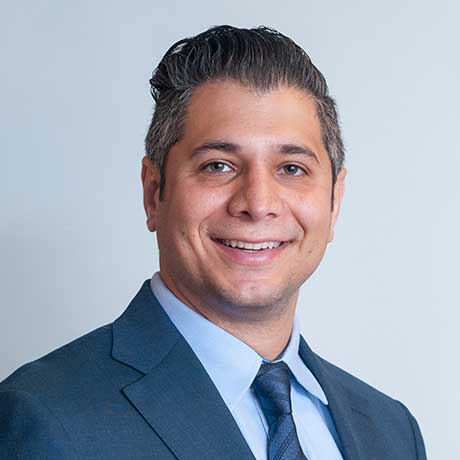
Daniel Daneshvar
NeuroscientistWikipedia
8
MENTIONS
5
EPISODES
5
PODCASTS
Search complete. 8 mentions across 5 episodes found for "Daniel Daneshvar".
Sep 2, 2026

Georgie PageHOST
Researchers looked at the brains donated by 235 families for the study, and 215 of those brains showed signs of CTE.
Georgie PageHOST
Now, we need to bear in mind that as lead author Dr. Daniel Daneshvar from Harvard Medical School says, families are more likely to donate a brain when they've already noticed memory issues, mood changes, or behavioral changes while the person was alive, which can skew the numbers.
Georgie PageHOST
Even so, Dr. Daneshvar says the possible rate of CTE among NFL players is very concerning, pointing out that less than 1% of the general non-athlete population develops this kind of brain damage.
Georgie PageHOST
And the bit that is really scary for us all, the majority of these players' head knocks didn't happen during major league games, but instead in their early years, from junior sporting into high school and at university.

Brian SimpsonGUEST
Yeah.
Joe RoganHOST
Said Dr. Daniel Daneshvar, the study's lead author.
Joe RoganHOST
The study found the maximum possible prevalence of CTE was around 97%, but the true rate is somewhere in the middle.
Brian SimpsonGUEST
Yeah.

Nate RottHOST
A quarter, so, like, one in four.
Becky SullivanGUEST
Yep, and the study's lead author, a doctor named Daniel Daneshvar, who directs a brain function lab at Mass General Brigham, says that number is the low end.
Daniel DaneshvarSOUNDBITE_SPEAKER
Counting only the cases of CTE that we diagnosed ourselves, we found the minimum rate of CTE between 2016 and 2021 was 25%.
Daniel DaneshvarSOUNDBITE_SPEAKER
At the upper end, the maximum rate of CTE was 98%, and so the true rate of CTE at death is somewhere in the middle there.
6 MINS LATER
Becky SullivanGUEST
I mean, that's actually really the whole thing with CTE research, and I've written about so many CTE studies where I make that point in the story of, like, look, there's sample bias because 93% of all these NFL player samples in this brain bank have CTE, but you can't draw too many conclusions from that for exactly the reason you say.
Becky SullivanGUEST
And so that, of course, was on the mind of the authors of this survey, this study that we're talking about.
Becky SullivanGUEST
Here again is lead author Dr. Daniel Daneshvar.
Daniel DaneshvarSOUNDBITE_SPEAKER
And so whenever we look at the percent or the rate of neurodegenerative disease in specific brain bank populations, we know that it's not presenting an accurate picture of what's really going on with the overall population or sample.

Brad MielkeHOST
They just wanna know straight up, "If my kid plays football, what is the likelihood they will suffer for the rest of their lives?" Well, yesterday, researchers published a study in the British Medical Journal making a startling claim that between the years 2016 and 2021, of all the former NFL players who died those years, one in four of them had CTE.
Brad MielkeHOST
Let's start the day with Dr. Daniel Daneshvar.
Brad MielkeHOST
He's the chief of brain injury rehabilitation at Harvard Medical School.
Brad MielkeHOST
He's the co-director of the Sports Concussion Program at Mass General Brigham.
8 MINS LATER
Daniel DaneshvarGUEST
... that are specific to this type of process later in life.
Brad MielkeHOST
Really useful.
Brad MielkeHOST
Uh, Dr. Daniel Daneshvar, uh, from Harvard a- and Mass General, also a member of BU's renowned, uh, CTE center, thank you so much.
Daniel DaneshvarGUEST
Thank you very much for having me.

Neal FreymanHOST
The editorial page editor said, "AI is a fact of modern life.
Neal FreymanHOST
People will use it to assist in their work, in their writing, including with research, checking grammar, editing and more." So he said this is fine because we just wanna make sure it reflects the author's original argument, so all good on the Wall Street Journal front.
Neal FreymanHOST
I don't know if they were prepared to issue a statement on this, but they were asked and they said, "Yeah, all good with us." And then on the other side, you had the Financial Times.
Neal FreymanHOST
Recently, uh, this went viral.
Toby HowellHOST
We'll see if this latest study does anything to change that approach going forward.
Neal FreymanHOST
Yeah.
Neal FreymanHOST
The lead author of the study, uh, Dr. Daniel Daneshvar, said, "We know what's causing this.
Neal FreymanHOST
Everyone knows what leads to CTE, and it's repeated impacts to the head over a life cumulatively." So it is...