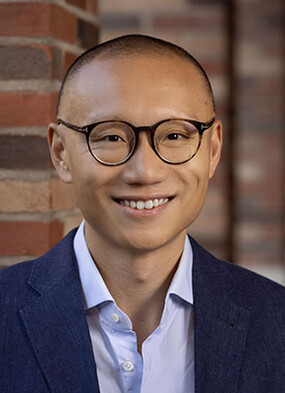
Dan Wang
Canadian writerWikipedia
14
MENTIONS
11
EPISODES
11
PODCASTS
Search complete. 14 mentions across 11 episodes found for "Dan Wang".
Sep 10, 2026

Saagar EnjetiHOST
I just come back to there is literally no re-- I mean, again, my China reading, every model has to be registered and evaluated by the Chinese government.
Saagar EnjetiHOST
The Chinese government itself, I encourage everybody to go read Dan Wang's book.
Saagar EnjetiHOST
To the extent that the CCP and the-- is a soc-- that China is a society of elites.
Saagar EnjetiHOST
Its elites are engineers.

Annrai O'TooleGUEST
I'm not fully certain where we are in the current cycle, but we're probably not at the top.
Adrian WecklerHOST
There's a great book by Dan Wang about China, comparing China and America.
Adrian WecklerHOST
And his basic thesis is that China is run entirely by engineers and America is run entirely by lawyers.
Adrian WecklerHOST
And even though you have a few breakout companies in the States, the giants, and it's a very entrepreneurial place, by and large, it's being hampered by the lawyers.

Type Three AudioNARRATOR
It's therefore very easy for those identities to end up anchored to an external status hierarchy, especially for the many students who go into a lot of debt to attend college and are relying on their newfound class privilege to make that choice financially worthwhile.
Type Three AudioNARRATOR
Dan Wang has a very compelling blog post on the resulting Girardian terror, which I'll quote at length.
Type Three AudioNARRATOR
Quote.
Type Three AudioNARRATOR
It's hard to construct a more perfect incubator for mimetic contagion than the American college campus.

Ruy TeixeiraGUEST
I mean, Democrats for better, well, and worse, really for worse, have become associated with inefficient allocation of resources, not paying enough attention to getting banged for your buck, and being super attentive to the dictates and procedural constraints that are now embedded in our laws and in a lot of the infrastructure that surrounds policymaking like NGOs and so on.
Ruy TeixeiraGUEST
As Dan Wang memorably put it, the industrial policy in the United States is industrial policy as devised by the Yale Law School.
Ruy TeixeiraGUEST
So that's not a good idea.
Ruy TeixeiraGUEST
And it hasn't worked out too well.

Dina Temple-RastonHOST
Entire subway systems, high-speed rail, cities that seem to appear almost overnight.
Dina Temple-RastonHOST
Economist Dan Wang has spent years thinking about what makes China so good at this.
Dina Temple-RastonHOST
He's the author of Breakneck: China's Quest to Engineer the Future.
Dina Temple-RastonHOST
And one of the places that helped him understand it was one of China's poorest provinces, which he decided to cross on a bicycle.
Dina Temple-RastonHOST
From Recorded Future News and PRX, this is Click Here, a show about the people making and breaking our digital world.
Dina Temple-RastonHOST
I'm Dina Temple-Raston.
Dina Temple-RastonHOST
Dan Wang has a theory about why China builds the way it does.
Dina Temple-RastonHOST
Basically, he thinks it comes down to who's in charge.

Claire ZauHOST
But it's interesting.
Claire ZauHOST
There is this great book by a guy called Dan Wang called Breakneck.
Claire ZauHOST
And it really talks about why, you know, China has been able to scale a lot of the robotics industry and manufacturing, you know, to what I mentioned earlier.
Claire ZauHOST
They have a lot of these foundational building blocks there.

Henry FarrellGUEST
So I think that we have the power to build up.
Henry FarrellGUEST
So, uh, Dan Wang and I wrote a piece for the Financial Times a couple of weeks ago suggesting that this was, uh, you know, that these people were like, uh, they came from a Philip K. Dick dystopia.
Henry FarrellGUEST
And so we suggested that, uh, what we need to do is not to focus on the vast dreams that they have, but to focus on the communities around them, to focus on the ways that they can build up structures.
Henry FarrellGUEST
And this has happened before.

Fareed ZakariaMODERATOR
So you are, you've come to the right place, because we have three terrific people to talk to us about all of this.
Fareed ZakariaMODERATOR
Dan Wang has written probably the best book on China recently.
Fareed ZakariaMODERATOR
Julian Gewirtz was in the Biden administration, in the, the Biden White House, and has written two great books on China.
Fareed ZakariaMODERATOR
Um, Julian is a late bloomer.
50 MINS LATER
Fareed ZakariaMODERATOR
Thank you so much.
speaker_8UNKNOWN
[Instrumental music]
Tricia JohnsonHOST
Dan Wang is a research fellow at Stanford University's Hoover Institution.
Tricia JohnsonHOST
Prior to this, he was a fellow at Yale Law School's Paul Tsai China Center.

Phil RosenHOST
I think I've told you about this.
Phil RosenHOST
Uh, this guy, I believe his name is Dan Wang, and he had this great comparison between the US and China.
Phil RosenHOST
He said the US is a country of lawyers.
Phil RosenHOST
That's how the society runs.

Dalibor RohacGUEST
So I think kind of learning those lessons, we have to be careful about learning those lessons.
Dalibor RohacGUEST
heard from your question as a subtext, this reference to Dan Wang's book about China and the United States, the sort of distinction between a sort of lawyerly process-oriented society of the United States versus a sort of engineer-driven society of China.
Dalibor RohacGUEST
And I think the difference between the two goes deeper than just this.
Dalibor RohacGUEST
I mean, at the same time, I think it would serve as well to kind of recognize that there are sectors in which the Chinese might have the technological edge and are able to mobilize resources at scale.
1 more episode mentions Dan Wang.
Create an account to see the whole feed, search across every transcript, and follow the entities you care about.