Damage-associated molecular pattern
4
MENTIONS
3
EPISODES
3
PODCASTS
Search complete. 4 mentions across 3 episodes found for "Damage-associated molecular pattern".
Sep 7, 2026

Christian JenskiGUEST
It's an array of events that almost like dominoes, one topples the other and it just continues on down.
Christian JenskiGUEST
And the reality is when you're talking about things like damage-associated molecular patterns, we call those DAMPs.
Christian JenskiGUEST
There's also pathogen-associated molecular patterns that we call PAMPs.
Christian JenskiGUEST
The best thing to understand from a layperson standpoint is that It's just creating a debris field.

Eric BalcavageGUEST
So when our own tissue is damaged or there's pieces of organisms that get into circulation...
Eric BalcavageGUEST
Those, we call them PAMPs or MAMPs, microbial associated molecular peptides and DAMPs, damage associated molecular peptides, which is our own tissue.
Eric BalcavageGUEST
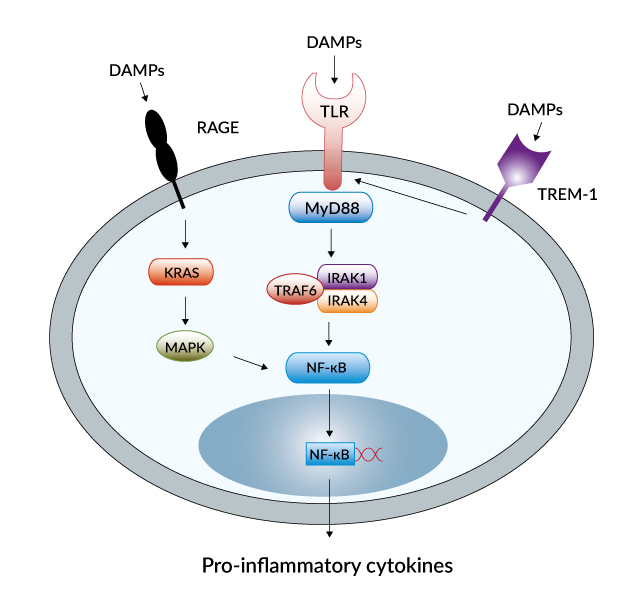
They get into circulation, they bind to receptors on immune cells and that activates the immune system and says, hey, here's the piece of tissue that's been damaged.
Eric BalcavageGUEST
Go there and help, right? Activate the forces and go help.
Eric BalcavageGUEST
Now we know what we're looking for is the problem, essentially.
Eric BalcavageGUEST
And that's how we activate the immune system.
Eric BalcavageGUEST
But those same DAMPs, PAMPs, MAMPs are in circulation, but the thyroid cell itself has receptors for those.
Eric BalcavageGUEST
And when those particles bind to the thyroid cell's toll-like receptors, that initiates, it can convert the thyroid cell into an immune-like cell that it initiates its own immune inflammatory process.

Kirstie LawtonGUEST
When it comes to inflammation, this is a key driver of neurodegenerative conditions.
Kirstie LawtonGUEST
So when a neuron is damaged, it releases what we call DAMPs, which are danger signals, and that instigates a bit of a response.
Kirstie LawtonGUEST
It perpetuates inflammation, and we see s- cell loss.
Kirstie LawtonGUEST
So we consider that.