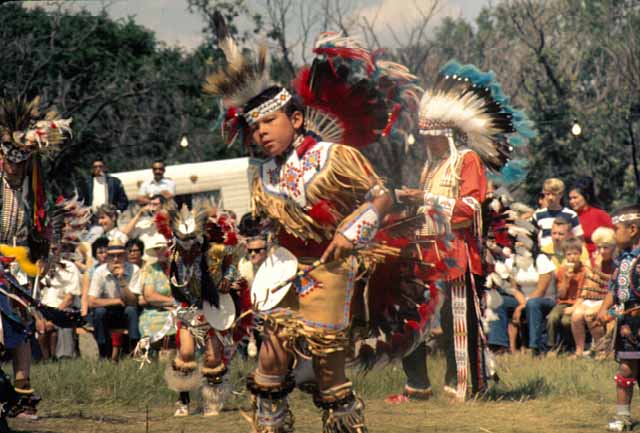
Dakota people
TribeWikipedia
141
MENTIONS
18
EPISODES
16
PODCASTS
Search complete. 141 mentions across 18 episodes found for "Dakota people".
Oct 14, 2026

Joe McClaneHOST
Glad you're here.
Joe McClaneHOST
Mankato, Minnesota holds the record for largest public hanging, 38 Dakota Indians.
Joe McClaneHOST
Lincoln was president.
Joe McClaneHOST
Uh, Bart's is what Huskers was trying to say, where Bart's class had Snake? I don't know.

TaraHOST
A lot of creation stories feature wolves.
TaraHOST
There's an Anishinaabe myth, there are stories from the plains among groups like the Lakota and the Dakota, for example.
TaraHOST
There are wolf clans in many indigenous nations, like the Cherokee and the Creek and the Haudenosaunee.
TaraHOST
There's a very extensive list of, of all of these things, which I think is pretty telling.

David NaimonHOST
And both before its publication and ever since, Layli has been creating visual art, whether in parallel to or explicitly intersecting with her practice of language making.
David NaimonHOST
Around the time of Whereas, she installed her star quilt exhibition of visual poetry, Obligations, at the Lakota-centric art space, Racing Magpie, in South Dakota.
David NaimonHOST
Since then, she's been involved in many visual arts projects, including two large-scale sculptures for Tin Works Arts in Bozeman, Montana.
David NaimonHOST
One called Day Poem Sun Mirrors, featuring lines from her Night Poems and Day Poems series, and the second made from a repurposed light cabinet from an old RV park called I Don't Trust Nobody But The Land, which itself repurposes this line from her poem Steady Summer.
28 MINS LATER
speaker_4UNKNOWN
Hmm.
Layli Long SoldierGUEST
And you know, then so they had posted this, um, digitally, um, altered poster, and then other students at the school had pressed like, and they were commenting on it.
Layli Long SoldierGUEST
It was extremely hurtful, and we had just lost a relative, I think that same month, um, in South Dakota, a young girl, a young relative.
Layli Long SoldierGUEST
And so just the fact that they didn't realize that this, this is real.

Mike MullenCORRESPONDENT
She says learning more about that history also helps Minnesotans recognize how tribal sovereignty continues to shape present day issues, including land use.
Mike MullenCORRESPONDENT
MHC helps distribute books under the Native Lives series and is collaborating with the Shakopee Mdewakanton Sioux Community on a new interactive map of Dakota history.
Mike MullenCORRESPONDENT
Away from the classroom, it's the 15th anniversary of the Why Treaties Matter exhibit on display at the Minnesota State Capitol.
Mike MullenCORRESPONDENT
It also can be viewed online, too.
Mike MullenCORRESPONDENT
If folks want to immerse themselves in a more real-life setting tied to Native history, they can schedule Dakota-led tours along the Bdote where the Mississippi and Minnesota Rivers meet.
Mike MullenCORRESPONDENT
Shin says these experiences weave together stories and past events in a beautiful way.
Sung Ja ShinSOUNDBITE_SPEAKER
It's a way for adults to step outside of their traditional learning environments and to really let those places speak to you.

Suhail StephenHOST
And as we begin this new season, we'd like to begin again with a land acknowledgement.
Mary CoswinHOST
We gather on the traditional territories of the Anishinaabe, Cree, Oji-Cree, Dakota, and Dene peoples, and on the national homeland of the Red River Métis.
Mary CoswinHOST
We acknowledge that our water is sourced from Shoal Lake 40, First Nation.
Mary CoswinHOST
We respect the treaties that were made on these territories, and we acknowledge the harms and mistakes of the past.

Aidan MattisHOST
Once again, you can use our code, THELORELODGE, for 55% off your first month, and you can click the link below in the description or the pinned comment to find it.
Aidan MattisHOST
But before you had Scentbird or Lyon County or even the concept of the state of Minnesota, the area was inhabited by the Eastern Dakota peoples.
Aidan MattisHOST
The Dakota were a Siouan language speaking people who originally inhabited all the way into northern Minnesota and the Great Lakes region.
Aidan MattisHOST
But during the 18th century, they were pushed further southwest by a war with the Ojibwa.
Aidan MattisHOST
But despite these losses in the northeastern corner of their territory, the Dakota maintained a strong trade empire, which they protected through military force.
Aidan MattisHOST
They were accomplished trappers and hunters, relying on bison to get them through the summers and then trapping beaver and other small game during the winter.
Aidan MattisHOST
Minnesota, being a land of many, many, many, many lakes and rivers, was an ideal place for beaver trapping.
Aidan MattisHOST
Having survived a smallpox epidemic in larger numbers than their agricultural sedentary neighbors, the Hidasta and Mandan tribes, the Dakota were able to establish dominance over the region.

Lindy SomicSOUNDBITE_SPEAKER
Uh, let's talk about the land for a second.
Lindy SomicSOUNDBITE_SPEAKER
Uh, the DNC acknowledges and honors the Dakota Oyate, the Dakota people, who are the original stewards of the lands and waters of Minneapolis.
Lindy SomicSOUNDBITE_SPEAKER
The Dakota cared for the lands, lakes, and the Wakpatanka, the Great River, the Mississippi River, uh, for thousands of-
Jesse KellyHOST
You, you, you got it.
Jesse KellyHOST
James Carville, he watched this happen.
James CarvilleSOUNDBITE_SPEAKER
It doesn't exist to make people feel good.
James CarvilleSOUNDBITE_SPEAKER
It exists, get this through your head, to win elections.
James CarvilleSOUNDBITE_SPEAKER
Now, do you think that is gonna help us win elections talking about land theft from the Dakotas? We're not.

Neil HarveyHOST
He joined the University of Minnesota in 2022 as Assistant Professor of American Indian Studies.
Neil HarveyHOST
In 2021, he visited the No Line 3 water protector camps in Dakota and Anishinaabe territory.
Neil HarveyHOST
There, he saw the catastrophic consequences of climate disruption and the fossil fuel economy on the tribe's sacred wild rice, called manomin.
Neil HarveyHOST
Instead of a normal harvest of eighty pounds, the epic drought left just a cup and a half of this critical food for the community and their economy.
Neil HarveyHOST
Nick Estes spoke at a Bioneers conference.
Nick EstesSOUNDBITE_SPEAKER
Anishinaabe people have an esoteric spiritual connection to manomin, which is codified within their 1855 treaty that actually protects the right of manomin to exist.
Nick EstesSOUNDBITE_SPEAKER
It's the only grain that is protected by treaty rights, by indigenous treaty rights, which isn't necessarily an aberration because Article 11 of the 1868 Fort Laramie Treaty, which was signed by my nation, the Oceti Sakowin, the Lakota Nation, and the Dakota Nations, also set aside territory for the continued perpetuation of the BdéOye Þíe, or the Buffalo Nation, or the Buffalo People.
Nick EstesSOUNDBITE_SPEAKER
And so even within these colonial treaties, these colonial laws, we inserted our rights of our relatives to exist and to continue to exist.

speaker_3NARRATOR
He then commenced to ascend the Mississippi, which was the first time it was ever attempted by a civilized man.
speaker_3NARRATOR
On the eleventh of April, they were met by a large war party of Dakotas, which filled thirty-three canoes, who opened fire on them with arrows.
speaker_3NARRATOR
But hostilities were soon stopped, and Hennepin and his party were taken prisoners and made to return with their captors to their villages.
speaker_3NARRATOR
Hennepin, in his narrative, tells a long story of the difficulties he encountered in saying his prayers, as the Indians thought he was working some magic on them, and they followed him into the woods and never let him out of their sight.
speaker_3NARRATOR
The party camped at Lake Pepin, and on the nineteenth day of their captivity, they arrived in the vicinity of where St. Paul now stands.
speaker_3NARRATOR
From this point, they proceeded by land to Mille Lacs, where they were taken by the Indians to their several villages and were kindly treated.
speaker_3NARRATOR
These Indians were part of the band of Dakotas called Mdewakantonwans, or the Lake Villagers.
speaker_3NARRATOR
I spell the Indian names as they are now known and not as they were given in Hennepin's narrative, although it is quite remarkable how well he preserved them with sound as his only guide.

Joseph ParkinsonHOST
Episodes of Ancient to Recent are out every Saturday and are available on YouTube, Spotify, and Apple Podcasts.
Joseph ParkinsonHOST
If Crazy Horse and Sitting Bull needed further evidence to win over those still amenable to compromise with the US, then they need look no further than their own Sioux cousins, the Dakota.
Joseph ParkinsonHOST
In 1851, the Dakota had signed treaties with the United States under pressure from Indian agents that accepted a reservation and signed away Bass Tracks.
Joseph ParkinsonHOST
of Dakota land.
Joseph ParkinsonHOST
At the Treaty of Traverseur de Sault, the Sisseton and Wapiton Dakota ceded around 21 million acres.
Joseph ParkinsonHOST
A second treaty was signed at Mendota by the Mediwakiton and Wapakute Dakota transferring further territory.
Joseph ParkinsonHOST
At Traverseur de Sault, the United States agreed to pay $1,665,000, but much of that money would never reach the Dakota directly, and the Senate later removed the reservation provision from the treaties.
Joseph ParkinsonHOST
Shortly, the land signed away was populated with Irish, German, and Scandinavian settlers, and what little land the Dakota still had was soon under pressure from further American encroachment.
8 more episodes mention Dakota people.
Create an account to see the whole feed, search across every transcript, and follow the entities you care about.