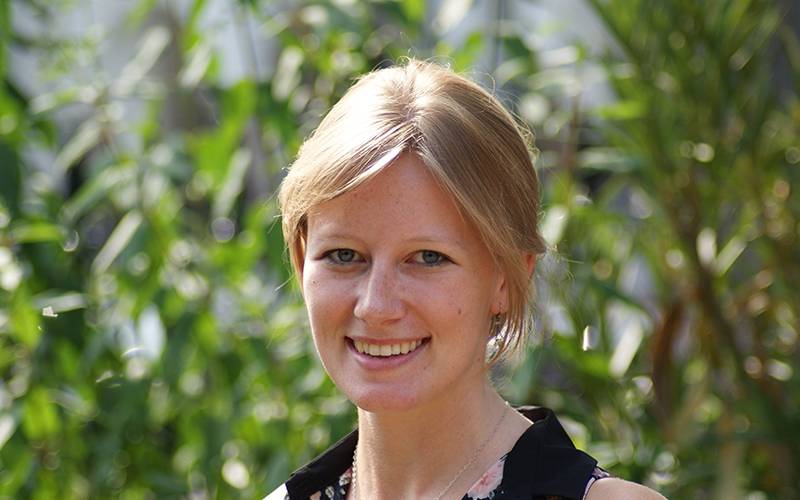
Daisy Fancourt
British researcher and professorWikipedia
14
MENTIONS
14
EPISODES
14
PODCASTS
Search complete. 14 mentions across 14 episodes found for "Daisy Fancourt".
Sep 24, 2026

Amie McNeeGUEST
Without a creative act, without making things, I think we see physiological change, and we're seeing more and more research lately that comes out that says we really do see physiological change when we don't create.
Amie McNeeGUEST
There's been some amazing research that's come out with the researcher called Dr. Daisy Fancourt.
Amie McNeeGUEST
Like, this is literally a biological need for human beings to have ideas and to make them manifest, and I just don't think we live in a culture that really respects art in that way.
Matt GibberdHOST
So interesting.

Jacob DaviesGUEST
And I think just to set that question within context, I think it's important to share that there's been a growing evidence based around the last 10, 15 years on the health and well-being benefits of engaging in arts and cultural activity.
Jacob DaviesGUEST
I would signpost listeners probably to the most prominent evidence synthesis out there on this topic, just conducted by Professor Daisy Fancourt and Dr. Saoirse Finn.
Jacob DaviesGUEST
on behalf of the World Health Organization in 2019.
Jacob DaviesGUEST
So they assessed an international body of evidence on the role the arts play in improving health and well-being of participants.

Ekaterina PopovaHOST
Now, we know that art is good for our health.
Ekaterina PopovaHOST
There's an amazing book and podcast episode we have here on the show with Daisy Fancourt all about art and how it can literally prevent dementia, slow down aging, help reduce cortisol levels, so check that out in her book, Art Cure.
Ekaterina PopovaHOST
But so when I'm in the shed in the, in my little painting studio, I oftentimes come back feeling lighter, clearer, and even have ideas for a challenge that I'm dealing with, let's say, in my personal life or business.
Ekaterina PopovaHOST
Art is also abundance because I get to share the things that bring me joy and that energy that is contained within my art with other people through sales, right? Art is also abundance because I get to pass on my wisdom, skills, and experiences through courses, through the podcast, through my writing.

Amy HausmannGUEST
I mentioned earlier that I had been down at the United Nations General Assembly in New York City last year, I think.
Amy HausmannGUEST
And, you know, we heard from different presenters, including Dr. Daisy Fancourt, who is in the UK, who just wrote a book called The Art Cure.
Amy HausmannGUEST
And she has looked at thousands of studies, really looking at the efficacies of some of this.
Amy HausmannGUEST
And because she can point to that, then when we go to state legislatures or we go to funders or philanthropy, et cetera, state governments, we actually have information that we can share that demonstrates what we have always known and have always intuited and have always felt.

Chris AppletonGUEST
Uh, at Social Rx, um, our standard care model and treatment plan is twelve doses over twelve months.
Chris AppletonGUEST
Um, and that model is, is informed by a big study that Dr. Daisy Fancourt of, uh, at UCL, University College London, that is one of the sort of pre-eminent social prescribing, uh, researchers in the world, showing that it's not every day, it doesn't even take every week.
Chris AppletonGUEST
It's just sustained ongoing engagement with the arts that's important.
Chris AppletonGUEST
A question related to, um, uh, what the mechanism is of, is it the arts? Is it social connection? Is it the behavioral activation? Is it agency? How do you untangle these things? We spoke a bit earlier about- Uh, you know, how do you generalize this to a larger population when there are so many different sort of smaller pilot programs that don't follow the same model and the same workflows? And so how do you generalize that for a larger population that healthcare can, can really buy? Um, and then, uh, of course, have to address, um, issues of equity and accessibility.

Xand van TullekenGUEST
And what I loved was that everything he said is actually supported by very good scientific evidence.
Xand van TullekenGUEST
So I have a colleague at University College London called Daisy Fancourt.
Xand van TullekenGUEST
She's a brilliant professor of neuropsychobiology, and her work is on the value of creativity in the arts in health and longevity.
Xand van TullekenGUEST
And there is good evidence that doing things you love with passion and enthusiasm and pursuing them and committing them, committing to them is great for you, and this is like the best news ever.

WillHOST
... and spent it on other things, that might actually improve your wellness.
WillHOST
And you talk about the work of Daisy Fancourt-
Xand van TullekenGUEST
Yeah
WillHOST
... who's got a fascinating book about-

Sasha Langton-GilkesSOUNDBITE_SPEAKER
They were in one hour singing.
Sasha Langton-GilkesSOUNDBITE_SPEAKER
This is Daisy Fancourt, who I think is the University College London did a study.
Sasha Langton-GilkesSOUNDBITE_SPEAKER
One hour of singing reduces the cortisol levels of stress associated, which is the kind of thing that makes your body more prone to getting cancer.
Sasha Langton-GilkesSOUNDBITE_SPEAKER
The publishers really wanted the kind of well-being and health aspect So that would come to Leonard's old age.

Mick HanniganGUEST
The arts are important for a community.
Mick HanniganGUEST
I'm currently reading an interesting book called Art Cure by Professor Daisy Fancourt, where she's reporting on studies of the beneficial effects of of engagement with artistic activity, whether it be literature, visual arts, cinema, music.
Mick HanniganGUEST
It's good for communities and it's good for us individually.
Mick HanniganGUEST
And Anne-Marie was a great...

Germaine LeeceHOST
Yeah.
Germaine LeeceHOST
And then I'm listening to Art Cure, which is a book by Daisy Fancourt.
Sophie HansenHOST
Oh.
Germaine LeeceHOST
Which, um, ironically is all about the ways art transforms our health and wellbeing.
4 more episodes mention Daisy Fancourt.
Create an account to see the whole feed, search across every transcript, and follow the entities you care about.