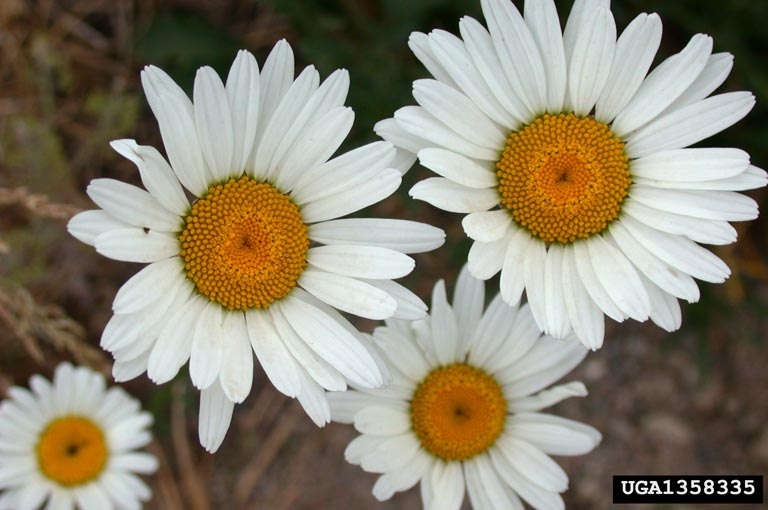
Daisy family
PlantWikipedia
52
MENTIONS
21
EPISODES
20
PODCASTS
Search complete. 52 mentions across 21 episodes found for "Daisy family".
Sep 11, 2026

speaker_3HOST
Polynesia sonchifolia.
speaker_3HOST
Unlike almost everything else we've discussed today, the legumes, the embelifers, the brassicas, the nightshades, yacon is a member of the Asteraceae family.
speaker_2HOST
Like sunflowers.
speaker_3HOST
Exactly.

speaker_3VOICE_ACTOR
Polypnea sanchifolia.
speaker_3VOICE_ACTOR
Unlike almost everything else we've discussed today, the legumes, the embellifers, the brassicas, the nightshades, yacon is a member of the Asteraceae family.
speaker_2VOICE_ACTOR
Like sunflowers.
speaker_3VOICE_ACTOR
Exactly.

Jos Vanden AbeeleHOST
Mm-hmm
Tanya QuintieriHOST
... um, it's in the Aster, Asteraceae family.
Jos Vanden AbeeleHOST
Yeah.
Jos Vanden AbeeleHOST
Yeah.

Sue AndersonNARRATOR
Let us now consider some of the methods by which weeds spread by the aid of external natural agencies, as wind, water, and animals.
Sue AndersonNARRATOR
The common thistle, dandelion, wild lettuce, and many other plants of the Compositae family have seeds to which a part of the flower, calyx, adheres in the form of a downy parachute, pappus.
Sue AndersonNARRATOR
The seeds of the common milkweed are provided with a tuft of hairs, which is a direct outgrowth from the seed coat.
Sue AndersonNARRATOR
In the fall of the year, the air is full of these little fluffy bodies, but if we examine them carefully, we will find that the seed has dropped from all of those sailing along so easily in a gentle breeze.

ChristopheHOST
It will grow back stronger next spring.
ChristopheHOST
It belongs to the very large Asteraceae family.
ChristopheHOST
The English name dandelion comes from the French dent de lion, lion's tooth, referring to the serrated shape of the leaf.
ChristopheHOST
Its Latin name is Taraxacum officinale.
ChristopheHOST
You know, they look like a little strap, a little strap-like petal.
ChristopheHOST
Well, that little strap is actually one flower, and the capitulum contains a multitude.
ChristopheHOST
It does not have tubulate flowers, unlike other Asteraceae.
ChristopheHOST
So those tubulate flowers look like little tubes, but dandelion flower doesn't have them.

ChiaraGUEST
The
Joshua EadyHOST
artichoke belongs to the Asteraceae family, which is commonly known as the daisy sunflower or aster
DaniloGUEST
family.
DaniloGUEST
Wow, so it's basically a sunflower.

Rita HoganHOST
But it's not the same as most of the milk thistle on the market is standardized milk thistle.
Rita HoganHOST
Okay? And we're talking about Silybum marianum, which is a member of the Asteraceae family, okay? And, um, I'm gonna call it the seed, and it's technically a fruit, okay? It's the seed of the plant, and most people know that.
Rita HoganHOST
Some people don't.
Rita HoganHOST
They just call it milk thistle.

Sue AndersonNARRATOR
Let us now consider some of the methods by which weeds spread by the aid of external natural agencies, as wind, water, and animals.
Sue AndersonNARRATOR
The common thistle, dandelion, wild lettuce, and many other plants of the Compositae family have seeds to which a part of the flower, calyx, adheres in the form of a downy parachute, pappus.
Sue AndersonNARRATOR
The seeds of the common milkweed are provided with a tuft of hairs, which is a direct outgrowth from the seed coat.
Sue AndersonNARRATOR
In the fall of the year, the air is full of these little fluffy bodies, but if we examine them carefully, we will find that the seed has dropped from all of those sailing along so easily in a gentle breeze.

Stephanie GeorgieffHOST
And we will be looking at Achillea millefolium, which is known in popular language as yarrow.
Stephanie GeorgieffHOST
Now, um, this is a flowering plant, again, in the Asteraceae family, and there's all sorts of interesting common names for these.
Stephanie GeorgieffHOST
I've never seen these, but I always have fun when I start doing research for this, these Materia Medica Mondays, 'cause when you look in different herbals, especially older ones, you get all these cool names.
Stephanie GeorgieffHOST
And this one I think is interesting.
Stephanie GeorgieffHOST
And, uh, the other one I like is sanguinary.
Stephanie GeorgieffHOST
Sanguine is a Latin word for the blood humor.
Stephanie GeorgieffHOST
So, uh, this Asteraceae family, which is the, uh, sunflower or daisy family, this means that it has lots of flowers in its head and also a deep taproot.
Stephanie GeorgieffHOST
And the fo- the, uh, focus of this family, uh, is that it collects sunlight in all those little flowers, and it transforms it into the soil.

Crystal ArmidaNARRATOR
The latter, the parsleys and their relatives.
Crystal ArmidaNARRATOR
With the exception of tarragon, which belongs to the Compositae, parsley and a few of its relatives, which have deserted their own ranks, all the important leaf herbs belong to the Labiatae, and without a notable exception, all the herbs whose seeds are used for flavoring belong to the Umbelliferae.
Crystal ArmidaNARRATOR
Fennel flower, which belongs to the natural order Ranunculaceae, or crowfoot family, is a candidate for admission to the seed sodality.
Crystal ArmidaNARRATOR
Costmary and southernwood of the Compositae seek membership with the leaf faction.
Crystal ArmidaNARRATOR
Rue of the Rutaceae and tansy of the Compositae, in spite of suspension for their boldness and ill-breeding, occasionally force their way back into the domain of the leaf herbs.
Crystal ArmidaNARRATOR
Marigold, a composite, forms a clique by itself, the most exclusive club of all.
Crystal ArmidaNARRATOR
It has admitted no members, and there seem to be no candidates.
Crystal ArmidaNARRATOR
Each carpel bears five longitudinal prominent ribs and several, often four, lesser intermediate ones, in the intervals between which numerous oil ducts have their openings from the interior of the fruit.
11 more episodes mention Daisy family.
Create an account to see the whole feed, search across every transcript, and follow the entities you care about.