Cytokine release syndrome
SyndromeWikipedia
86
MENTIONS
20
EPISODES
14
PODCASTS
Search complete. 86 mentions across 20 episodes found for "Cytokine release syndrome".
Sep 11, 2026

Luke RussellGUEST
Across all of those animals, we're of course monitoring the generation of cytokines.
Luke RussellGUEST
CRS is something that's pretty well understood within the CAR T field, which stands for cytokine release syndrome, and it's something that had to be managed extensively for patients who receive CAR T therapy to the point where the, um, the sites that are allowed to administer CAR T therapy have to be certified to do so, specifically because they are qualified to manage the CRS symptoms.
Luke RussellGUEST
So it's a, it's a big issue.
Luke RussellGUEST
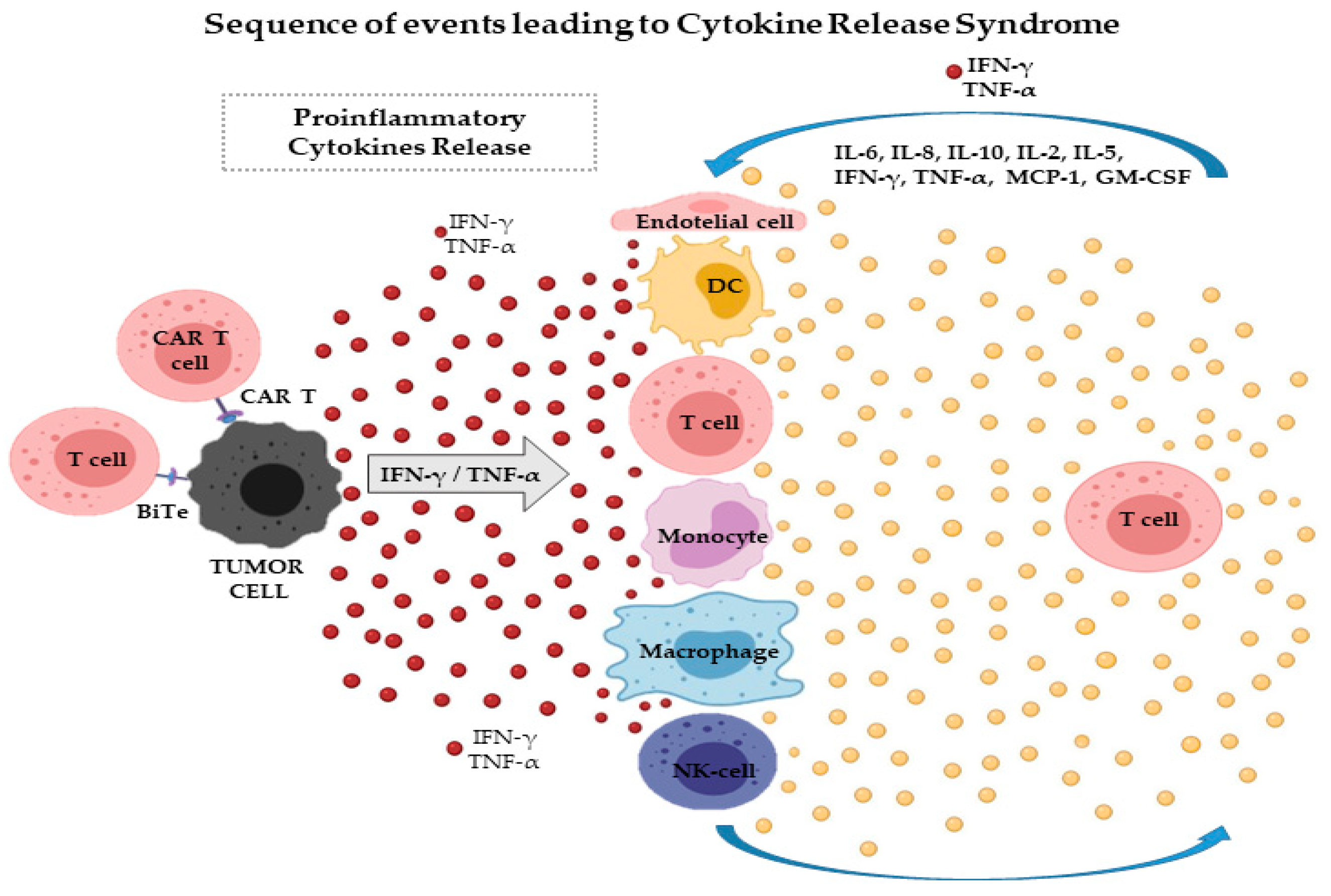
We're creating a, a massive cytokine storm inside these patients, especially when the CAR T-cells start to grow and grow.
Luke RussellGUEST
But what we didn't see was a huge cytokine reaction to the virus infusion, and I think that's kind of important.
Luke RussellGUEST
We, we expected to see an infusion reaction in these animals, and we saw much less of it than what we were anticipating.
Luke RussellGUEST
And I think that's hopefully a positive sign for, you know, these first patients who are going to be dosed with our vector, because the infusion reaction is something that you, you, you don't know exactly how it's going to proceed until you've started to dose patients, and you want to make sure that it doesn't pose this additional on top of the CRS kind of a risk for, for patients who are receiving this type of therapy.
Luke RussellGUEST
So, you know, we're not the first to do, to dose a patient with an in vivo CAR T, and we've seen a pretty wide spectrum of what this infusion reaction looks like depending on who generates the vector.

Annalisa RuggeriGUEST
So the registry, the BNT registry, helped a lot with some joint effort with the other hematological societies such as EHA and also partner society in deepening understanding how the different toxicities could be handled and early recognized.
Annalisa RuggeriGUEST
So after the early events like the severe CRS, cytokine release syndrome, and immune effector cell-related neurological toxicity, The ICANNs and CRS are nowadays more manageable, especially because we feel more confident in establishing an early treatment for preventing the massive effect of the cytokine storm, which is related to the CAR T.
Annalisa RuggeriGUEST
We also know how the disease burden is clearly impacting on the cell therapy effect.
Annalisa RuggeriGUEST
And with the possibility of advancing the line of treatment earlier in the disease phase of the patient, this is helping a lot in managing this kind of toxicity.
Lea DeLeonHOST
Early acute toxicity such as CRS and ICANN attracted a lot of attention from the start.
Lea DeLeonHOST
And are they still a main concern?
Annalisa RuggeriGUEST
CRS and ICANN are the main early events related to the toxicity of CAR-T. and are mainly due to the effect of the reaction, the cell reaction of the patients after the infusion of the product.
Annalisa RuggeriGUEST
Nowadays, we know that also with more sophisticated products, the toxicity and the difference in the construct of the CAR-T itself, the toxicity is earlier and with less lower grade of toxicity.

Krupa PandeyGUEST
Yeah.
Krupa PandeyGUEST
Um, so I think one of the most important and, uh, widely known, uh, side effects of CAR-T therapy in the oncology world is called the cytokine release syndrome, and that syndrome, or CRS for short, is what happens when you introduce something novel to the body.
Krupa PandeyGUEST
The body's innate response is to overreact to make sure that it's protecting itself.
Krupa PandeyGUEST
So again, with the introduction of these genetically modified cells, just like you would in a transplant patient, the body may initially reject those CAR-T cells, and a normal response is to release inflammatory markers to then call in other immune cells, which are usually good at fighting off things that shouldn't be there.
Stephanie BuxhoevedenHOST
Hmm.
Krupa PandeyGUEST
The other side effect that oc-can occur is, um, called the immune effector cell associated neurotoxicity syndrome, also known as ICANS.
Krupa PandeyGUEST
And ICANS is one of those things that's very similar to CRS or the cytokine, uh, release syndrome.
Krupa PandeyGUEST
But the difference is, is that in this case, those inflammatory markers reach the brain and can cause focal neurological symptoms.

Prashant KapoorGUEST
So the toxicity profiles are very different from bispecifics in many ways.
Prashant KapoorGUEST
where the CRS and ICANNs, although encountered, the rates are much lower, the severity is lower as well.
Prashant KapoorGUEST
And as we have seen, Raj, with some of these recent studies, including this Monviso study, which was presented by my colleague, Dr. Saurabh Chhabra from Mayo, Arizona, where the use of prophylactic tocilizumab, in fact, led to 0% CRS.
Prashant KapoorGUEST
Granted that these numbers were small, but these data were very, very impressive.
Prashant KapoorGUEST
Now, etentamic, which was the drug that trial utilized, it's another anti-BCMA bispecific that was utilized.
Prashant KapoorGUEST
It's given after the first step-up dose, it's given only once every four weeks and also has reduced... interaction or affinity rather with CD3, thereby making it more appealing for use because of reduced incidence of CRS.
Prashant KapoorGUEST
So overall, even without the use of prophylactic TOSI, CRS rates were low to begin with the tentamic,
Ashwin KishtagariHOST
but 0%

William G WierdaGUEST
But I think it is an important treatment for us.
Neil LoveHOST
Incidentally, when you say difficult treatment, does that kind of come down to more CRS?
William G WierdaGUEST
Yes, the logistics of doing it and the CRS and the monitoring that needs to be done and the expertise you need to have to manage the toxicities that we see with that treatment.
Neil LoveHOST
All right, well, let's take a look at this survey, and to me, this is my favorite part of this Grand Rounds series.
Neil LoveHOST
I watched a lot of these virtually, and whenever we get into these scenarios, the audience gets very engaged.
6 MINS LATER
Neil LoveHOST
But now, only one year before they have progressive disease.
Neil LoveHOST
Now, everybody says pertabrutinib, but you say pertabrutinib bridged to CAR-T.
Neil LoveHOST
So, first of all, can you talk about, in that situation, what you would consider eligibility? You mentioned the fact there's more CRS.

William G WierdaGUEST
But I think it is an important treatment for us.
Neil LoveHOST
Incidentally, when you say difficult treatment, does that kind of come down to more CRS?
William G WierdaGUEST
Yes, the logistics of doing it and the CRS and the monitoring that needs to be done and the expertise you need to have to manage the toxicities that we see with that treatment.
Neil LoveHOST
All right, well, let's take a look at this survey.
Neil LoveHOST
To me, this is my favorite part of this Grand Rounds series.
6 MINS LATER
Neil LoveHOST
but now only one year before they have progressive disease.
Neil LoveHOST
Now, everybody says pertabrutinib, but you say pertabrutinib bridge to CAR T.
Neil LoveHOST
So, first of all, can you talk about, in that situation, what you would consider eligibility? You mentioned the fact there's more CRS.

William G WierdaGUEST
But I think it is an important treatment for us.
Neil LoveHOST
Incidentally, when you say difficult treatment, does that kind of come down to more CRS?
William G WierdaGUEST
Yes, the logistics of doing it and the CRS and the monitoring that needs to be done and the expertise you need to have to manage the toxicities that we see with that treatment.
Neil LoveHOST
All right, well, let's take a look at this survey, and to me, this is my favorite part of this Grand Rounds series.
Neil LoveHOST
I watched a lot of these virtually, and whenever we get into these scenarios, the audience gets very engaged.
6 MINS LATER
Neil LoveHOST
But now, only one year before they have progressive disease.
Neil LoveHOST
Now, everybody says pertabrutinib, but you say pertabrutinib bridged to CAR-T.
Neil LoveHOST
So, first of all, can you talk about, in that situation, what you would consider eligibility? You mentioned the fact there's more CRS.
Ticiana LealGUEST
about two weeks ago.
Ticiana LealGUEST
So far, she's tolerated the treatment, hasn't had any adverse events, including no ICANS, no CRS of significance, but I'm monitoring very closely to understand how the use of Tarlatimab, if it could impact the course of her LEMS.
Neil LoveHOST
So interesting.
Neil LoveHOST
I probably shared with you because I've shared with a lot of people inside and outside of lung cancer.
6 MINS LATER
Neil LoveHOST
and lymphoma for a long time but when we heard about it in small cell we were like oh my god these people are in the hospital they're sick they're gonna have full blown they got a lot of disease they're gonna have a lot of crs any idea about why we haven't seen more crs
Ticiana LealGUEST
I don't exactly know why, except for, you know, maybe it's lessons learned with the other studies that have been done, for example, in hematologic malignancies, you know, the use of the pre-medications and use of steroids.
Ticiana LealGUEST
I think it's very effective in mitigating the risk of CRS.
Ticiana LealGUEST
And also, I think the step-up dosing that we are employing to mitigate the risk of CRS.
Ticiana LealGUEST
She was treated with concurrent chemotherapy and radiation, had at the end sort of worsening disease with new superclavicular lymph nodes, had improvement with the LEMS symptoms, including with amifampradine, and we just recently started her on tarlatumab, which about two weeks ago.
Ticiana LealGUEST
So far, she's tolerated the treatment, hasn't had any adverse events, including no ICANS, no CRS of significance, but I'm monitoring very closely to understand how the use of Tarlatimab, if it could impact the course of her lens.
Neil LoveHOST
So interesting.
Neil LoveHOST
I probably shared with you because I've shared with a lot of people inside and outside of lung cancer.
6 MINS LATER
Neil LoveHOST
They're going to have full blown.
Neil LoveHOST
They got a lot of disease.
Neil LoveHOST
They're going to have a lot of CRS.
Neil LoveHOST
Any idea about why we haven't seen more CRS?

Rebecca GonzalezGUEST
Although the overall incidences have been higher in Cilta-cel, it's really kind of driven by the dual BCMA binding effects of the structure of Cilta-cel in comparison to Ida-cel, which only has one BCMA-targeted antigen.
Rebecca GonzalezGUEST
So overall, when we look at kind of the overall incidences and any particular risk factors that are associated with this, similar to some of our other toxicities like CRS and ICANS, having a higher baseline IL-6 level and increased tumor burden have consistently kind of shown patients are at higher risk for developing this particular toxicity.
Rebecca GonzalezGUEST
Additionally, and I think something that will kind of encompass all of these atypical toxicities is kind of an increased recognition of higher peak ALC within the first three weeks post CAR T, kind of driving some of these inflammatory responses.
Rebecca GonzalezGUEST
I think one of the key aspects in terms of management is that, you know, unlike some other disorders, cranial neuropalsies are very responsive to corticosteroids, as well as the introduction of IVIG supplementation as well.
7 MINS LATER
Emma UchidaGUEST
You might also see it referred to as an IEC-associated Parkinsonism.
Emma UchidaGUEST
It tends to occur in about 5% of patients that are receiving the BCMA-targeted CAR T-cell therapies, again, mostly with those patients that are treated with cell-to-cell for the reasons that Becca went over earlier with the cranial nerve palsies.
Emma UchidaGUEST
Although some of the symptoms of this could overlap with ICANS, really these MNT symptoms typically exhibit a delayed onset well after the resolution of CRS and ICANS.
Emma UchidaGUEST
So the median onset of these symptoms is around one month in reported cases, but it has a pretty broad range.
10 more episodes mention Cytokine release syndrome.
Create an account to see the whole feed, search across every transcript, and follow the entities you care about.