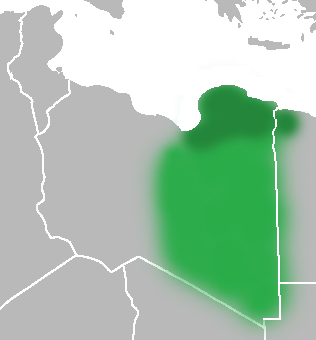
Cyrenaica

Cyrenaica

Region in LibyaWikipedia

Search complete. 156 mentions across 14 episodes found for "Cyrenaica".

Sep 30, 2026

Roland RamblerHOST
41:27
Rome ultimately took control of both regions and, rather than separating them, the Roman administration bound them even tighter.
Roland RamblerHOST
41:36
They paired the island of Crete with Cyrenaica in North Africa to form a single joint province, guaranteeing the active trade routes between Crete and Alexandria remained completely open.
Roland RamblerHOST
41:48
During this era, the ideas and gods of the Nile began migrating west into the Aegean.
Roland RamblerHOST
41:55
The Egyptian goddess Isis and the hybrid god Serapis won devoted followers across Greece.
Eric SmithGUEST
49:43
too late too late but that's how we got here just okay
Michael StrangeHOST
49:46
gotcha okay okay full full context there okay check it out and so i was reading uh eric and i talked about this weeks ago too selfium came up in one of the conversations that we had when he first called the show and i was i was reading through this uh as uh the last couple days and this thing i didn't know this part check this out i'm going to say this and we won't we'll move on from selfium But the plant's discovery is attributed to around 638 BCE following a black rain event in Cyrenaica.
Michael StrangeHOST
50:12
C-Y-R-E-N-A-I-C-A.
Michael StrangeHOST
50:13
It's right here.
AJ GentileHOST
47:57
Yep.
Alex PetkasGUEST
47:57
Cyrene is, or Cyrenaica is that eastern part of Libya today.
Alex PetkasGUEST
48:02
Not a place that you're s- that you would want to visit, I, I'm told now.
Alex PetkasGUEST
48:07
Um, but anyway, it, it, it was a beautiful, uh, verdant area.
Alex PetkasGUEST
48:43
Because a lot of, a lot of the, the culture is forged there, you know? Um, after Constantine takes over and, uh, legalizes Christianity.
Alex PetkasGUEST
48:54
So this is like two generations after Constantine, where you still have a lot of pagans and a lot of the upper classes of the Roman Empire, um, very educated people converting to Christianity.
Alex PetkasGUEST
49:08
Syne- Synesius is from one of these, um, grand old families of Cyrenaica who, uh ... and this, you see this a lot in, in the late Roman Empire.
Alex PetkasGUEST
49:17
People like to trace their lineages back like 800-

Unknown podcast

Imperialism and World Politics, Part 2 of 4-Parker Thomas Moon

Sep 28 · 14 Mentions

AlistairNARRATOR
183:47
With Italy an agreement was quickly made.
AlistairNARRATOR
183:50
Fortunately for Delcassé's purposes, the Italian government inquired whether the Anglo-French agreement of 1899, the agreement which settled the Fashoda crisis, marking out French and British spheres of interest in the Sudan, would infringe on the Turkish provinces of Tripoli and Cyrenaica, which Italians coveted for themselves.
AlistairNARRATOR
184:10
Promptly Delcassé instructed the French ambassador in Rome to reassure the Italian Foreign Minister that France had no designs on Tripoli and Cyrenaica.
AlistairNARRATOR
184:19
In exchange the Foreign Minister in December 1900 handed the French ambassador a note saying that Italy would not oppose France in the exercise and the safeguarding of the rights which are the result for her of the proximity of her territory Algeria with that Moroccan Empire.
AlistairNARRATOR
184:40
It being understood that if a modification of the political and territorial status of Morocco should result therefrom, Italy would reserve herself a measure of reciprocity the right eventually to develop her influence with regard to Tripolitania Cyrenaica.
AlistairNARRATOR
184:58
Since up to this date the Italian government had been prepared to fight rather than permit France to take more of North Africa, the meaning of the rotund and dignified phrases just quoted is clear and simple.
AlistairNARRATOR
185:10
Italy would let France conquer the independent empire of Morocco if France would let Italy seize the Turkish provinces of Tripoli and Cyrenaica.
AlistairNARRATOR
185:20
This secret agreement, we may add, so reconciled Rome and Paris that a little later, in 1902, further secret letters were exchanged by which each nation pledged itself to neutrality in the case the other should be attacked or should find herself compelled in defence of her honour or of her security to take the initiative of a declaration of war.

Unknown podcast

Lost Oases-Ahmed Hassanein

Sep 27 · 24 Mentions

Steven SeidelNARRATOR
15:16
In 1915, I had been fortunate enough to meet in Cairo Sayyid Idris el-Senussi, the famous head of the Senussi Brotherhood, when he was returning from a pilgrimage to Mecca.
Steven SeidelNARRATOR
15:28
The capital of the Senussi is Kufra, and when in 1917 I went on a mission to Sayyid Idris with Colonel the Honourable Milo Talbot, C.B., R.E., a distinguished officer who had retired from the Egyptian Army but had returned to the service during the Great War, and renewed my acquaintance with that notable man at Zutina, a little port near Jedabiah in Cyrenaica, I seized the opportunity and told him of my ambition.
Steven SeidelNARRATOR
15:58
Sayyid Idris was most sympathetic and asked me to let him know when I proposed to make the expedition so that he might give me the help and countenance without which a journey to Kufra could not be undertaken.
speaker_1ADVERTISER
16:10
Have fun at Casino Days.

42 MINS LATER

Steven SeidelNARRATOR
57:50
He developed an inclination to asceticism and a conviction that what his religion needed was a return to a pure form of Islam, as exemplified in the teachings of the Prophet.
Steven SeidelNARRATOR
58:02
At the age of 51, he was compelled to leave Mecca by the opposition of the older sheikhs, who challenged his orthodoxy.
Steven SeidelNARRATOR
58:10
He returned through Egypt to Cyrenaica and began to establish centers for teaching his doctrines among the Bedouins.
Steven SeidelNARRATOR
58:18
At this point, an explanation of the meaning of three Arabic words will elucidate the text.
Stephen SeidelNARRATOR
16:14
In 1915 I had been fortunate enough to meet in Cairo Sayid Idris el Senussi, the famous head of the Senussi brotherhood, when he was returning from a pilgrimage to Mecca.
Stephen SeidelNARRATOR
16:26
The capital of the Senussi is Kufra, and when in 1917 I went on a mission to Sayid Idris with Colonel the Honourable Milo Talbot, CB, RE, a distinguished officer who had retired from the Egyptian Army, but had returned to the service during the Great War, and renewed my acquaintance with that notable man at Zuttina, a little port near Jedabiah in Cyrenaica, I seized the opportunity and told him of my ambition.
Stephen SeidelNARRATOR
16:55
Sayid Idris was most sympathetic, and asked me to let him know when I proposed to make the expedition, so that he might give me the help and countenance without which a journey to Kufra could not be undertaken.
speaker_4ADVERTISER
17:07
[upbeat music] Stop wasting your nights on a mattress that doesn't get you.

43 MINS LATER

Stephen SeidelNARRATOR
60:18
He developed an inclination to asceticism and a conviction that what his religion needed was a return to a pure form of Islam as exemplified in the teachings of the Prophet.
Stephen SeidelNARRATOR
60:30
At the age of fifty-one, he was compelled to leave Mecca by the opposition of the older sheikhs, who challenged his orthodoxy.
Stephen SeidelNARRATOR
60:38
He returned through Egypt to Cyrenaica and began to establish centers for teaching his doctrines among the Bedouins.
Stephen SeidelNARRATOR
60:46
At this point, an explanation of the meaning of three Arabic words will elucidate the text.
Patrick WymanHOST
23:01
She becomes the concubine of an important official.
Patrick WymanHOST
23:05
She becomes the concubine of a guy named Hecubolus who's being sent to Libya to the city of Cyrenaica to be to be like the governor there.
Patrick WymanHOST
23:16
So he brings Theodora with him.
Patrick WymanHOST
23:19
Theodora gets pregnant.

Unknown podcast

Imperialism and World Politics, Part 2 of 4-Parker Thomas Moon

Sep 21 · 14 Mentions

AlistairNARRATOR
191:38
With Italy an agreement was quickly made.
AlistairNARRATOR
191:40
Fortunately for Delcasse's purposes, the Italian government inquired whether the Anglo-French agreement of 1899, the agreement which settled the Fashoda crisis, marking out French and British spheres of interest in the Sudan, would infringe on the Turkish provinces of Tripoli and Cyrenaica, which Italians coveted for themselves.
AlistairNARRATOR
192:00
Promptly Delcasse instructed the French ambassador in Rome to reassure the Italian foreign minister that France had no designs on Tripoli and Cyrenaica.
AlistairNARRATOR
192:10
In exchange the foreign minister in December 1900 handed the French ambassador a note saying that Italy would not oppose France in The exercise and the safeguarding of the rights which are the result for her of the proximity of her territory Algeria with that Moroccan empire.
AlistairNARRATOR
192:31
It being understood that if a modification of the political and territorial status of Morocco should result therefrom, Italy would reserve herself a measure of reciprocity the right eventually to develop her influence with regard to Tripolitania Cyrenaica.
AlistairNARRATOR
192:48
Since up to this date the Italian government had been prepared to fight rather than permit France to take more of North Africa, the meaning of the rotund and dignified phrases just quoted is clear and simple.
AlistairNARRATOR
193:00
Italy would let France conquer the independent empire of Morocco if France would let Italy seize the Turkish provinces of Tripoli and Cyrenaica.
AlistairNARRATOR
193:10
This secret agreement, we may add, so reconciled Rome and Paris that a little later, in 1902, further secret letters were exchanged by which each nation pledged itself to neutrality in the case the other should be attacked or Should find herself compelled in defence of her honour or of her security to take the initiative of a declaration of war.

Unknown podcast

Short Nonfiction Collection, Vol. 097-Various

Sep 13 · 4 Mentions

speaker_14NARRATOR
264:07
For more information or to volunteer, please visit LibriVox.org.
speaker_14NARRATOR
264:13
Throughout a long series of years, the Italian government has never ceased to represent to the Porte the absolute necessity that the state of disorder and neglect in which Tripoli and Cyrenaica are left by Turkey should come to an end, and that these regions should be allowed to enjoy the same progress as that attained by other parts of Northern Africa.
speaker_14NARRATOR
264:33
This transformation, which is required by the general exigencies of civilization, constitutes, so far as Italy is concerned, a vital interest of the very first order, by reason of the small distance separating these countries from the coasts of Italy.
speaker_14NARRATOR
264:49
Notwithstanding the attitude maintained by the Italian government, which has always loyally accorded its support to the Imperial Government on different political questions of recent times, notwithstanding the moderation and patience displayed by the Italian government hitherto, not only have its views in regard to Tripoli been misunderstood by the Imperial Government, but what is more, all enterprises on the part of Italians in the aforesaid regions constantly encounter a systematic opposition of the most obstinate and unwarranted kind.
speaker_14NARRATOR
265:22
The Imperial Government, which has thus up to now displayed constant hostility toward all legitimate Italian activity in Tripoli and Cyrenaica, quite recently, at the eleventh hour, proposed to the Royal Government to come to an understanding, declaring itself disposed to grant any economic concession compatible with the treaties in force and with the higher dignity and interests of the Turks.
speaker_14NARRATOR
265:45
But the Royal Government does not feel itself in a position to enter upon such negotiations, the uselessness of which is demonstrated by past experience, and which, far from constituting a guarantee for the future, could but afford a permanent cause of friction and conflict.
speaker_14NARRATOR
266:04
On the other hand, information received by the Royal Government from its consular agents in Tripoli and Cyrenaica represents the situation as extremely dangerous on the account of the agitation prevailing against Italian subjects, which is very obviously fomented by officers and other organs of the authorities.
speaker_14NARRATOR
266:25
This agitation constitutes an imminent danger not only to Italian subjects, but also to foreigners of any nationality, who, justly perturbed and anxious for their safety, have commenced to embark and are leaving Tripoli without delay.
speaker_0HOST
10:12
By September 1942, the LRDG's own raiding ambitions have grown well beyond guiding other units to targets.
speaker_0HOST
10:20
Operation Caravan sends a squadron of two half-patrols, 47 men in total, on a raid entirely its own, deep into Cyrenaica, against the Italian garrison town of Basse and its airfield.
speaker_0HOST
10:34
Command falls to Major Jake Eason-Smith, the Tank Regiment officer who joined the unit as a lieutenant back in its first year and has spent 18 months becoming one of its most trusted patrol commanders.
speaker_0HOST
10:45
To reach Bas, Eason-Smith's force drives over 1,100 miles.

4 more episodes mention Cyrenaica.

Create an account to see the whole feed, search across every transcript, and follow the entities you care about.

We value your privacy

We use cookies to understand how you use our platform and to improve your experience. Click “Accept All” to consent, or “Decline non-essential” to opt out of non-essential cookies. Read our Privacy Policy.