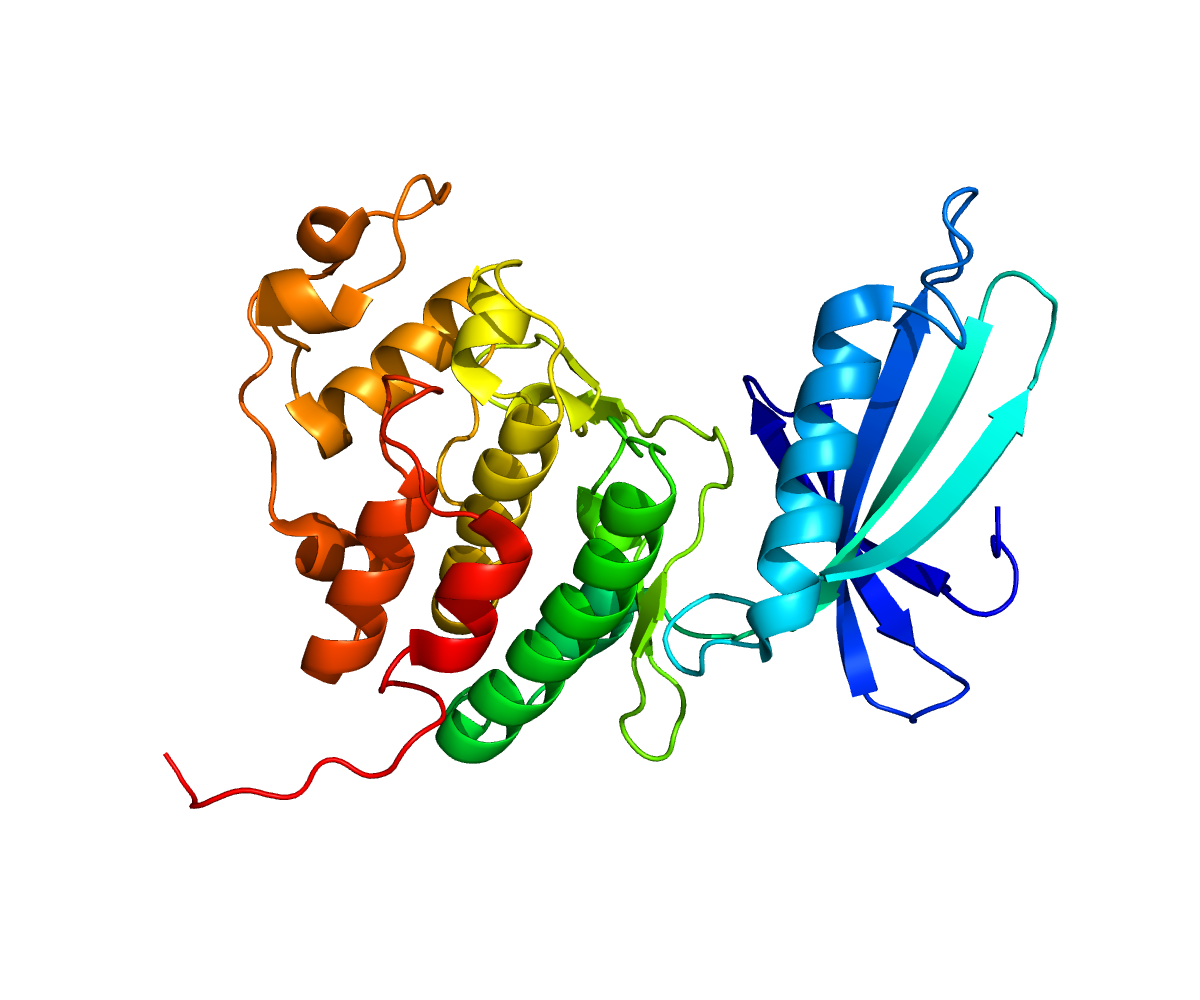
Cyclin-dependent kinase 4
ProteinWikipedia
149
MENTIONS
25
EPISODES
24
PODCASTS
Search complete. 149 mentions across 25 episodes found for "Cyclin-dependent kinase 4".
Nov 1, 2026

Manead KhinHOST
But seeing an OS signal at six years in adjuvant breast cancer is meaningful.
Manead KhinHOST
CDK4-6 inhibitors in early stage disease are here to stay.
Manead KhinHOST
Let's quickly talk about the peptide story.
Manead KhinHOST
This one is interesting and a little chaotic.

Yaron WerberHOST
Now they're going to do the PDAC combo with RevMed is going to move ahead.
Yaron WerberHOST
B1 was 40 months behind Pfizer in phase three, and they're probably going to end up reading data at the same time from their CDK4 phase three.
Yaron WerberHOST
So B1 is a huge competitor, plus they have their own res agents too now in phase one.
Yaron WerberHOST
So this is going to be a phenomenal area to watch, but the B1 pipeline is one of the best in the industry right now in oncology.

Aditya BardiaMODERATOR
The ATAC and BIG-98 study demonstrated that aromatase inhibitors and astrazole-letrazole were superior to tamoxifen with a hazard ratio of about 0.81%.
Aditya BardiaMODERATOR
More recently, we've seen CDK4-6 inhibitors in combination with endocrine therapy approved for early breast cancer.
Aditya BardiaMODERATOR
They've increased efficacy but also have associated toxicities.
Aditya BardiaMODERATOR
In early breast cancer, the intent is curative, but up to a quarter of patients can have disease recurrence within five years.
6 MINS LATER
Aditya BardiaMODERATOR
So with this handed to Dr. Hurwitz, we can talk about how this fits in and how LIDERA population is different from Natalie and Monarchy.
Sarah HurwitzGUEST
Thank you, Aditya.
Sarah HurwitzGUEST
I think immediately I reflected on the fact that we also have the use of CDK4-6 inhibitors in the adjuvant setting.
Sarah HurwitzGUEST
And this study did not test in the main study, giridastrin combined with the CDK4-6 inhibitor.

Leslie PetterHOST
recommendations did the expert panel make for adjuvant targeted therapy?
Jennifer Caswell-JinGUEST
So at this point, for targeted therapy, we mean adjuvant CDK4-6 inhibitors, and we mean adjuvant olaparib for germline BRCA1, BRCA2, or PALB2 carriers.
Jennifer Caswell-JinGUEST
And these drugs can definitely reduce recurrence risk beyond endocrine therapy alone, but they come with toxicities and, of course, burden for the patient.
Jennifer Caswell-JinGUEST
So the decision to use them needs to be driven by an individual's expected benefit.
Jennifer Caswell-JinGUEST
Which at this point, without validated ways to say which tumors are more or less sensitive to the treatments, essentially means based on the individual's absolute risk.
Jennifer Caswell-JinGUEST
So we provide a practical framework for thinking about absolute risk.
Jennifer Caswell-JinGUEST
For example, for CDK4-6 inhibitors, we recommend treatment if an individual's risk of breast cancer death within 10 years is greater than 25%.
Jennifer Caswell-JinGUEST
And we recommend avoiding it if they have lower than a 10% risk.

Erica MayerGUEST
So this trial is enrolling patients who have up to T3 size tumors, who have Multiple nodes, so N2 or N3 or T3 with other high-risk features.
Erica MayerGUEST
And patients have a recurrence score 0 to 25 and are randomized to what we might think of for these high anatomic risk as standard of care, chemotherapy, endocrine, and CDK4-6 inhibitor versus omission of chemotherapy, endocrine therapy, and CDK4-6 inhibitor.
Erica MayerGUEST
So we await results of this really important trial.
Erica MayerGUEST
Now, as I alluded to, I think we're all familiar with hormone receptor-positive breast cancer having a very long tail risk of recurrence.
8 MINS LATER
Erica MayerGUEST
I'm in the not category.
Erica MayerGUEST
I'd like to see some data that these actually impact outcomes before patients are having this done routinely.
Erica MayerGUEST
This is adjuvant CDK4-6 inhibitors.
Erica MayerGUEST
And these are our data sets.

Erica MayerGUEST
Multiple nodes, so N2 or N3 or T3 with other high-risk features.
Erica MayerGUEST
And patients have a recurrence score 0 to 25 and are randomized to what we might think of for these high anatomic risk as standard of care, chemotherapy, endocrine, and CDK4-6 inhibitor versus omission of chemotherapy, endocrine therapy, and CDK4-6 inhibitor.
Erica MayerGUEST
So we await results of this really important trial.
Erica MayerGUEST
Now, as I alluded to, I think we're all familiar with hormone receptor-positive breast cancer having a very long tail risk of recurrence.
8 MINS LATER
Erica MayerGUEST
I'm in the not category.
Erica MayerGUEST
I'd like to see some data that these actually impact outcomes before patients are having this done routinely.
Erica MayerGUEST
This is adjuvant CDK4-6 inhibitors.
Erica MayerGUEST
And these are our data sets.

Erica MayerGUEST
Multiple nodes, so N2 or N3 or T3 with other high-risk features.
Erica MayerGUEST
And patients have a recurrence score 0 to 25 and are randomized to what we might think of for these high anatomic risk as standard of care, chemotherapy, endocrine, and CDK4-6 inhibitor versus omission of chemotherapy, endocrine therapy, and CDK4-6 inhibitor.
Erica MayerGUEST
So we await results of this really important trial.
Erica MayerGUEST
Now, as I alluded to, I think we're all familiar with hormone receptor-positive breast cancer having a very long tail risk of recurrence.
8 MINS LATER
Erica MayerGUEST
I'm in the not category.
Erica MayerGUEST
I'd like to see some data that these actually impact outcomes before patients are having this done routinely.
Erica MayerGUEST
This is adjuvant CDK4-6 inhibitors.
Erica MayerGUEST
And these are our data sets.

Komal JhaveriHOST
Yeah, no, I think it is such a Beautiful conversation that we'll dovetail again into because we were talking about in the early stage setting, you know, the lead time, like you detect something and what can you do about it? We couldn't do anything about it yet in the early stage with the tumor-informed assay we were saying, right? But in the metastatic setting, we've at least moved a step forward in the right direction in that we have been able to do something about the lead time in some ways, right? And that's where the Serena 6 trial is very relevant because as we know, this was a phase three trial that just recently received FDA accelerated approval this past month, September.
Komal JhaveriHOST
And the trial really looked at over 3,000 patients who have been on their first line therapy with a aromatase inhibitor and a CDK4-6 inhibitor for at least six months.
Komal JhaveriHOST
And if they've been for six months, we then start doing the testing with ESR1 mutation serially every two to three months on study.
Komal JhaveriHOST
And if there is an emergence of ESR1 mutation, but no radiological progression.
12 MINS LATER
Komal JhaveriHOST
For ribocyclic, we do three EKGs when the patients start to make sure that we do the EKG monitoring for the package insert.
Komal JhaveriHOST
Now, Serena 6 had 24 patients with ribocyclib.
Komal JhaveriHOST
So all CDK4-6 were allowed.
Komal JhaveriHOST
Majority were palbo.

Jennifer SaldanhaGUEST
Over the last five years, and I think I use this, and I say this quite often in my clinic rooms, is I think during COVID, a lot of cancer research has happened just because, you know, we couldn't see patients.
Jennifer SaldanhaGUEST
So let's think about research, right? So we've got so many, as you said, CDK4-6 inhibitors.
Jennifer SaldanhaGUEST
We've got anti-HER2 inhibitors.
Jennifer SaldanhaGUEST
therapies.

Karine TawagiHOST
And then for metastatic disease, don't forget with bone mets to think about bone therapies like bisphosphonates or denosumab.
Karine TawagiHOST
For ER positive, our frontline is still AI, aromatase inhibitor, plus the CDK4-6 inhibitor.
Karine TawagiHOST
And then for HER2 positive, we do have TDXD as a preferred second line.
Karine TawagiHOST
And again, don't forget that ILD.
15 more episodes mention Cyclin-dependent kinase 4.
Create an account to see the whole feed, search across every transcript, and follow the entities you care about.