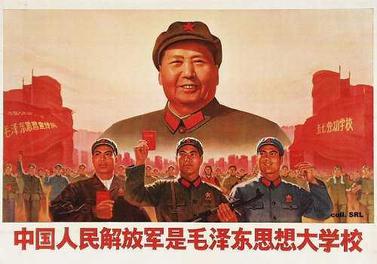
Cultural Revolution
441
MENTIONS
205
EPISODES
174
PODCASTS
Search complete. 441 mentions across 205 episodes found for "Cultural Revolution".
Sep 11, 2026
Dinesh D'Souza LIVE at the University at Buffalo The socialist temptation
D
3:31Dinesh D'SouzaGUEST
The Chinese dumped socialism.
D
3:34Dinesh D'SouzaGUEST
After the Mao's Great Leap Forward, after the so-called Cultural Revolution, you got a guy named Deng Xiaoping, and the Chinese began to liberalize.
D
3:43Dinesh D'SouzaGUEST
Now, they didn't liberalize to democracy.
D
3:46Dinesh D'SouzaGUEST
So they have a very interesting hybrid that some people thought impossible, but it's clearly It's clearly possible because we have it in China.
Gavin Healy, "A Guide to Mao’s China: Showing the Nation to Foreign Guests" (Cornell UP, 2026)
G
12:19Gavin HealyGUEST
And he was kind of flummoxed by it because he was a diplomat, someone who had been serving largely in the Himalayas, like Nepal.
G
12:29Gavin HealyGUEST
And he's recalled to China during the Cultural Revolution, like a lot of diplomats were, And initially, he's kind of sequestered in the foreign ministry, sort of protected by Zhou Enlai.
G
12:41Gavin HealyGUEST
He's sort of a protege of Zhou Enlai.
G
12:44Gavin HealyGUEST
And in 1971, you know, there's this kind of top-level decision that they're going to sort of open up to more, you know, Western tourists because they've seen there's a lot of interest in coming to China.
G
14:05Gavin HealyGUEST
And it's sort of written in those sort of like glowing terms.
G
14:09Gavin HealyGUEST
But then in the 70s, it becomes this sort of idea of something like you're selling a piece of the nation.
G
14:15Gavin HealyGUEST
So sort of in the sort of cultural revolution context is sort of viewed kind of negatively.
G
14:20Gavin HealyGUEST
And he talks about that in the 70s context.
Gavin Healy, "A Guide to Mao’s China: Showing the Nation to Foreign Guests" (Cornell UP, 2026)
G
11:50Gavin HealyGUEST
And he was kind of flummoxed by it because he was a diplomat, someone who had been serving largely in the Himalayas, like Nepal.
G
12:01Gavin HealyGUEST
And he's recalled to China during the Cultural Revolution, like a lot of diplomats were, And initially, he's kind of sequestered in the foreign ministry, sort of protected by Zhou Enlai.
G
12:12Gavin HealyGUEST
He's sort of a protege of Zhou Enlai.
G
12:15Gavin HealyGUEST
And in 1971, there's this kind of top-level decision that they're going to sort of open up to more Western tourists because they've seen there's a lot of interest in in coming to China.
G
13:36Gavin HealyGUEST
And it's sort of written in those sort of like glowing terms.
G
13:40Gavin HealyGUEST
But then in the 70s, it becomes this sort of idea of something like you're selling a piece of the nation.
G
13:46Gavin HealyGUEST
So sort of in the sort of cultural revolution context is sort of viewed kind of negatively.
G
13:52Gavin HealyGUEST
And he talks about that in the seventies context.
Gavin Healy, "A Guide to Mao’s China: Showing the Nation to Foreign Guests" (Cornell UP, 2026)
G
12:21Gavin HealyGUEST
And he was kind of flummoxed by it because he was a diplomat, someone who had been serving largely in the Himalayas, like Nepal.
G
12:31Gavin HealyGUEST
And he's recalled to China during the Cultural Revolution, like a lot of diplomats were, And initially, he's kind of sequestered in the foreign ministry, sort of protected by Zhou Enlai.
G
12:43Gavin HealyGUEST
He's sort of a protege of Zhou Enlai.
G
12:46Gavin HealyGUEST
And in 1971, there's this kind of top-level decision that they're going to sort of open up to more Western tourists because they've seen there's a lot of interest in coming to China and, and, and, you know, the, like a lot of these people in the government, they're very practical people and they want to figure out how to like earn, earn some foreign exchange from that.
G
14:07Gavin HealyGUEST
And it's sort of written in those sort of like glowing terms.
G
14:11Gavin HealyGUEST
But then in the 70s, it becomes this sort of idea of something like you're selling a piece of the nation.
G
14:17Gavin HealyGUEST
So sort of in the sort of cultural revolution context is sort of viewed kind of negatively.
G
14:22Gavin HealyGUEST
And he talks about that in the seventies context.
Mao More Than Ever
D
19:50David MoserHOST
And I was studying Xiangsheng, the crosstalk humor.
D
19:55David MoserHOST
And after the end of the Cultural Revolution, the Xiangsheng humor was able to make fun and satirize that era.
D
20:05David MoserHOST
But the villain was not Mao, it was the Gang of Four.
D
20:10David MoserHOST
So all of the humor and the satire was directed at Jiang Qing and the Gang of Four.
Nathan Goes to China #3: US-China Relations, the Art of the AI Deal & the Road to Pax Robotica
N
38:19Nathan LabenzHOST
So that is something that, that the government delivers on as well that we should not underestimate the value of.
N
38:26Nathan LabenzHOST
People there really do, especially because they do have this living memory of the Cultural Revolution.
N
38:32Nathan LabenzHOST
You go all over the place, you go and see signs where it's like, oh, this alleyway during the Cultural Revolution was renamed to this, but then after that, it was restored.
N
38:41Nathan LabenzHOST
That wasn't that long ago, so, like, older people lived through it and younger people have heard about it from older people, and they still see it in just the signage and the, the history that's kind of posted all over the place.
N
38:53Nathan LabenzHOST
So they know what it's like to go through chaos, and I think they do really value the stability, the safety, the peace, the prosperity that the government has delivered.
28 MINS LATER
N
67:18Nathan LabenzHOST
I think the big narrative that motivates so much of what the national government in China is doing is the story of the century of humiliation.
N
67:31Nathan LabenzHOST
And again, it's important to remember that this is still something that is in living memory for Chinese people.
N
67:40Nathan LabenzHOST
The Cultural Revolution ended in 1976.
Investigating 911: Crowley, Epstein & Ritual Murder w. William Ramsey (September 10, 2026)
R
106:48Ryan GableHOST
Mao's famine killed about 40 million people, 45 million people.
R
106:52Ryan GableHOST
And then the Cultural Revolution in the '60s, which killed another, uh, I mean, between two and 15.
R
106:57Ryan GableHOST
Nobody has any idea how many.
R
106:59Ryan GableHOST
Uh, but it's an amazing book series because it, it documents a lot of the same types of parallels that we're talking about in this Red Terror book that you can see what's happening, like, with the, the left-wing extremists.
Homesick for a World Unknown w/ Miriam Horn
M
25:32Miriam HornGUEST
And he had to navigate a lot of crazy politics.
M
25:35Miriam HornGUEST
And, you know, especially in China in the 80s, it had just come out of the Cultural Revolution.
M
25:40Miriam HornGUEST
So that's one thing is I thought, OK, well, you would never have pulled this off.
M
25:45Miriam HornGUEST
The other thing I really came to see was the price that a family pays for this level of commitment by someone.
DCC DRAMA, HUGO AWARDS, AND CANCELING AUTHORS? | BookTalks ep. 6
M
18:39MariahHOST
Yeah.
M
18:40MariahHOST
But then what got me is I was, like, continuing to read one of my mutuals, like, that review, and apparently it talks about Mao and the Cultural Revolution, and it's very, like, horseshoe theory.
M
18:50MariahHOST
And then also apparently how there's strange conversation about how communists supposedly support the Khmer Rouge.
M
18:59MariahHOST
in Cambodia, which was U.S.-backed. Fun fact, nobody fucking does.
How to Build an Authoritarian Regime
J
32:54Julian WallerGUEST
What's the...
S
32:55Santi RuizHOST
I think it's a paper about Chinese families that were landed before the Cultural Revolution and in families that had everything taken away from them.
S
33:04Santi RuizHOST
Still, their descendants often persist.
S
33:07Santi RuizHOST
Top leadership.
195 more episodes mention Cultural Revolution.
Create an account to see the whole feed, search across every transcript, and follow the entities you care about.