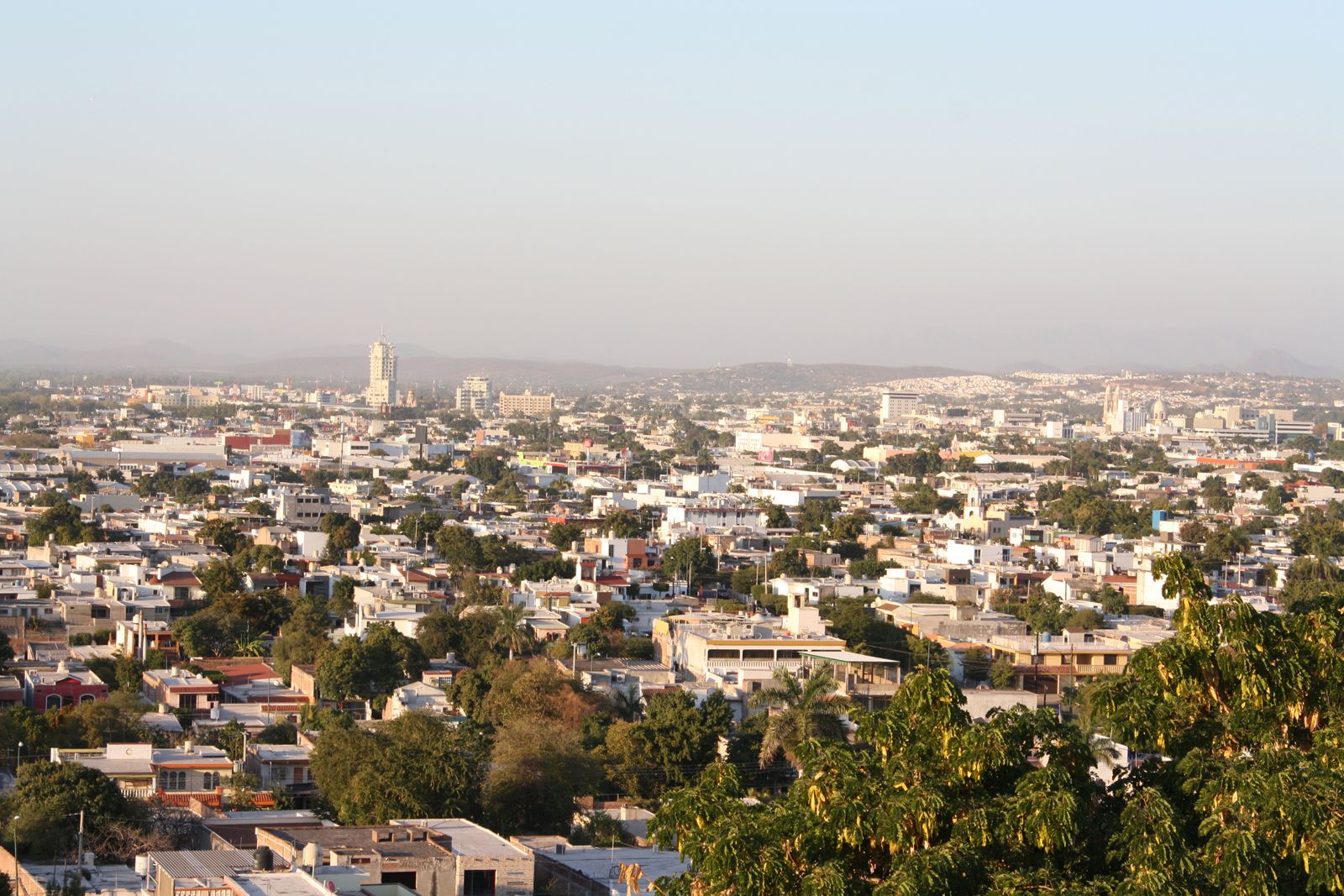
Culiacán
City in MexicoWikipedia
114
MENTIONS
34
EPISODES
30
PODCASTS
Search complete. 114 mentions across 34 episodes found for "Culiacán".
Sep 25, 2026

Hildelisa BeltránHOST
Right now we are obsessed with phylloxera, this skin, Celtic, because the serums mana.
Hildelisa BeltránHOST
And you know what? To be in peace with yourself, you don't care what people think, you don't care, you don't care, you don't care, you don't care, you don't care, you don't care, you don't care, you don't care, you don't care, you don't care, you don't care, you don't care, you don't care, This ingatus that ingatus moves Culiacán.
Hildelisa BeltránHOST
Yes.
Hildelisa BeltránHOST
Arroba Sofía Alba.
Hildelisa BeltránHOST
Se usa eso aquí.
Hildelisa BeltránHOST
No estás completa.
Hildelisa BeltránHOST
Eso es muy de Culiacán también.
Hildelisa BeltránHOST
Ando muy culichi.

Sue AndersonNARRATOR
The first and principal narrative was written for the purpose of providing a history of the expedition by one of the common soldiers sometime after his return to Mexico, when he apparently felt that there was danger that posterity would forget the deeds of those with whom he had toiled and suffered in the vain search for something which would reward their costly undertaking.
Sue AndersonNARRATOR
All that is known of the author, Pedro Castañeda, beyond what he relates in this narrative, is that he was a native of the Biscayan town of Nájera in northern Spain, who had established himself in the Spanish outpost at Culiacán in northwestern Mexico at the time Coronado organized his expedition, and that he was the father of eight surviving children who, with their mother, presented in 1554 a claim against the Mexican treasury on account of the father's exploits.
Sue AndersonNARRATOR
The Spanish text of Castañeda's history is preserved in the Lenox Library, now absorbed into the New York Public Library.
Sue AndersonNARRATOR
It is printed together with the translations reprinted herewith in the 14th Annual Report of the United States Bureau of Ethnology, Washington, D.C., 1896, a volume which has long been out of print.
26 MINS LATER
Sue AndersonNARRATOR
As I was saying, at the time Francisco Vasquez was appointed governor, he was traveling through New Spain as an official inspector, and in this way he gained the friendship of many worthy men who afterward went on his expedition with him.
Sue AndersonNARRATOR
It happened that just at this time three Spaniards, named Cabeza de Vaca, Dorantes, and Castillo Maldonado, and a negro who had been lost on the expedition which Pánfilo de Narváez led into Florida, reached Mexico.
Sue AndersonNARRATOR
They came out through Culiacán, having crossed the country from sea to sea, as anyone who wishes may find out for himself by an account which this same Cabeza de Vaca wrote and dedicated to Prince Don Philip, who is now King of Spain and our sovereign.
Sue AndersonNARRATOR
They gave the good Don Antonio de Mendoza an extended account of some powerful villages, four and five stories high, of which they had heard a great deal in the countries they had crossed, and other things very different from what turned out to be the truth.

Sue AndersonNARRATOR
The first and principal narrative was written for the purpose of providing a history of the expedition by one of the common soldiers sometime after his return to Mexico, when he apparently felt that there was danger that posterity would forget the deeds of those with whom he had toiled and suffered in the vain search for something which would reward their costly undertaking.
Sue AndersonNARRATOR
All that is known of the author, Pedro Castañeda, beyond what he relates in this narrative, is that he was a native of the Biscayan town of Nájera in northern Spain, who had established himself in the Spanish outpost at Culiacán in northwestern Mexico at the time Coronado organized his expedition, and that he was the father of eight surviving children who, with their mother, presented in fifteen fifty-four a claim against the Mexican treasury on account of the father's exploits.
Sue AndersonNARRATOR
The Spanish text of Castañeda's history is preserved in the Lenox Library, now absorbed into the New York Public Library.
Sue AndersonNARRATOR
It is printed together with the translations reprinted herewith in the fourteenth annual report of the United States Bureau of Ethnology, Washington, D.C., eighteen ninety-six, a volume which has long been out of print.
21 MINS LATER
Sue AndersonNARRATOR
Acting on this information, Nuño de Guzmán got together nearly four hundred Spaniards and twenty thousand friendly Indians of New Spain, and as he happened to be in Mexico, he crossed Tarasca, which is in the province of Michoacán, so as to get into the region which the Indians said was to be crossed toward the North Sea, in this way getting to the country which they were looking for, which was already named the Seven Cities.
Sue AndersonNARRATOR
He thought from the forty days of which the Tejo had spoken that it would be found to be about two hundred leagues and that they would easily be able to cross the country.
Sue AndersonNARRATOR
Omitting several things that occurred on this journey, as soon as they had reached the province of Culiacán, where his government ended and where the new kingdom of Galicia is now, they tried to cross the country, but found the difficulties very great because the mountain chains which are near the sea are so rough that it was impossible after great labor to find a passageway in that region.
Sue AndersonNARRATOR
His whole army had to stay in the district of Culiacán for so long on this account that some rich men who were with him, who had possessions in Mexico, changed their minds and every day became more anxious to return.

speaker_1NARRATOR
Story 5 My name is Andres Villalobos, and I am 44 years old.
speaker_1NARRATOR
I live in Culiacan.
speaker_1NARRATOR
I work as a warehouse manager.
speaker_1NARRATOR
I have been at the same job for 11 years, with the same coworkers and practically the same routine as always.
speaker_1NARRATOR
I took it out.
speaker_1NARRATOR
It was a number I did not have saved.
speaker_1NARRATOR
Judging by the area code, it was from Culiacan, but I did not know it.
speaker_1NARRATOR
I hesitated.

Sue AndersonNARRATOR
This history describes the only and comparatively meager results of the expedition undertaken by Pánfilo de Narváez in fifteen twenty-seven, and an outcome which had nothing more to do with Narváez and his ill-conducted scheme.
Sue AndersonNARRATOR
Yet it is certain that the appearance of Cabeza de Vaca and his fellow sufferers at Culiacán and their statements directed the attention of the Spanish authorities at the young city of Mexico to the north more than the reports about the Seven Cities and the raids which Nuño de Guzmán had made in that direction.
Sue AndersonNARRATOR
Nevertheless, the importance of the story of Cabeza de Vaca must not be overestimated.
Sue AndersonNARRATOR
A perusal of the narrative shows that the forlorn wanderers were not, as it has long been admitted, the discoverers of New Mexico.
4 HRS 44 MINS LATER
Sue AndersonNARRATOR
Seven of our men perished, and many friends whom the Christians had taken along could not reach before noon the following day the place where we found water that same night.
Sue AndersonNARRATOR
We traveled with them 25 leagues, more or less, and at last came to a settlement of peaceable Indians.
Sue AndersonNARRATOR
There the alcalde left us and went ahead three leagues further to a place called Culiacán, where Melchor Díaz was chief alcalde and the captain of the province.
Sue AndersonNARRATOR
As soon as the chief alcalde became informed of our arrival, on the same night he came to where we were.

Katarina SzulcGUEST
Um, and now it's, of course, CJNG, extremely powerful, and they're essentially absorbing the Chapitos faction of the Sinaloa cartel, El Chapo's faction, because they made an alliance, an alliance with them, fighting against the Mayos, Mayito Flacos faction of the Sinaloa cartel.
Katarina SzulcGUEST
Um, and when I was in Sinaloa this summer, I went to Culiacán and across Sinaloa for a couple of weeks just to kinda get the two-year update since El Mayo was captured.
Katarina SzulcGUEST
Sean, it was like you're just...
Katarina SzulcGUEST
You're not walking in a city.
Katarina SzulcGUEST
Okay?
Shawn RyanHOST
Sheesh.
Katarina SzulcGUEST
From the moment I got there, I drove from Mazatlán to Culiacán because I wanted to go through the towns and kind of try to get a grasp of who's controlling which areas because it's ever-evolving.
Katarina SzulcGUEST
And when you're going through these small towns and you're taking that highway from Mazatlán to Culiacán, and I took the old highway, not the new highway, so it's, like, I guess in layman's terms, like, more dangerous, like, just to really understand it, you can see who's controlling there.

speaker_1NARRATOR
That decentralized structure helps them hold territory and keep functioning across Mexico.
speaker_1NARRATOR
She visited Culiacán and saw multiple crime scenes within hours.
speaker_1NARRATOR
The real tragedy, she says, isn't just the violence itself, but the families living with permanent loss.
speaker_0NARRATOR
The discussion gets even broader when you look at their business model.

JohnHOST
week you
AnthonyHOST
were down there, they rounded up like fucking 25 dudes in Culiacan and fucking blasted them.
AnthonyHOST
The Marines did.
AnthonyHOST
Not surprised.

Nayo EscobarHOST
Platícame, ¿de dónde eres y cómo fue tu historia?
Adriana Maricela PérezGUEST
Yo soy de Culiacán, Sinaloa.
Adriana Maricela PérezGUEST
Vengo de una familia de siete hermanos, una familia muy humilde.
Adriana Maricela PérezGUEST
La verdad es que tuvimos muchas carencias.

Sue AndersonNARRATOR
The first and principal narrative was written for the purpose of providing a history of the expedition by one of the common soldiers sometime after his return to Mexico, when he apparently felt that there was danger that posterity would forget the deeds of those with whom he had toiled and suffered in the vain search for something which would reward their costly undertaking.
Sue AndersonNARRATOR
All that is known of the author, Pedro Castañeda, beyond what he relates in this narrative, is that he was a native of the Biscayan town of Nájera in northern Spain, who had established himself in the Spanish outpost at Culiacán in northwestern Mexico at the time Coronado organized his expedition, and that he was the father of eight surviving children who, with their mother, presented in 1554 a claim against the Mexican Treasury on account of the father's exploits.
Sue AndersonNARRATOR
The Spanish text of Castañeda's history is preserved in the Lenox Library, now absorbed into the New York Public Library.
Sue AndersonNARRATOR
It is printed together with the translations reprinted herewith in the fourteenth Annual Report of the United States Bureau of Ethnology, Washington, DC 1896, a volume which has long been out of print.
26 MINS LATER
Sue AndersonNARRATOR
As I was saying, at the time Francisco Vasquez was appointed governor, he was traveling through New Spain as an official inspector, and in this way he gained the friendship of many worthy men who afterward went on his expedition with him.
Sue AndersonNARRATOR
It happened that just at this time three Spaniards, named Cabeza de Vaca, Dorantes, and Castillo Maldonado, and a Negro who had been lost on the expedition which Pánfilo de Narváez led into Florida, reached Mexico.
Sue AndersonNARRATOR
They came out through Culiacán, having crossed the country from sea to sea, as anyone who wishes may find out for himself by an account which this same Cabeza de Vaca wrote and dedicated to Prince Don Philip, who is now King of Spain and our sovereign.
Sue AndersonNARRATOR
They gave the good Don Antonio de Mendoza an extended account of some powerful villages, four and five stories high, of which they had heard a great deal in the countries they had crossed, and other things very different from what turned out to be the truth.
24 more episodes mention Culiacán.
Create an account to see the whole feed, search across every transcript, and follow the entities you care about.