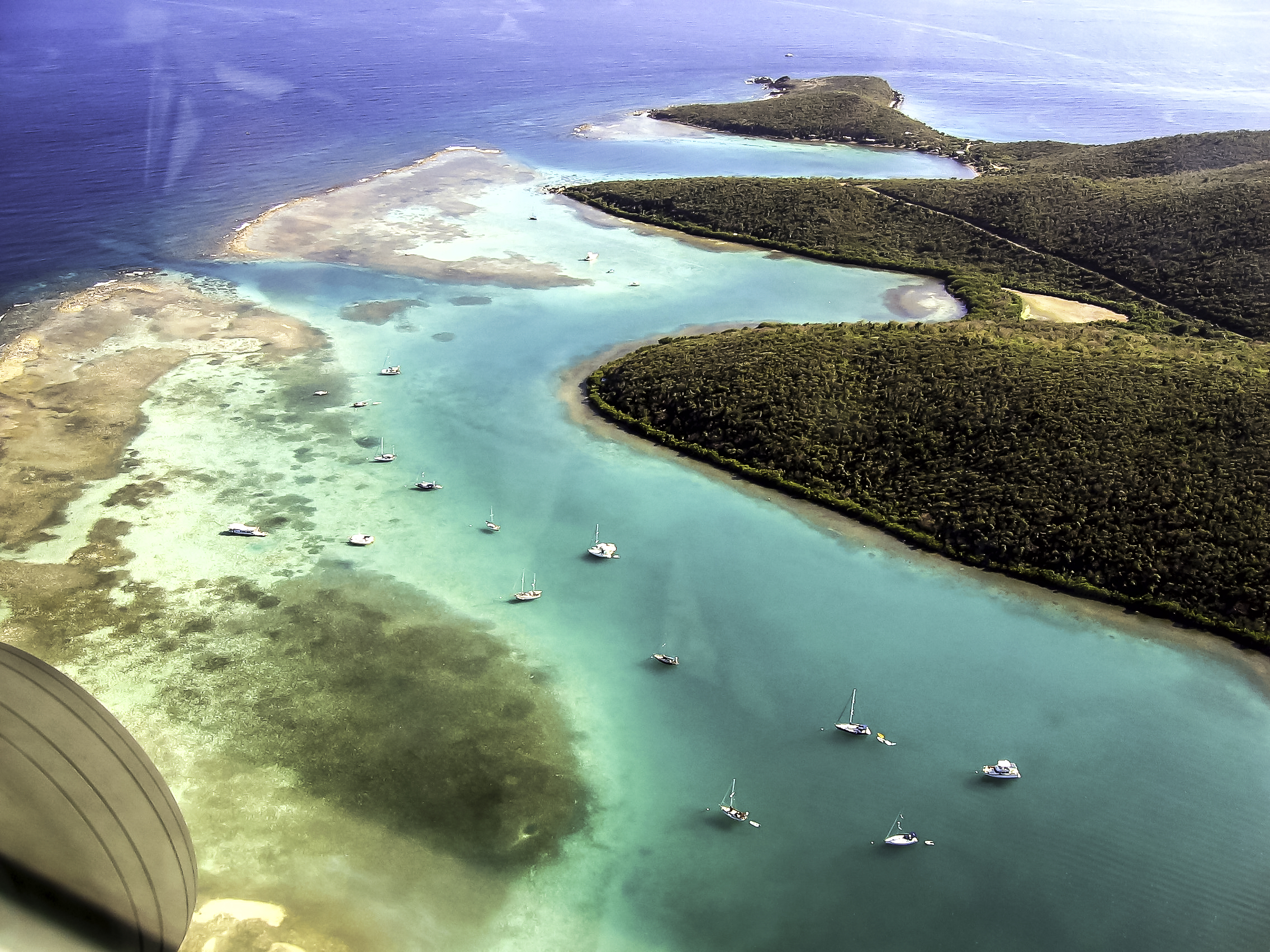
Culebra
Puerto Rican MunicipalityWikipedia
12
MENTIONS
7
EPISODES
6
PODCASTS
Search complete. 12 mentions across 7 episodes found for "Culebra".
Nov 25, 2026

Kevin MartinezGUEST
Yeah.
Kevin MartinezGUEST
So, yeah, for today, at least in Puerto Rico, we have also the high rip current risk for the northern exposed beaches, basically from Aguadilla through Fajardo and also including Culebra for the same reason.
Neville JamesHOST
I'm just going to ask you about Culebra and Vieques.
Neville JamesHOST
They're impacted as well?
Kevin MartinezGUEST
Yeah, Culebra has a high rip current risk.
Kevin MartinezGUEST
Vieques is moderate.
Neville JamesHOST
Okay.
Neville JamesHOST
Even though they're right next to each other, you have a different application, moderate and high risk, even though Kulebra and Vieques are not that far apart?

Jannese TorresHOST
And I think there's so much to do in like such a small area too, because you have El Yunque, the rainforest, you have the surfing beaches, you have the chill, like wading beaches, you have bioluminescent bay out there.
Jannese TorresHOST
You have the ferry that goes to Culebra and Vieques.
Jannese TorresHOST
There's a lot of boating in Fajardo, which is where I ended up buying.
Jannese TorresHOST
So like if you love you know, snorkeling and deep sea fishing and all those things like there's so much to do in.

speaker_2NARRATOR
Company A, 1st Battalion, 5th Marines was the first unit to use the revamped Manly.
speaker_2NARRATOR
It used rubber boats to execute its 23 February 1940 assault landing against Culebra in the Caribbean.
speaker_2NARRATOR
Satisfied by the utility of the destroyer transport, the Navy redesignated Manly yet again, this time as the lead ship of a new class, APD-1.
speaker_2NARRATOR
The APD designation denoted a high-speed transport.

Vincent TorresGUEST
That goes to Puerto Rico.
Vincent TorresGUEST
I've been fortunate to go to Puerto Rico and support communities of Vieques and Culebra with health fairs and some assessment work.
Vincent TorresGUEST
So really doing a lot of work in Puerto Rico.
Vincent TorresGUEST
And, you know, all over the Bahamas as well.

EvanHOST
Oh, yeah, me too.
EvanHOST
In Culebra, Flamingo Beach, Puerto Rico.
EvanHOST
Yeah.
EvanHOST
Were there a lot of people around? There were people, but not a lot.
Aaron BennettNARRATOR
A new regiment, the 1st Marines with its necessary support, was formed equitably from the 5th and 7th because the COs of the older units did not know whether they would stay behind two lists or take over the new outfits.
Aaron BennettNARRATOR
On 1 February 1941, the 1st Marine Brigade was re-designated the 1st Marine Division while its troops were on board ship heading for the Puerto Rican island of Culebra for maneuvers.
Aaron BennettNARRATOR
At the same time on the west coast, the 2nd Brigade at San Diego, which had grown in similar fashion from its original infantry regiment, the 6th Marines, was re-designated the 2nd Marine Division.
Aaron BennettNARRATOR
Most of its troops, however, were located at a new FMF base, Camp Elliott, in the low, hilly country 12 miles northeast of San Diego.

Carlos Berríos PolancoHOST
The biggest installation was the Roosevelt Road's Naval Station, which was eventually closed in 2004 but was reopened last year.
Carlos Berríos PolancoHOST
The U.S. military also occupied the island municipalities of Vieques and Culebra, which they used for all types of training, including using it as a bombing range.
Carlos Berríos PolancoHOST
Per the Guardian, they dropped up to 3 million pounds of ordnance in Vieques per year.
Carlos Berríos PolancoHOST
This includes 263 rounds of depleted uranium-tipped munitions that were quote-unquote accidentally expended during a training exercise on February 19, 1999, per Navy Facilities Command.
Carlos Berríos PolancoHOST
I talk a little bit more about all this in my episodes about U.S. colonies, so check that
Andrew D. FergusonGUEST
out if you want to learn more.
Carlos Berríos PolancoHOST
Vieques and Culebra were so important to U.S. military strategy that in the 1960s, the U.S. government attempted to purchase the entirety of the two island municipalities for bombing practice.
Carlos Berríos PolancoHOST
This would have involved moving the nearly 9,000 people that live there to another part of the archipelago, as well as exhuming all the bodies in the cemeteries, some which had been there for over 200 years, and reburying them somewhere else.