Cytotoxic T-lymphocyte associated protein 4
38
MENTIONS
22
EPISODES
17
PODCASTS
Search complete. 38 mentions across 22 episodes found for "Cytotoxic T-lymphocyte associated protein 4".
Sep 11, 2026

Maya PatelHOST
Solstis Oncology launched with a two hundred and twenty-five million dollar Series A, backed by investors including RA Capital, Canaan, and Forbion.
Maya PatelHOST
It plans to pair porostatart, a CTLA4 antibody, with pembrolizumab in a Phase 2 colon cancer study.
Alex MercerHOST
Canaan's rationale is to test immunotherapy before surgery in microsatellite stable colon cancer, a setting the investor describes as largely resistant to it.
Alex MercerHOST
The planned study focuses on Stage 2 and 3 disease, while the cancer can still be removed.

Jedd WolchokGUEST
For the first time, that actually changed in 2010 with the phase three results from the first study using ipilimumab.
Jedd WolchokGUEST
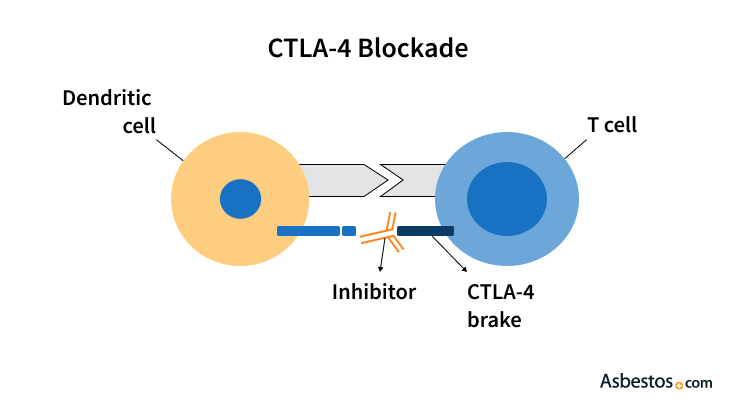
which is a CTLA-4 blocking antibody that was really developed first in melanoma.
Jedd WolchokGUEST
That data was presented by Dr. Steve O'Day at the ASCO annual meeting in 2010 and showed for the first time that any intervention could improve overall survival in metastatic melanoma.
Jedd WolchokGUEST
Just under a year later, the US FDA approved Ipilimumab for use in metastatic melanoma based upon that improvement in overall survival.
Jedd WolchokGUEST
I think that As we develop more sensitive means for detecting minimal residual disease as time and technology march on, we probably will get a better sense of things in terms of complete eradication versus sort of a restoration of a state of immune surveillance against whatever the minimal residual disease is.
Jedd WolchokGUEST
What we do know, though, is that the shape of the survival curves, as you alluded to, changes quite dramatically after about two to three years, where there is this plateauing effect.
Jedd WolchokGUEST
And in Checkmate 67, which was the phase three randomized trial that looked at the combination of PD-1 blockade with nivolumab, CTLA-4 blockade with ipilimumab, alongside the monotherapies, we actually followed patients who enrolled on that trial for 10 years or longer.
Jedd WolchokGUEST
So we were really able to observe this plateau, I would think, with much greater attention than we could using prior studies where the follow-up was shorter.

Michael FernandoHOST
Additional in-transit metastases, which are metastases that basically are cutaneous deposits between the primary and the nearest sort of drainage lymph node, were allowed if the patient had less than three of them.
Michael FernandoHOST
Patients had to be naive for anti-PD-1, anti-CTLA-4.
Michael FernandoHOST
And they were stratified by BRAF status.
Michael FernandoHOST
Now, what happened is they were randomized to standard of care where they had a total lymph node dissection after resection of the primary and then adjuvant therapy, which is standard of care.

Martin WelschofGUEST
T-cell INFORMA and the data that we have shown at EHA is showing strong single agent activity which position actually the compound in the first line setting as a single agent but also works nice in combination with Ketruda but going forward we'll develop it in the single agent setting.
BradHOST
Yeah, obviously like you've got your hands full with the cancers that you're focused on, but if you've essentially discovered a new checkpoint like you're talking about, you know, we've seen the wide breadth that PD-1 or even CTLA-4, like the applicability, like do you think that this could have wider applicability than just those cancers as well?
Martin WelschofGUEST
Absolutely.
Martin WelschofGUEST
As I said, already during the single agent dose escalation for 1808, we saw complete responses in ovarian cancer.

John CatanzaroGUEST
So on the final design, that's why it's multi-targeted.
John CatanzaroGUEST
A lot of the times what happens is like, for instance, in Keytruda and some of these other CTLA-4, you heard a lot about these checkpoint inhibitors.
John CatanzaroGUEST
They wear out, they're welcome.
John CatanzaroGUEST
They cause a lot of toxicity.

Ira MellmanGUEST
It was academic work.
Ira MellmanGUEST
And as I said, at least one small company, Mederex, decided to take the plunge with CTLA-4 and with PD-1 and PD-L1.
Ira MellmanGUEST
and got some spectacular results early on and everybody piled on.
Ira MellmanGUEST
It cost nothing.

Anna Olsen-BrownHOST
Obviously, this, this study that, that Alfred and, and the Notch team have done is in monotherapy.
Anna Olsen-BrownHOST
We need to understand the influence of combinations with CTLA-4, um, and PD-1 combos and whether that has an impact, whether that gives more priming and so would the time of day story get more important.
Anna Olsen-BrownHOST
We need to understand the impact of, you know, what is the impact of the, the chemo IO.
Anna Olsen-BrownHOST
Obviously, some of those studies have started looking into it.
Alex MercerHOST
Seastone Pharmaceuticals posted twenty twenty-six interim results today, and the lead asset did something people are going to quote badly.
Alex MercerHOST
CS2009 is a PD-1 VEGF CTLA-4 trispecific.
Alex MercerHOST
At thirty milligrams per kilogram in first-line non-small cell lung cancer with high PD-L1 expression, the company reported a one hundred percent objective response rate.
Maya PatelHOST
On patients, eleven of eleven is a hypothesis wearing a results clothes.
Maya PatelHOST
Twenty percent response in heavily pretreated metastatic colorectal cancer with a ninety-three point three percent disease control rate.
Maya PatelHOST
Colorectal is where PD-1 blockade goes to die.
Maya PatelHOST
If the CTLA-4 arm is doing real work, that's where it shows up first.
Alex MercerHOST
And they're taking it straight at the standard.

Ari RosenbergGUEST
There's a lot of interest incorporating that in these types of treatment and looking at that in these types of trials.
Ari RosenbergGUEST
We're looking at that in our ongoing trial, which is looking at a PD-1 CTLA-4 bispecific called Varustamig in the neoadjuvant setting.
Ari RosenbergGUEST
That's a neoadjuvant immunotherapy trial that's ongoing.
Ari RosenbergGUEST
We're looking at circulating tumor DNA in that trial.

Sapna PatelHOST
Do they qualify for lifileucel? I don't know.
Sapna PatelHOST
Uh, do I wanna CTLA-4 PD-1 them, PD-1 LAG-3 them, or PD-1/nivo them, uh, PD-1/tudricav them? Cool that we have all-
James LarkinHOST
Yeah, I mean...
James LarkinHOST
Yeah, it is.
12 more episodes mention Cytotoxic T-lymphocyte associated protein 4.
Create an account to see the whole feed, search across every transcript, and follow the entities you care about.