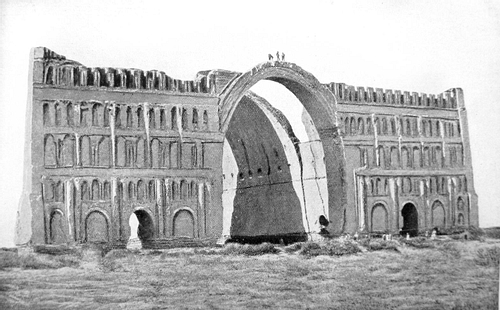
Ctesiphon
24
MENTIONS
13
EPISODES
12
PODCASTS
Search complete. 24 mentions across 13 episodes found for "Ctesiphon".
Oct 18, 2026

Simon ElliottGUEST
So you have Trajan's conquest of Parthia.
Simon ElliottGUEST
Trajan is one of the few Roman emperors to conquer the Parthian Empire, successfully captures and sacks the Parthian capital, Ctesiphon, um, and then probably the only Roman emperor who got all the way through to put his toes in the Persian Gulf.
Simon ElliottGUEST
And then on his way back, he suffers rebellion after rebellion after rebellion as he's going back through newly conquered Roman territory.
Simon ElliottGUEST
Now, remember that the, the, the huge continental river valleys of the Tigris and Euphrates have got these amazing Hellenistic cities, which are fabulously rich.

JimmyHOST
We're going to start with the eastern edge, which has the best scene on this historical mystery.
JimmyHOST
In 116, Trajan took Ctesiphon, the Parthian capital on the Tigris, in what's now Iraq.
JimmyHOST
He was in his early 60s and had been emperor for 18 years, and rather than stop, he put his army on boats and followed the Tigris south toward the Persian Gulf.
JimmyHOST
The historian Cassius Dio, writing about a century later, says the passage was rough, with a storm, the river's current, and the incoming tide combining to put the fleet in real danger.

Andrew M. HenryHOST
Mani lived most of his life in the Sasanian Empire, a Persian empire that covered much of Mesopotamia and modern-day Iran.
Andrew M. HenryHOST
He was born around 216 CE, among the Aramaic-speaking populations near the city of Ctesiphon on the Tigris River, and here in the marshlands of Mesopotamia.
Andrew M. HenryHOST
Surrounded by a multi-religious population of Syriac Christians, Mandaeans, and Jews, Mani was raised within some sort of religious sect that practiced baptism.
Andrew M. HenryHOST
We know this from one of the most consequential discoveries for the study of Manichaeans, the Mani Codex, a credit card-sized book discovered in Egypt in the 20th century, and it dates to the 5th century.

speaker_0HOST
Meanwhile, Constantinople had a population between five hundred thousand and seven hundred thousand at this point in history.
speaker_0HOST
Only the cities of Nanjing in China and Ctesiphon in Persia rivaled Constantinople's population, but it is doubtful that they equaled Constantinople's grandeur.
speaker_0HOST
If I could choose anywhere in the world to visit in the year five hundred AD, I would pick Constantinople without a moment of hesitation.
speaker_0HOST
Enthroned in the great imperial palace ruling over the Balkans, Asia Minor, Palestine, Greece, Syria, and Egypt, you would find the emperor Anastasius I Dicorus, an elderly civil servant turned emperor in the ninth year of his reign.

speaker_0HOST
He did it with brutal efficiency.
speaker_0HOST
He crossed the Euphrates, drove into the heart of enemy territory, and took Seleucia and Ctesiphon, the great cities of the Parthians.
speaker_0HOST
Ctesiphon was their capital, and Cassius burned its royal palace.
speaker_0HOST
He came home a hero.
speaker_0HOST
The soldiers respected him for his iron discipline.

Tony RobinsonNARRATOR
Caliph Umar's army met with the Persian armies in the Battle of Cardassia in the year 636 AD.
Tony RobinsonNARRATOR
In early January 637, the Muslim advance guard reached the outskirts of Ctesiphon and laid siege to the city for two months.
Tony RobinsonNARRATOR
Eventually, the city fell and the Muslims occupied it.
Tony RobinsonNARRATOR
During the fighting, the palaces and the library at Ctesiphon were deliberately burned.
Tony RobinsonNARRATOR
In the end, the only book that managed to survive in Arabia was the glorious Quran.
Dan GibsonGUEST
When it comes to the history of the Quran, historians have struggled.

Abdur-Rahman MangeraHOST
You know, like sometimes you have an inhabitation.
Abdur-Rahman MangeraHOST
You hear about the Persians, you hear about this great city they had called Madain, Ctesiphon.
Abdur-Rahman MangeraHOST
You're looking for that on the map, you won't find it today.
Abdur-Rahman MangeraHOST
Baghdad is a very recent city in, you know, in the history of things.

MatthewHOST
But before we get to the city, because that's what Constantinople was known as in antiquity, it was, there were cities and then there was the city.
MatthewHOST
Before we go there, we need to go to Tisfun, or Ctesiphon, capital of Persia.
MatthewHOST
To the mind of the man who set all this in motion, Mr. Khosrow.
MatthewHOST
Khosrow II, Khosrow Parvez the Wise.

Chris KempshallPANELIST
So things like, even, like, the choice of battles as a, as a starting point.
Chris KempshallPANELIST
I was saying to, to both of you, like, I just, I do not believe that most people who are kind of vaguely interested in, in the First World War know about the Battle of Ctesiphon or in depth about the Ottoman raid of the Suez Canal.
Chris KempshallPANELIST
I just don't believe that that is, that that is true.
Chris KempshallPANELIST
So first of all, by having these types of battles in the game, we kind of immediately increase an understanding of the nature of some of the, of some of the, the fighting in this area, and also the, some of the landscape for it.
6 MINS LATER
Chris KempshallPANELIST
Yeah.
Chris KempshallPANELIST
No, no, no.
Chris KempshallPANELIST
They, they, they understand that, um, you know, they're not, they're not gonna be, if they win this map, they're not gonna sail on a march on Constantinople, um, or, or, or push on from Ctesiphon onto Baghdad, um, as, as fun as that would be.
Jessica MeyerHOST
Because they haven't wor- you just haven't worked out how to gamify dysentery.
3 more episodes mention Ctesiphon.
Create an account to see the whole feed, search across every transcript, and follow the entities you care about.