Crossroad
Song by Robert Johnson
20
MENTIONS
8
EPISODES
7
PODCASTS
Search complete. 20 mentions across 8 episodes found for "Crossroad".
Oct 23, 2026

JimmyHOST
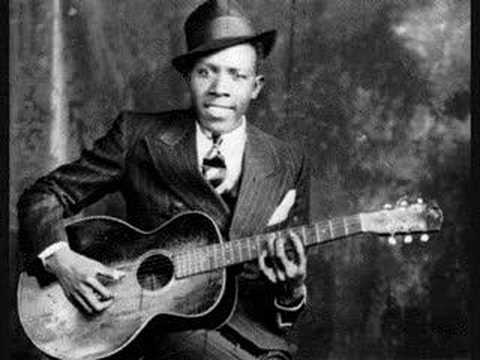
He finally got the chance to record in 1936 and 1937, cutting 29 songs in two sessions in Texas.
JimmyHOST
These recordings, including future classics like Crossroad Blues and Sweet Home Chicago, showcased his eerie, expressive vocals and astonishing guitar technique.
JimmyHOST
Yet during his lifetime, those records made only a minor ripple regionally.
JimmyHOST
Johnson remained virtually unknown to the wider world and earned no fame or fortune to speak of while alive.
JimmyHOST
In Johnson's case, he literally sang about demons and hellhounds, which only added fuel to the fire.
JimmyHOST
Songs like Me and the Devil Blues paint a portrait of waking up to Satan knocking on his door, and Hellhound on My Trail speaks of being chased by demonic dogs.
JimmyHOST
It wasn't hard for listeners to connect these lyrics to the legend, and in his most famous track, Crossroad Blues, Johnson moans about going down to the crossroads and kneeling to beg for God's mercy.
JimmyHOST
This is a haunting scene that many later interpreted as a reference to his midnight meeting with Satan.

Steve StocktonHOST
Welcome to a deep dive into the occult conspiracies that have defined rock and roll.
Steve StocktonHOST
Now, the legend of Robert Johnson and the Crossroads is perhaps the most pervasive and influential myth in the history of modern music.
Steve StocktonHOST
It serves as the genesis story for rock and roll, establishing the trope of the tortured, supernaturally gifted artist.
Steve StocktonHOST
However, to understand the conspiracy of the crossroads, you have to look past the supernatural veneer and examine the intersection of West African spiritual traditions, the socio-economic reality of the Jim Crow South, and the calculated marketing of the 1960s blues revival.
Steve StocktonHOST
When Columbia Records released King of the Delta Blues Singers in 1961, it reached a young, white audience in the UK, including such future luminaries as Eric Clapton, Keith Richards, and Jimmy Page.
Steve StocktonHOST
These musicians were captivated by the spookiness of their recordings.
Steve StocktonHOST
Producers and writers, recognizing the commercial power of a cursed artist, leaned heavily into the Crossroads myth.
Steve StocktonHOST
Peter Goralnik, in his seminal work, Searching for Robert Johnson, notes that the myth grew because it filled the void left by the lack of biographical facts.

Sam GeorgeHOST
Got nothing for you here
Amy JoeHOST
Crossroads Blues.
Amy JoeHOST
Yes
Andy SmithHOST
Yes.

speaker_0SOUNDBITE_SPEAKER
I went down to the crossroads
The TroutHOST
... on Crossroads Blues at the Royal Albert Hall back in the '60s.
speaker_0SOUNDBITE_SPEAKER
But I didn't find what I was looking for.
The TroutHOST
So first, I'm gonna start out with a little history of why Crossroads, where did the name Crossroads come from, why is it called the Crossroads Guitar Festival, and everything to do with the Crossroads Guitar Festival and all the wonderful guests that appeared there for two nights, Saturday and Sunday, at the, the festival.
The TroutHOST
But first, we're gonna start off with a little history about Crossroads song because it goes back 90 years ago.
The TroutHOST
Unbelievable.
The TroutHOST
Robert Johnson, I would call him kind of the grandfather of the blues, recorded Crossroads Blues on November 27th, 1936.
The TroutHOST
Yep, 90, almost 90 years ago.

Mick SmithHOST
Handy, Bessie Smith's commercial breakthrough, 780,000 copies in six months, Robert Johnson's two record recording sessions, and includes an explicit title correction.
Mick SmithHOST
Johnson's song is Crossroad Blues, not Crossroads, which is Cream's 1966 arrangement.
Mick SmithHOST
The deal with the devil mythology is traced to its actual source, and the West African tradition is unpacked.
Mick SmithHOST
section three sacred fire moves from slave spirituals and the fisk jubilee singers through thomas dorsey's conversion from blues pianist to gospel pioneer the story behind take my hand precious lord and sister rosetta tharp as the missing link between gospel and rock guitar Section four, Hot Jazz, covers the original Dixie Jazz Band's commercialized approximation of Versus Armstrong's actual achievement, the Hot Five and Seven Sessions.
12 MINS LATER
Mick SmithHOST
Those 29 songs are among the most studied, imitated, and mythologized recordings in American music history.
Mick SmithHOST
A critical note on titles here, because the misattribution is nearly universal.
Mick SmithHOST
The actual title of Johnson's most famous song is Crossroad Blues, not Crossroads, which is the title Eric Clapton's cream gave their 1966 arrangement.
Mick SmithHOST
They are related but distinct works, and calling Johnson's original Crossroads is one of those persistent errors that finds its way into otherwise careful writing.

Brent IngersollHOST
Hopefully I don't get flagged for this, but you got audio there, Ron? [blues music] So this is Robert Johnson.
Brent IngersollHOST
This is a song called Crossroads.
AJ ThomasHOST
Mm.
Brent IngersollHOST
And the legend is-
17 MINS LATER
AJ ThomasHOST
There's, there's a crossroads
Brent IngersollHOST
... that's a great series.
AJ ThomasHOST
Crossroads.
Brent IngersollHOST
Yeah, The Crossroads.
Steve StocktonNARRATOR
Two songs are primary exhibits.
Steve StocktonNARRATOR
First, we have Crossroad Blues from 1936.
Steve StocktonNARRATOR
While the title suggests a ritual, the lyrics describe a man stranded at a literal crossroads at sunset, fearing for his safety in a sundown town where being a black man alone after dark could be a death sentence.
Steve StocktonNARRATOR
Quoting from the lyrics here, I went to the crossroad, fell down on my knees, asked the Lord above, have mercy, now save poor Bob, if you please.