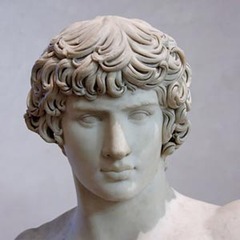
Critias
Poet and philosopherWikipedia
364
MENTIONS
50
EPISODES
41
PODCASTS
Search complete. 364 mentions across 50 episodes found for "Critias".
Sep 12, 2026

Tim GallaudetSOUNDBITE_SPEAKER
Atlantis is a placeholder term that comes from Solon relaying this myth to Plato.
Tim GallaudetSOUNDBITE_SPEAKER
I think a lot of people discount that because it was told at this mythos festival of Timaeus and Critias, when in fact, I think a lot of Plato's stuff was probably actually ontologically true and real.
Tim GallaudetSOUNDBITE_SPEAKER
And Troy was supposedly fictional.
Tim GallaudetSOUNDBITE_SPEAKER
And Heinrich von Schleiman, this kind of amateur German businessman, found it.
Jesse MichaelsSOUNDBITE_SPEAKER
Atlantis is a placeholder term that comes from Solon relaying this myth to, to Plato.
Jesse MichaelsSOUNDBITE_SPEAKER
I think a lot of people discount that because it was told at this mythos festival of Timaeus and Critias, when in fact, I think a lot of Plato's stuff was probably actually ontologically true and real, and Troy was supposed-
Tim GallaudetSOUNDBITE_SPEAKER
Right.
Tim GallaudetSOUNDBITE_SPEAKER
Exact same thing

Geoffrey EdwardsNARRATOR
This Thracian told me that the Greek physicians are quite right in these notions of theirs, which I was mentioning, as far as they go.
Geoffrey EdwardsNARRATOR
But Simulxes, he added, our king, who is also a god says further that as you ought not to attempt to cure the eyes without the head or the head without the eyes so neither ought you to attempt to cure the body without the soul and this he said is the reason why the cure of many diseases is unknown to the physicians of hellas because they are ignorant of the whole which ought to be studied also for the part can never be well unless the whole is well for all good and evil whether in the body or in human nature originates as he declared in the soul and overflows from thence as from the head into the eyes and therefore if the head and the body are to be well you must begin by curing the soul that is the first thing and the cure my dear youth has to be effected by the use of certain charms and these charms are fair words and by them temperance is implanted in the soul and where temperance is there health is speedily imparted not only to the head but to the whole body and he who taught me the cure and the charm added a special direction let no one he said persuade you to cure the head until he has first given you his soul to be cured by the charm for this he said is the great error of our day in the treatment of the human body that physicians separate the soul from the body and he added with emphasis at the same time making me swear to his words let no one however rich or noble or fair persuade you to give him the cure without the charm now i have sworn and i must keep my oath and therefore if you will allow me to apply the thracian charm first to your soul as the stranger directed i will afterwards proceed to apply the cure to your head but if not i do not know what i am to do with you my dear charmides critias when he heard this said the headache will be an unexpected benefit to my young relation if the pain in his head compels him to improve his mind and i can tell you socrates that charmides is not only pre-eminent in beauty among his equals but also in that quality which is given by the charm and this as you say is temperance is it not yes i said then let me tell you that he is the most temperate of human beings and for his age inferior to none in any quality yes i said charmides and indeed i think that you ought to excel others in all good qualities for if i am not mistaken there is no one present who could easily point out two athenian houses the alliance of which was likely to produce a better or nobler son than the two from which you are sprung there is your father's house which is descended from critias the son of dropidas whose family has been commemorated in the panegyrical verses of anacreon solon and many other poets as famous for beauty and virtue and all other high fortune and your mother's house is equally distinguished for your maternal uncle pirilampes never met with his equal in persia at the court of the great king or on the whole continent in all the places to which he went as ambassador for stature and beauty that whole family is not a whit inferior to the other having such ancestors you ought to be first in all things and as far as i can see sweet son of glaucon your outward form is no dishonour to them and if you have temperance as well as beauty, as Critias declares, then blessed art thou, dear Carmedes, in being the son of thy mother.
Geoffrey EdwardsNARRATOR
And this is the question.
Geoffrey EdwardsNARRATOR
If this gift of temperance is already yours, as Critias declares, and you are temperate enough, in that case you have no need of any charms, whether of Zemulxes, or of Aberys the Hyperborean, and I may as well give you the cure of the head at once.
Geoffrey EdwardsNARRATOR
but if you are wanting in these qualities i must use the charm before i give you the medicine please therefore to inform me whether you admit the truth of what critias has been saying about your gift of temperance or are you wanting in this particular charmides blushed and the blush heightened his beauty for modesty is becoming in youth he then said very ingenuously that he really could not say at once either yes or no in answer to the question which i had asked for said he if i affirm that i am not temperate that would be a strange thing to say of myself and also i should have to give the lie to critias and many others who think that i am temperate as he tells you but on the other hand if i say that i am i shall have to praise myself which would be ill manners and therefore i have no answer to make to you i said to him that is a natural reply charmides and i think that you and i may as well inquire together whether you have this quality about which i am asking or not and then you will not be compelled to say what you do not like neither shall i be a rash practitioner of medicine therefore if you please i will join with you in the inquiry but i will not press you if you would rather not there is nothing which i should like better he said and as far as i am concerned you may proceed in the way which you think best i think i said that i had better begin by asking you what is temperance for you must have an opinion about this
Drew McIntyreADVERTISER
Drew McIntyre here from WWE.
8 MINS LATER
Geoffrey EdwardsNARRATOR
All that, Socrates, appears to me to be true.
Geoffrey EdwardsNARRATOR
But I should like to know what you think about another definition of temperance, which I just now remember to have heard from someone who said, that temperance is doing our own business.

Jeffrey EdwardsNARRATOR
persons of the dialogue socrates who is the narrator charmides cheriphon quiddius scene the palaestra of taurius which is near the porch of the king archon yesterday evening i returned from the army at padidea and having been a good while away i thought that i would go and look at my old haunts so i went into the palestra of tereus which is over against the temple adjoining the porch of the king archon and there i found a number of persons most of whom i knew but not all my visit was unexpected and no sooner did they see me entering than they saluted me from afar on all sides and cheriphon who is a kind of madman started up and ran to me seizing my hand and saying how did you escape socrates i should explain that an engagement had taken place at potidaea not long before we came away the news of which had only just reached athens you see i replied that here i am there was a report he said that the engagement was very severe and that many of our acquaintance had fallen that i replied was not far from the truth i suppose he said that you were present i was then sit down and tell us the whole story which as yet we have only heard imperfectly i took the place which he assigned to me by the side of critias the son of calesgros and when i had saluted him and the rest of the company i told them the news from the army and answered their several inquiries then when there had been enough of this i in my turn began to make inquiries about matters at home about the present state of philosophy and about the youth.
Jeffrey EdwardsNARRATOR
i asked whether any of them were remarkable for beauty or sense or both critias glancing at the door invited my attention to some youths who were coming in and talking noisily to one another followed by a crowd of the beauties socrates he said i fancy that he will soon be able to form a judgment for those who are just entering are the advanced guard of the great beauty of the day and he is likely to be not far off himself who is he i said and who is his father charmides he replied is his name he is my cousin and the son of my uncle glaucon i rather think that you know him although he was not grown up at the time of your departure certainly i know him i said for he was remarkable even then when he was still a child and now i should imagine that he must be almost a young man you will see he said in a moment what progress he has made and what he is like he had scarcely said the word when charmides entered now you know my friend that i cannot measure anything and of the beautiful i am simply such a measure as a white line is of chalk for almost all young persons are alike beautiful in my eyes but at that moment when i saw him coming in i must admit that i was quite astonished at his beauty and stature all the world seemed to be enamoured of him amazement and confusion reigned when he entered and a troop of lovers followed him that grown-up men like ourselves should have been affected in this way was not surprising but i observed that there was the same feeling among the boys all of them down to the very least child turned and looked at him as if he had been a statue caraphon called me and said what do you think of him socrates has he not a beautiful face that he has indeed i said but you would think nothing of his face he replied if you could see his naked form he is absolutely perfect and to this they all agreed By Heracles, I said, there never was such a paragon, if he has only one other slight addition.
Jeffrey EdwardsNARRATOR
What is that? said Critias.
Jeffrey EdwardsNARRATOR
If he has a noble soul, and, being of your house, Critias, he may be expected to have this.
Jeffrey EdwardsNARRATOR
He is as fair and good within as he is without, replied Critias.
Jeffrey EdwardsNARRATOR
Shall we ask him, then, I said, to show us, not his body, but his soul, naked and undisguised? He is just of an age at which he will like to talk.
speaker_0ADVERTISER
Welcome to Planet Fitness, a.k.a.
Jeffrey EdwardsNARRATOR
Now, why should you not make believe to him that you know a cure for the headache? there will be no difficulty about that, I said, if he comes.
Jesse MichaelsSOUNDBITE_SPEAKER
Atlantis is a placeholder term that comes from Solon relaying this myth to, to Plato.
Jesse MichaelsSOUNDBITE_SPEAKER
I think a lot of people discount that because it was told at this mythos festival of Timaeus and Critias, when in fact, I think a lot of Plato's stuff was probably actually ontologically true and real, and Troy was supposed-
Tim GallaudetSOUNDBITE_SPEAKER
Right
Jesse MichaelsSOUNDBITE_SPEAKER
... supposedly fictional.
Jesse MichelsSOUNDBITE_SPEAKER
Atlantis is a placeholder term that comes from Solon relaying this myth to, to Plato.
Jesse MichelsSOUNDBITE_SPEAKER
I think a lot of people discount that because it was told at this mythos festival of Timaeus and Critias, when in fact, I think a lot of Plato's stuff was probably actually ontologically true and real, and Troy was supposed-
Tim GallaudetSOUNDBITE_SPEAKER
Right
Jesse MichelsSOUNDBITE_SPEAKER
... supposedly fictional.
Jesse MichelsSOUNDBITE_SPEAKER
Atlantis is a placeholder term that comes from Solon relaying this myth to Plato.
Jesse MichelsSOUNDBITE_SPEAKER
I think a lot of people discount that because it was told at this mythos festival of Timaeus and Critias, when in fact, I think a lot of Plato's stuff was probably actually ontologically true and real and Troy was supposedly fictional.
Jesse MichelsSOUNDBITE_SPEAKER
And Heinrich von Schleiman, this kind of amateur German businessman, found it.
Jesse MichelsSOUNDBITE_SPEAKER
Pre the 90s, if anyone were to say that the civilization was as old as Gobekli Tepe, they'd go crazy.

LeniNARRATOR
And he fears that the sophists, who are plentifully supplied with graces of speech, in their erratic way of life having never had a city or house of their own, may through want of experience err in the conception of philosophers and statesmen.
LeniNARRATOR
And therefore to you I turn, Timaeus, citizen of Locris, who are at once a philosopher and a statesman, and to you, Critias, whom all Athenians know to be similarly accomplished, and to Hermocrates, who is also fitted by nature and education to share in our discourse.
LeniNARRATOR
Hermocrates: We will do our best, and have been already preparing; for on our way home Critias told us of an ancient tradition, which I wish, Critias, that you would repeat to Socrates.
LeniNARRATOR
I will, if Timaeus approves.
LeniNARRATOR
I approve.
LeniNARRATOR
Listen then, Socrates, to a tale of Solon's, who, being the friend of Dropidas, my great-grandfather, told it to my grandfather Critias, and he told me.
LeniNARRATOR
The narrative related to ancient famous actions of the Athenian people, and to one especially, which I will rehearse in honor of you and of the goddess.
LeniNARRATOR
Critias when he told this tale of the olden time was ninety years old, I being not more than ten.
Jesse MichelsSOUNDBITE_SPEAKER
Atlantis is a placeholder term that comes from Solon relaying this myth to, to Plato.
Jesse MichelsSOUNDBITE_SPEAKER
I think a lot of people discount that because it was told at this mythos festival of Timaeus and Critias, when in fact, I think a lot of Plato's stuff was probably actually ontologically true and real, and Troy was supposed-
Tim GallaudetSOUNDBITE_SPEAKER
Right.
Tim GallaudetSOUNDBITE_SPEAKER
Exact same thing

speaker_4ADVERTISER
Terms and conditions apply.
Kevin JohnsonNARRATOR
INTRODUCTION The Protagoras, like several of the dialogues of Plato, is put into the mouth of Socrates, who describes a conversation which had taken place between himself and the great sophist at the house of Callias, the man who had spent more upon the sophists than all the rest of the world, and in which the learned Hippias and the grammarian Prodicus had also shared, as well as Alcibiades and Critias.
Kevin JohnsonNARRATOR
both of whom said a few words, in the presence of a distinguished company consisting of disciples, of Protagoras, and of leading Athenians belonging to the Socratic circle.
Kevin JohnsonNARRATOR
The dialogue commences with a request on the part of Hippocrates that Socrates would introduce him to the celebrated teacher.
34 MINS LATER
Kevin JohnsonNARRATOR
The characters to whom we are introduced at the beginning of the dialogue all play a part more or less conspicuous towards the end.
Kevin JohnsonNARRATOR
There is Alcibiades, who is compelled by the necessity of his nature to be a partisan, lending effectual aid to Socrates.
Kevin JohnsonNARRATOR
There is Critias, assuming the tone of impartiality.
Kevin JohnsonNARRATOR
Callias, here as always inclining to the sophists, but eager for any intellectual repast.
40 more episodes mention Critias.
Create an account to see the whole feed, search across every transcript, and follow the entities you care about.